What the words mean
- Live-in care: one carer lives in the home, supports the person through the day, takes a daily break and sleeps in their own room, helping occasionally at night.
- Live-in care plus waking nights: the live-in carer covers the day, and a second carer comes in each night and stays awake.
- Two live-in carers: both live in, so two people are always available for tasks that need two, day and night.
- 24-hour care with shifts: a team of carers works in shifts, so someone is awake and working at every hour.
- Sleep-in: a carer sleeps in the home and is woken only if needed, often alongside daytime visits.
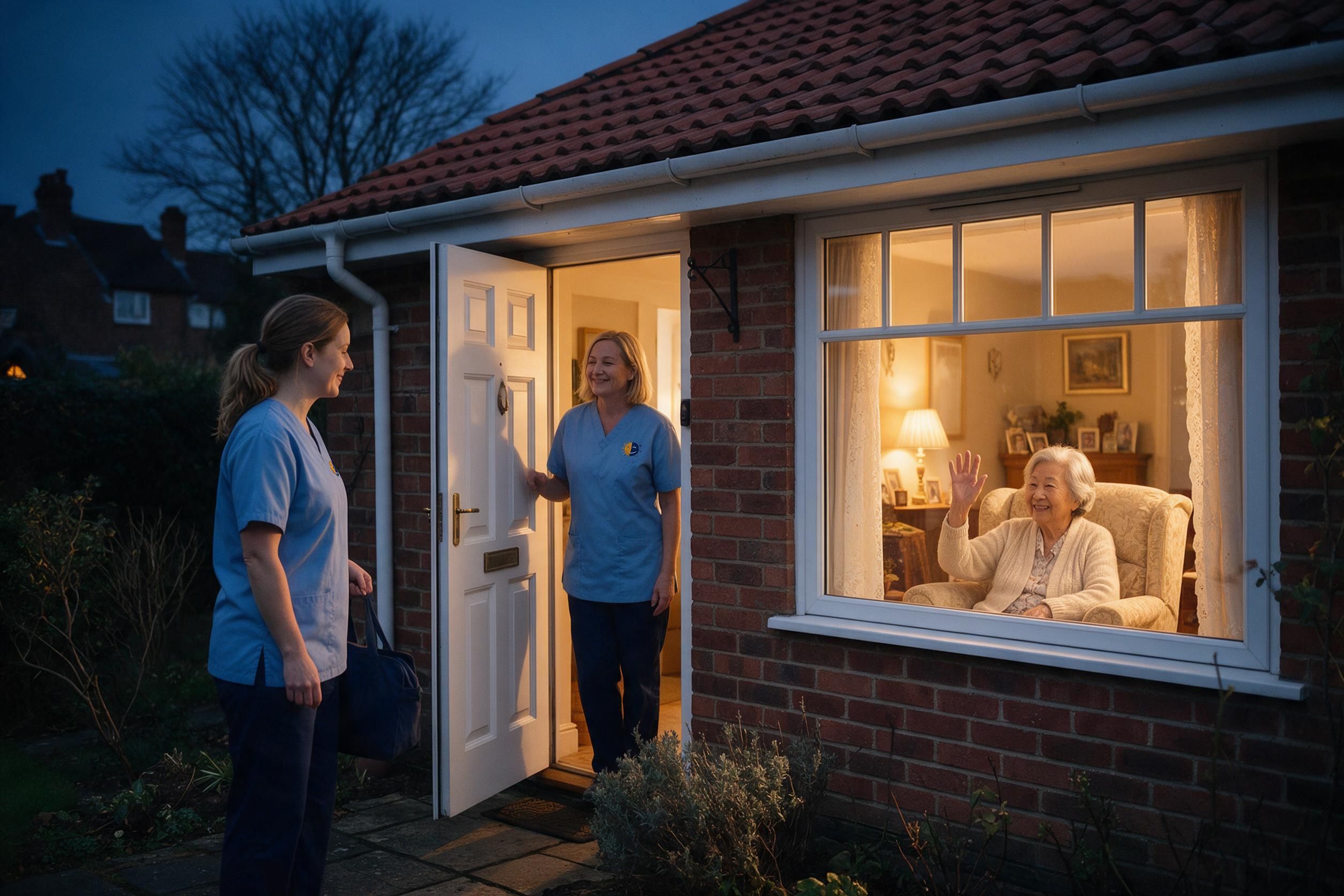
Some providers call live-in care “24-hour care” because the carer is there around the clock. Being there is not the same as being awake. The question that matters is: who will be awake and working at 3am?
When one live-in carer is usually enough
- The person usually sleeps through, or needs help once in a while, for example to reach the toilet.
- One trained carer can help them move safely, with equipment if needed.
- They can be left safely for the carer’s daily break, or someone can cover it.
- There is a spare bedroom for the carer.
This describes many people living with frailty, early to middle-stage dementia, Parkinson’s, or recovery after a fall or a hospital stay. See what live-in care is and a day with a live-in carer.
Honest signs that nights need more
- Regular waking. Help is needed several times a night on most nights, not just now and then.
- Turning in bed. Someone at high risk of pressure ulcers who cannot change position themselves needs help to move regularly. NICE recommends that adults at high risk change position at least every four hours, with help if they cannot do it themselves, which means planned help through the night.
- Night-time walking or distress. Someone with dementia is often up at night, tries to go out, or becomes very anxious after dark.
- Two-person help at night. Getting to the toilet or changing position needs two carers.
- Health that needs watching. Unsettled breathing, seizures, or the last days of life, when someone may need comfort and care at any hour.
- The carer is exhausted. The daily notes show broken nights week after week.
Before adding night care, ask the GP to look for causes that can be treated, such as pain, a urine infection, the timing of water tablets, or side effects of medicines. Sometimes nights settle again.
Signs that two carers are needed during the day
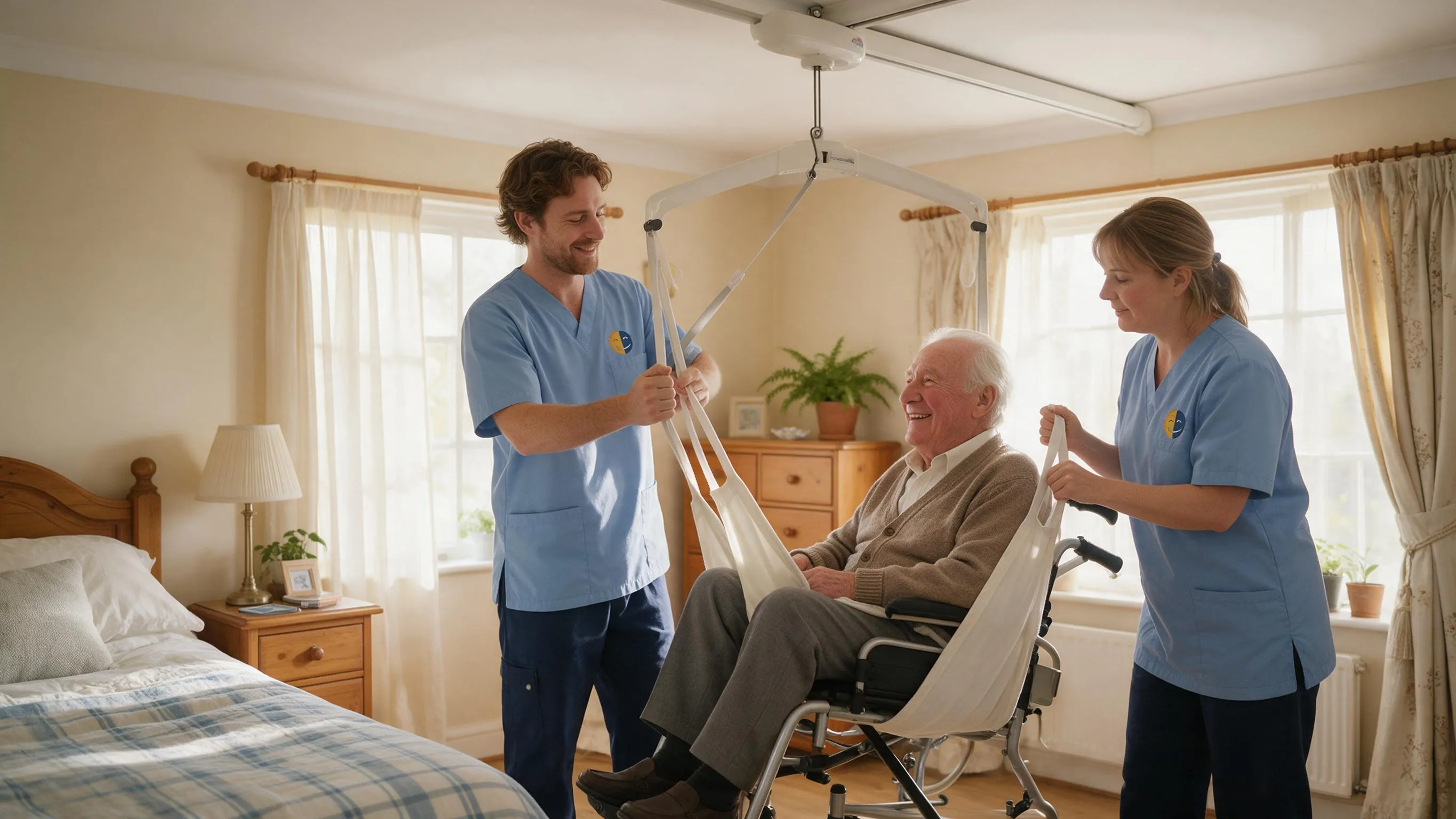
- Most transfers need a hoist and two people. An occupational therapist or moving and handling assessor decides what is safe; sometimes the right equipment allows one carer to help safely.
- The person’s behaviour at times means one carer alone could be at risk.
- A couple both have high needs at the same moments of the day.
Keep a night diary for two weeks
Write down every time help is needed after bedtime. It turns “she’s up a lot” into evidence that providers, the council and the NHS can plan around.
| Time | What happened | How long it took |
|---|---|---|
| 1.10am | Called out, needed the toilet, unsteady | 15 minutes |
| 3.40am | Awake and anxious, looking for her late husband | 40 minutes |
At the end, count the nights with any waking, the nights with more than one, and anything that needed two people.
How the costs compare
There are no official national averages for care at home, so here are verified benchmarks for 2026/27. Private prices are usually higher than what councils pay.
| Arrangement | Awake at night? | Bedrooms needed | Cost guide |
|---|---|---|---|
| One live-in carer | No, occasional help | One | Oxfordshire County Council’s ceiling: £1,600.64 a week with the carer’s breaks covered, £1,168.35 without |
| Live-in plus waking nights | Yes | One | The live-in price plus each night; at Oxfordshire County Council’s waking night rate of £242.48, about £1,700 for seven nights |
| Two live-in carers | Partly | Two | Roughly twice one live-in carer |
| 24-hour shifts | Yes | None | 168 hours a week; at £30.87 an hour, about £5,190 a week |
For comparison, the average self-funded care home place in England was about £1,300 a week for residential care and £1,519 for nursing care in January 2026 (Which?, using Lottie data). Ask every provider for a written quote listing every extra, including disturbed-night charges and bank holidays.
How to pay for more care at night
- Attendance Allowance at the higher rate, £114.60 a week in 2026/27, is for people who need help or supervision both day and night. If it is paid at the lower rate and nights have become harder, tell the Attendance Allowance helpline (0800 731 0122, Monday to Friday, 8am to 6pm) about the change. See Attendance Allowance.
- NHS Continuing Healthcare. Needs that are intense or unpredictable at night are important evidence. Your night diary helps. See NHS Continuing Healthcare.
- The council. Statutory guidance says councils should not set arbitrary ceilings on personal budgets that force people into care homes against their will. A council may compare the cost of suitable options, but that “does not mean choosing the cheapest option”. See council funding and direct payments.
- Mixing support. Family covering one or two nights a week, a sleep-in rather than a waking night when waking is rare, or sensors and alarms from telecare can sometimes make the care plan both safer and more affordable. Discuss any change with the provider first.
More ideas are in how to reduce the cost of care, and our funding and cost checker shows which help may apply.
When neither may be right

If nursing is needed around the clock, or two-person care is needed day and night and the home has no space for it, a nursing or care home may serve the person better. Our guide to when a care home may be the right choice explains the signs kindly and honestly.
Words you can use
Asking the council to review care when nights change: “My mother, [name, date of birth, address], has a care and support plan from your team. Her needs at night have increased: in the last two weeks she needed help on [number] nights, often [two or three] times a night, and now needs [two people / turning in bed]. I attach a night diary. Please could you review her care and support plan and her personal budget, and tell me when the review will happen?”
Asking the GP or nurse about NHS funding: “Please could you complete an NHS Continuing Healthcare Checklist for my father, [name, date of birth]? His needs at night have become [frequent / unpredictable]; a night diary is attached.” The NHS says a decision should usually be made within 28 days of the Checklist or a request for a full assessment.
Questions to ask a provider about nights
- How often can your live-in carer be woken before you review the care?
- What happens, and what does it cost, if nights change suddenly?
- Do you provide waking night carers, and how do they hand over to the live-in carer?
- If two carers are needed, how is the second carer’s room, food and break arranged?
- Who decides on moving and handling, and how often is it reviewed?
- Who answers the phone at 2am?
What to do next
- Keep the night diary for two weeks.
- Ask the GP to review anything that might be disturbing sleep.
- Ask for an occupational therapy or moving and handling assessment if transfers are getting harder.
- Share the diary with the council, any provider and, where health needs are significant, the GP or nurse completing a Continuing Healthcare Checklist.
- Ask two or three providers to quote for the arrangement that fits, in writing.
- Review again whenever nights change.
How we can help
Day and Nightcare provides fully managed live-in care anywhere in England, from £1,550 a week, and home care visits, waking nights and sleep-ins across Oxfordshire, and 24-hour care with carers working in shifts anywhere in England, so we can help you work out what nights really need. We are registered with CQC and rated Good, and work with people who fund their own care, councils (including direct payments) and NHS Continuing Healthcare. Call us on 01865 715780 to arrange a free initial assessment and a written quote.
Common questions
Is live-in care the same as 24-hour care?
Not quite, although some companies use the words loosely. With live-in care, one carer lives in the home, takes a daily break and sleeps at night, helping occasionally if needed. With 24-hour care, carers are awake and working at every hour, usually in shifts or as a live-in carer plus a waking night carer. Ask any provider: will someone be awake and working at 3am, and is that included in the price?
How many times can a live-in carer be woken at night?
There is no single legal number, and providers set their own limits. Many plan for a live-in carer to be woken only occasionally, often once or twice on some nights, and review the care if waking becomes a regular pattern. A carer who is up several times every night cannot rest and stay alert and safe the next day. Ask each provider what its threshold is and what happens, and what it costs, if nights change.
Can the council or NHS pay for a waking night carer?
Yes, if the person's assessed needs call for it. A council must meet eligible needs, which can include night care, and should not set arbitrary ceilings that push people into care homes, though it can weigh up the cost of suitable options. NHS Continuing Healthcare can fund night care in full when needs are mainly health needs. The higher rate of Attendance Allowance is for people who need help both day and night.
Can a sleep-in carer replace a live-in carer?
Sometimes. A sleep-in carer stays overnight and is woken only if needed, so it suits someone who is fine during the day with visits, or with family, but should not be alone at night. It does not give the all-day company and help of a live-in carer. Combining daytime visits with sleep-ins can work well for some people, especially in the early stages of needing care.
Sources and further information
- GOV.UK: Attendance Allowance, what you'll get
- GOV.UK: Care and support statutory guidance (paragraphs 10.27 and 11.22)
- Oxfordshire County Council: Adult social care fees and reviews (2026/27 rates)
- NICE: Pressure ulcers, prevention and management (CG179)
- NHS: NHS continuing healthcare
- Which?: Care home costs across the UK explained
Prepared by the Day and Nightcare care team. Last updated 30 October 2026; sources last checked 30 October 2026. This guide is general information about care in England, not financial, legal or medical advice.