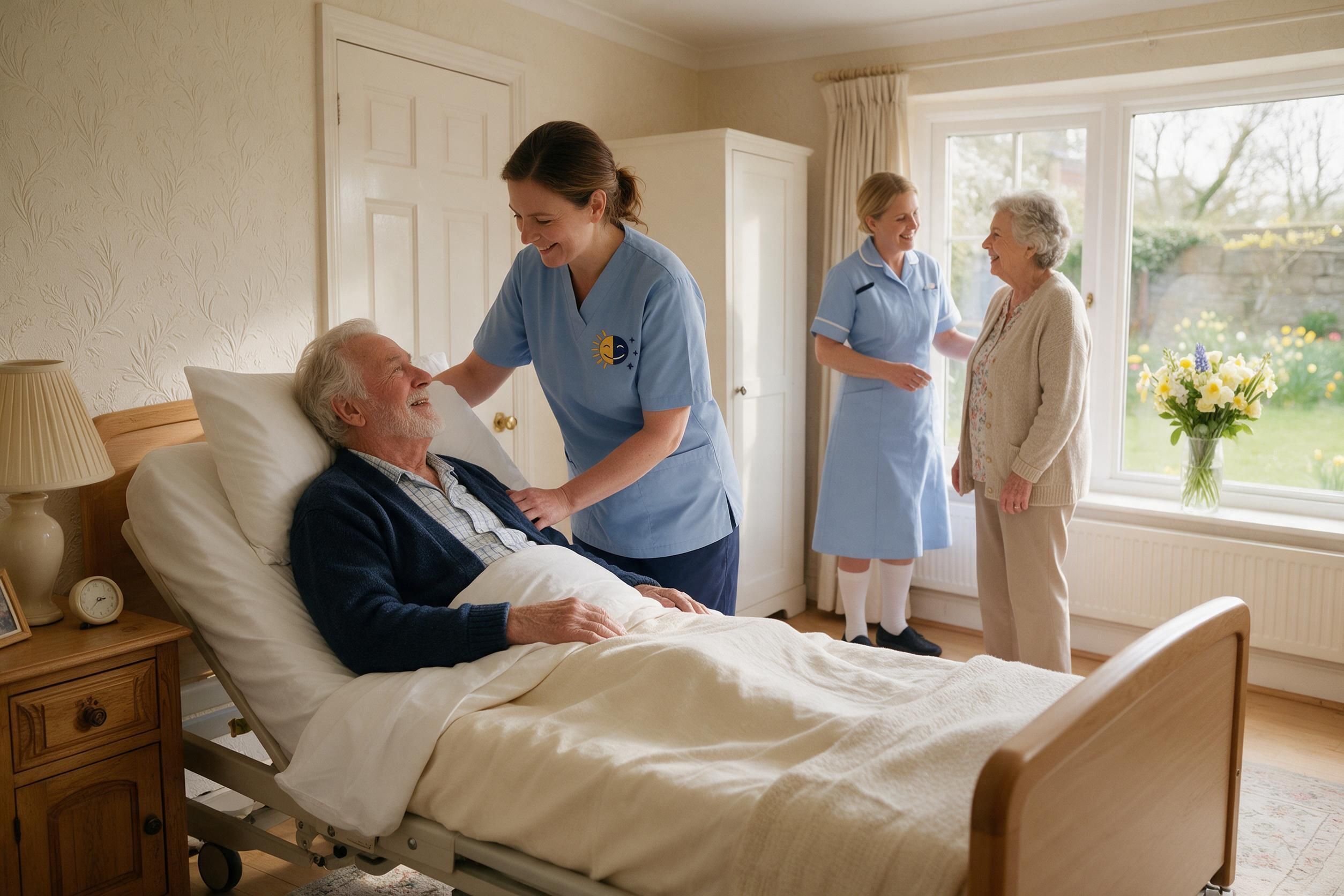
CHC covers personal care as well as health care, wherever the person lives; at home, that can include live-in care. Decisions are made by integrated care boards (ICBs), the local NHS bodies, following the national framework. In Scotland, Wales and Northern Ireland the rules differ.
Who qualifies: the “primary health need” test
A person qualifies if their main need is for health care rather than social care. The assessors look at four characteristics of their needs:
- Nature: the type of needs and their overall effect on the person.
- Intensity: how much support is needed, how severe the needs are, and whether care must be continuous.
- Complexity: how needs and conditions interact, and the skill needed to monitor and manage them.
- Unpredictability: how much needs fluctuate, and the risk if care is not given in time.
Any one of these, alone or with others, can show a primary health need. One principle matters at every stage: well-managed needs are still needs. A need does not disappear because good care keeps it under control.
Step 1: the Checklist
The Checklist is a screening tool, completed by a nurse, doctor, other healthcare professional or social worker. It scores 11 areas of need as A (high), B or C (low). The threshold is deliberately low, so that everyone who may need a full assessment gets one, and because CHC is not means-tested it is worth asking even if the person has always paid for their own care. A full assessment is needed if:
- two or more domains score A; or
- five or more score B, or one scores A and four score B; or
- any one of the four “priority” domains scores A: breathing, behaviour, drug therapies and medication, or altered states of consciousness.
The Checklist must be sent to the ICB whether the result is positive or negative, and the outcome and reasons should be given to the person or their representative in writing as soon as reasonably practicable, normally as a copy of the completed Checklist.
- If the Checklist is negative, you can ask the ICB to reconsider, adding anything that was missed. The ICB should give the request due consideration, but it does not have to carry out another Checklist. If the person’s needs are expected to increase within the next three months, ask for this to be recorded, with a date to look again.
- If the Checklist is positive, it means a full assessment is needed, not that the person is eligible. They should not be left without appropriate support while they wait for the decision.
How to ask (email to the GP surgery, ward or social worker): “I’m writing about [full name, date of birth, NHS number if known]. [Their / My] health needs have increased: [for example, repeated chest infections, risk of choking, pressure sores, distressed behaviour at night, complex medication]. Please complete an NHS Continuing Healthcare Checklist, send it to the integrated care board and send me a copy. [If you are writing for someone else: [Name] consents to me being involved, or I hold their health and welfare Lasting Power of Attorney.] Please let me know when it will be done so that I can be present.”
Step 2: the full assessment and the Decision Support Tool
A multidisciplinary team (MDT) gathers evidence and completes the Decision Support Tool (DST). The MDT must include at least two professionals from different healthcare professions, or one healthcare professional and one social care assessor; it should usually include both. It records needs in 12 care domains:
- Breathing
- Nutrition (food and drink)
- Continence
- Skin and tissue viability
- Mobility
- Communication
- Psychological and emotional needs
- Cognition
- Behaviour
- Drug therapies and medication: symptom control
- Altered states of consciousness
- Other significant care needs
Each domain is scored as no needs, low, moderate, high, severe or, in four domains, priority. A clear recommendation of eligibility is expected where there is:
- a priority need in any of the four domains that carry that level; or
- severe needs in two or more domains.
A severe need combined with needs in several other domains, or several domains with high or moderate needs, may also show a primary health need. Scores must not simply be added up (“two moderates make a high” is not allowed): the team looks at the whole person.
The person, and the people they want involved, should be invited, given reasonable notice and helped to take part, in person, by video or by phone. The MDT makes a recommendation, and the ICB decides. The ICB should normally respond to the recommendation within 48 hours, and the whole process should usually take no more than 28 days from the ICB receiving the positive Checklist. If it takes longer without good reason and the person is found eligible, the NHS should refund care costs from day 29.
Fast Track for people nearing the end of life
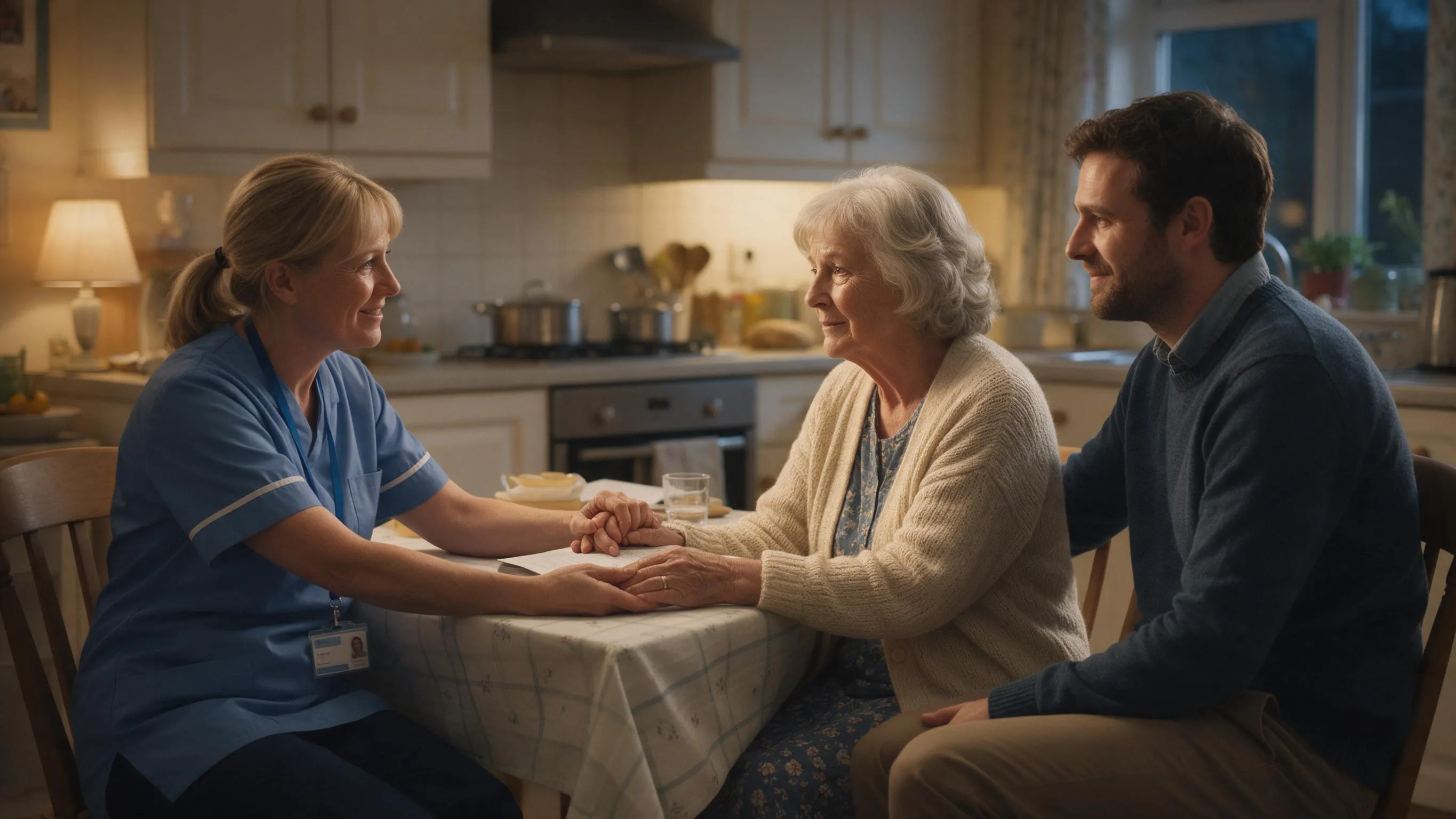
If someone has a rapidly deteriorating condition that may be entering a terminal phase, an “appropriate clinician” (a doctor or registered nurse responsible for their care, including hospice clinicians) can complete the Fast Track Pathway Tool instead. The ICB must accept a properly completed tool and arrange care urgently: this should not usually take more than 48 hours. There is no fixed life-expectancy limit, and “rapidly deteriorating” should not be read narrowly. Fast Track often makes it possible to come home from hospital or stay at home. See end-of-life care at home.
What to say to the ward or GP: “[Name]’s condition is deteriorating quickly and [they want] to be at home. Could you complete the Fast Track Pathway Tool for NHS Continuing Healthcare today, so that care can be arranged?”
What CHC pays for at home
- All the care and support in the CHC care plan, at no cost to the person.
- At home, people have a right to a personal health budget: NHS money that can be managed by the NHS, by a third party or as a direct payment for healthcare. It can pay a care agency, including for live-in care.
- The ICB considers the person’s wishes but can also weigh cost and value for money when deciding how to meet needs.
- The package cannot be “topped up”, but the person can pay separately for extra private services from different staff, such as hairdressing.
- Everyday living costs at home, such as food, rent or mortgage and household bills, are not covered.
If the answer is no: joint packages and nursing care
The ICB should still consider whether the NHS should pay for part of the care, alongside the council, as a joint package. In a care home with nursing, the NHS pays NHS-funded nursing care of £267.68 a week from April 2026, straight to the home, towards registered nursing care. The rest of the fee falls under the council’s means test; see Council funding for care.
Reviews
The first review should take place within three months of the decision, then at least every 12 months. Reviews check that the care still meets the person’s needs and whether they remain eligible. Eligibility can end if needs genuinely reduce, but the ICB must follow the proper process, and the same challenge route applies.
How to challenge a decision
- Local resolution. Write to the ICB’s CHC team within six months of the date on the decision letter. The decision letter should name the ICB; if it does not, the NHS website lists every integrated care board (link below). Expect an informal discussion first, then a formal meeting if needed.
- Independent review. If you are still unhappy, ask NHS England for an independent review panel within six months of the local resolution decision. Contact details are normally on the local resolution letter; otherwise NHS England’s contact centre is 0300 311 22 33 (Monday to Friday 9am to 5pm, Wednesday from 10am) or england.contactus@nhs.net. The panel has an independent chair; nobody needs a lawyer. The process typically takes three to six months.
- Ombudsman. If the decision is upheld and you still disagree, complain to the Public Service Ombudsman (formerly the Parliamentary and Health Service Ombudsman) on 0345 015 4033 (Monday to Thursday 9am to 4pm, Friday 8.30am to 12pm), normally within 12 months.
Template letter for local resolution: “Re: NHS Continuing Healthcare decision for [full name, date of birth, NHS number], letter dated [date]. I am writing to ask for this decision to be reviewed under your local resolution procedure. I disagree with the scoring of the following domains: [domain: scored X, should be Y, because…]. The assessment did not take into account [evidence, for example care charts showing two-person repositioning every two hours, incident reports, the GP’s letter]. I also believe the nature, complexity, intensity and unpredictability of [name]’s needs, taken together, show a primary health need. Please send me the completed Decision Support Tool and all evidence used, and arrange a meeting. I enclose [list].”
Claims for past care (previously unassessed periods)

If someone paid for care when they should have been considered for CHC, you can ask the ICB to assess that “previously unassessed period of care”. ICBs generally consider periods from 1 April 2012 onwards, and the current guidance sets no deadline for asking. The person, or someone with authority to act for them (such as an attorney, deputy or the executor of a deceased person’s estate), applies to the ICB, which collects care home, GP, hospital and social care records. You will usually have 28 days to return the forms and proof of authority. ICBs aim to finish within six months for claims of a year or less, and 12 months for longer claims. If the person was eligible, the costs are refunded with interest. A period that was already assessed is not a past-care claim; challenge it through the appeal route instead.
How to prepare evidence
- Keep a care diary for two to four weeks: every intervention, night disturbance, fall, choking episode, behaviour incident and medication change, with times and how many carers were needed.
- Ask the care provider for care notes, repositioning, fluid and food charts, behaviour charts and incident reports, and gather GP and hospital letters.
- Read the 12 domains in advance and write down real examples for each one.
- Attend the MDT meeting, bring someone to take notes, and ask the team to record any disagreement with a score before it moves on.
- Explain what would happen without skilled care: the risk, not just the task.
- Point out needs that are well managed only because of good care.
What to do next
- Ask the GP, district nurse, ward or social worker for a Checklist, or a Fast Track assessment if the person is deteriorating quickly, and ask for a copy.
- If you are acting for someone, ask them to sign the national consent form (published May 2026), or have the Lasting Power of Attorney or deputyship order ready.
- Start a care diary today and gather the records above.
- Confirm the date of the MDT meeting and prepare examples for each domain.
- When the decision letter arrives, note the six-month limit for asking for local resolution, and if the answer is no, ask about a joint package or NHS-funded nursing care.
- If the answer is yes, note the review dates: within three months, then yearly.
- If someone paid for care in the past that the NHS may have owed, ask the ICB about a past-care claim.
Background: the October 2026 forms and the latest figures
New versions of the Checklist, the Decision Support Tool and the Fast Track Pathway Tool were published on 20 October 2026, in standard and accessible versions (the Decision Support Tool guidance was updated again on 22 October). The eligibility rules, domains and thresholds have not changed, and the national framework (2022, revised in 2023) still applies. The forms are free to download from GOV.UK (see the sources below) if you want to read the domains before an assessment.
NHS England’s figures for April to June 2026 show how selective the full assessment is: of 13,001 standard full assessments, 2,295 people were found eligible (17.7%), and 67.4% of standard referrals were completed within 28 days. A further 27,892 people were found eligible through Fast Track, and 52,141 people in England were eligible at the end of June. Of 666 local resolution requests completed, 92 (13.8%) ended with the person found eligible. These figures are a reason to prepare carefully, not to give up.
How we can help
Day and Nightcare is a CQC-registered home care provider, rated Good, supporting people at home since 2008. We provide care funded by NHS Continuing Healthcare, by councils (including direct payments) and privately. Our fully managed live-in care is available anywhere in England from £1,550 a week, and 24-hour care with carers working in shifts can be arranged anywhere in England; home care visits, waking nights and sleep-ins are provided across Oxfordshire. For a free initial assessment and a written quote, call 01865 715780 or contact us.
Useful contacts and next steps
- NHS website: Find your local integrated care board. Lists every integrated care board in England, so you can find the CHC team to write to for a Checklist, an assessment or local resolution.
Common questions
Does a dementia diagnosis mean someone will qualify?
Not on its own. No diagnosis guarantees eligibility, and none rules it out. What matters is the care the person needs and how complex, intense and unpredictable it is. People with advanced dementia often have significant needs in the cognition, behaviour, communication, nutrition and mobility domains, and a priority-level need in behaviour can on its own indicate eligibility.
Do we need a solicitor or paid adviser?
No. People can apply and appeal on their own, and independent review panels do not need anyone to be legally represented. Free help is available: the NHS website points people to Beacon, an independent CHC advice service (0345 548 0300), and charities such as Independent Age (0800 319 6789) can explain the process. If you do consider a paid firm for an appeal or a past-care claim, check its fees carefully before signing.
The answer was no last year. Can we ask again?
Yes, if the person's needs have changed. The Checklist guidance says screening is not needed when someone was found not eligible and their needs have not changed, so explain clearly what is different now: new diagnoses, more falls, choking, pressure damage, distressed behaviour, more medication or more night-time care, and ask for a new Checklist. If you think last year's decision was wrong, that is an appeal, which normally has a six-month time limit.
Can a relative or friend be involved and see the paperwork?
Yes, with the person's written consent, or if you hold a health and welfare Lasting Power of Attorney or are their deputy. You can then take part and see the Checklist, the Decision Support Tool and the decision letter. Where the person lacks capacity and nobody holds that authority, a best interests decision is made about sharing information. Ask for copies of everything in writing.
Sources and further information
- GOV.UK: National framework for NHS continuing healthcare and NHS-funded nursing care (July 2022, revised)
- GOV.UK: NHS continuing healthcare decision support tool and guidance (October 2026)
- GOV.UK: NHS continuing healthcare checklist (October 2026)
- NHS.uk: NHS continuing healthcare
- GOV.UK: Requests for assessments of previously unassessed periods of care from 1 April 2012
- GOV.UK: Time limits for requests to review NHS continuing healthcare eligibility decisions
- GOV.UK: NHS-funded nursing care rates from April 2026
- NHS England: NHS Continuing Healthcare and NHS-funded Nursing Care statistics (Q1 2026/27)
Prepared by the Day and Nightcare care team. Last updated 30 October 2026; sources last checked 30 October 2026. This guide is general information about care in England, not financial, legal or medical advice.