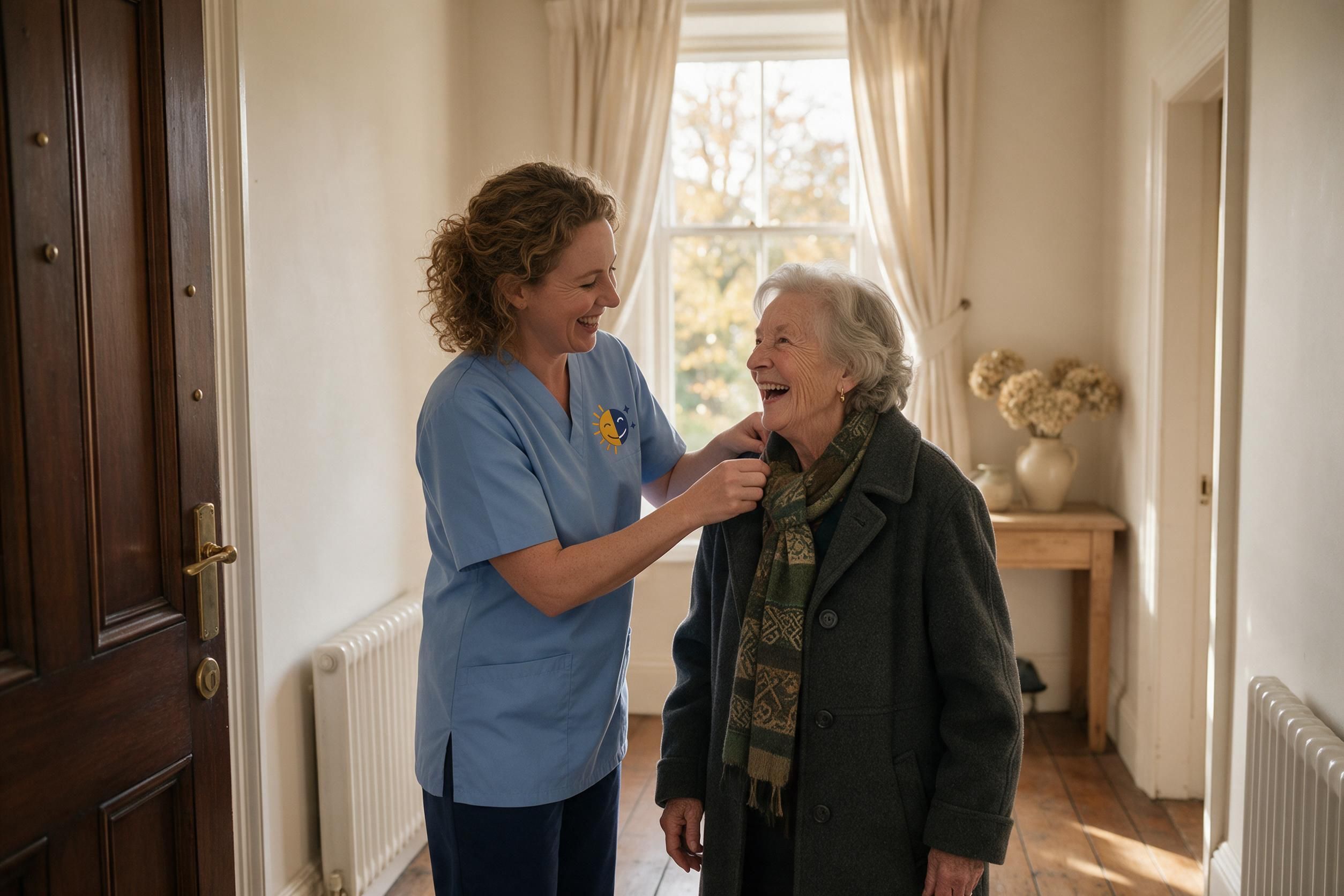
Start with the person, not the service
Before comparing types of care, it helps to picture an ordinary day and night for the person who needs support. Four questions point towards the right kind of care:
- When is help needed? At a few set times, such as getting up and going to bed, or at many unpredictable moments through the day?
- What about nights? Do they sleep through, need help once in a while, or need help most nights?
- Is it safe to be alone? For an hour, for a whole afternoon, or not at all?
- How many people are needed? Some moving and handling tasks need two trained carers.
A free care needs assessment from the council, and a provider’s own assessment, will look at the same questions. The answers often change over time, so the best care is the care that can change with them.
Visiting home care (domiciliary care)
Carers visit at agreed times to help with personal care, meals, medicines and getting out and about. Visits can be short, for example to check that someone has taken their tablets, or last several hours.
Visiting care suits people who manage well between visits and are safe on their own overnight. It is usually charged by the hour. As a guide, the Homecare Association recommends that councils pay at least £34.42 an hour in 2026/27, and people paying for their own care often pay more.
National guidance from NICE says visits shorter than half an hour should only be used when the carer is known to the person, the visit is part of a wider package of support, and there is enough time for the task, such as checking someone is safe and well. Ask how long each visit really is, and what happens if a carer runs late. See home care visits for how visiting care works with us.
Sitting and companionship services
A sitting or companionship service gives company, conversation, help with shopping or a trip out, or simply someone there so that a family carer can have a few hours off.
The law defines “personal care” as physical help with eating, drinking, toileting, washing, bathing, dressing, oral care and care of the skin, hair and nails, or prompting with supervision when someone cannot manage these alone. A service that offers only companionship or help around the house does not provide personal care, so it does not have to be registered with the Care Quality Commission (CQC). If personal care might be needed during a sit, choose a CQC-registered provider.
Night care: waking nights and sleep-ins
- Waking night: a carer stays awake all night, ready to help with turning, the toilet, medicines, or comfort for someone who is restless or confused. It suits people who need help several times a night.
- Sleep-in: a carer sleeps in the home and is woken only if needed. It suits people who rarely need help at night but should not be alone.
Night care can stand alone or sit alongside visits or live-in care. See night care for more.
Live-in care
A trained carer lives in the home and supports the person throughout the day, with a daily break and help at night when it has been planned. Live-in care suits people who need help at many points in the day, people living with dementia who feel safest at home, couples, and people who want one-to-one care without moving. It is priced by the week. Our complete guide to live-in care explains how it works.
24-hour care with shifts
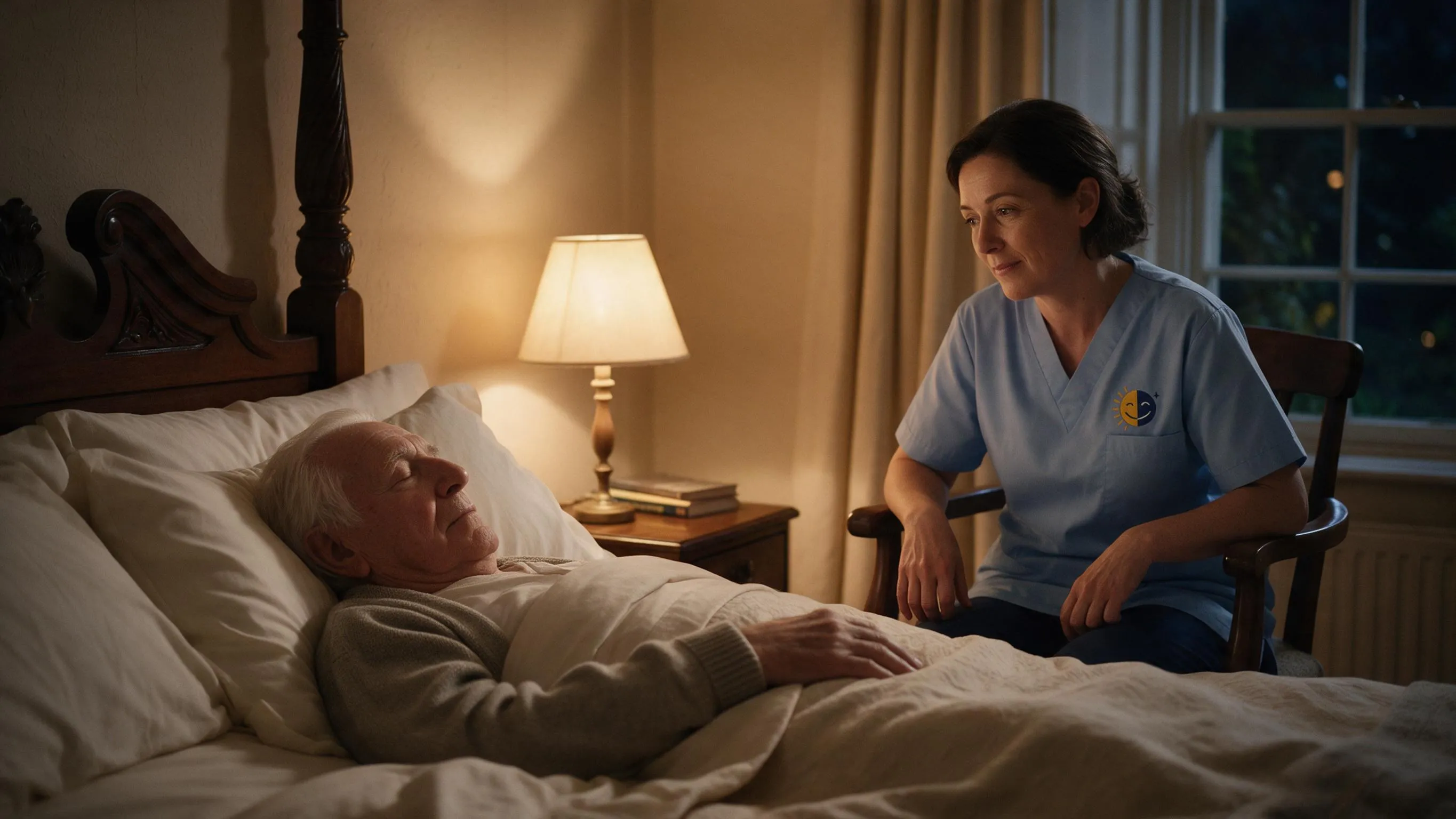
When someone needs help through the night as well as the day, a single live-in carer cannot safely do it all. The usual answers are a live-in carer with a waking night carer, or a team of carers working in shifts so that someone is always awake and working.
Shift-based 24-hour care is the most intensive kind of care at home and costs much more than live-in care, because every hour is paid as working time. It suits people with high needs at night, those who need two carers for moving and handling, and some people at the end of life.
Respite care
Respite care gives a family carer a break while the person they care for is looked after by someone else. It can be a few hours of sitting, a day centre, a short stay in a care home or a live-in carer for a week or two so the person stays at home with their routines. See respite live-in care.
Councils only fund respite for people they have assessed as needing it, so the person needing care should have a needs assessment and the family carer should ask for a carer’s assessment. More choices are in respite options.
Reablement and intermediate care
Reablement is short-term support at home to help someone regain skills and confidence after an illness, a fall or a hospital stay, for example washing, dressing and making a meal again. Intermediate care is a wider term for short-term recovery support, which may include therapy.
When the council provides intermediate care or reablement, it must be free for up to six weeks, whether or not the person has longer-term eligible needs. The aim is independence, so carers encourage the person to do things for themselves rather than doing things for them. See reablement and intermediate care.
Discharge to Assess (D2A)
Discharge to Assess means that once someone is medically ready to leave hospital, they go home (or to a short-term setting) with support, and their longer-term needs are assessed once they have had time to recover. National guidance describes four pathways:
- Pathway 0: home with no new care needs.
- Pathway 1: home with new or extra support, the most common route when help is needed.
- Pathway 2: a short stay in a community bed with recovery support.
- Pathway 3: a care home placement for people likely to need long-term care, used only in exceptional circumstances.
Funding during this period is arranged locally, so ask who is paying for the care, until when, and when the longer-term assessment will happen. See Discharge to Assess explained and care after a hospital stay.
Palliative and end-of-life care at home
Palliative care eases pain and other symptoms and supports wellbeing when an illness cannot be cured. Many people wish to die at home, and with the right support this is often possible. The GP, district nurses and local palliative or hospice teams lead the clinical care, while carers help with personal care, comfort, company and support for the family.
If health is deteriorating quickly, ask the GP or nurse about the NHS Continuing Healthcare Fast Track, which aims to put care in place quickly and is not means-tested. Read more about end-of-life care at home.
How to combine different types of care

Care at home works best as a package that fits the person, not a single product. Common combinations include:
- Visits plus family support: carers help mornings and evenings while family cover the rest.
- Visits plus a sleep-in: daytime visits with someone in the house overnight for reassurance.
- Live-in care plus waking nights: for someone who needs company all day and help through the night.
- Live-in care with break cover: a visiting carer or relative covers the live-in carer’s daily break.
- Reablement, then a smaller package: short-term help to recover, followed by visits if still needed.
- Respite blocks: a live-in carer for two weeks, a few times a year, so a family carer can rest.
| If the person… | Consider |
|---|---|
| Manages well between a few set times | Visiting home care |
| Is lonely or the family carer needs a few hours off | Sitting and companionship |
| Needs help at many times of day | Live-in care |
| Needs help most nights | Waking nights, or 24-hour care |
| Has just left hospital | Reablement or Discharge to Assess, then review |
How to arrange each type of care
| Type of care | Who to contact | Good to know |
|---|---|---|
| Visiting care, sitting, night care, live-in care | A CQC-registered provider directly, or the council if it may pay | Providers can usually assess within days |
| Respite | The council (after a needs assessment and carer’s assessment), or a provider directly | Book early for holidays and Christmas |
| Reablement | The hospital discharge team, or the council’s adult social care team | Free for up to six weeks when the council provides it |
| Discharge to Assess | The ward team or the hospital’s discharge (transfer of care) team | Arranged before the person leaves hospital |
| End-of-life care | The GP or district nurses | NHS Continuing Healthcare Fast Track usually puts care in place within 48 hours |
Keep a one-week care diary
A simple diary is the most useful thing you can bring to any assessment. For one week, note:
- each time help was needed, day and night, and what with;
- how long tasks took, and anything that caused pain, worry or a near-miss;
- falls, confusion, missed meals or missed medicines;
- what family and friends did to help, and when.
It turns “Mum manages, mostly” into a clear picture that assessors and providers can plan around.
Example email to the council
Subject: Request for a care needs assessment and a carer’s assessment
Dear Adult Social Care team, I am writing to ask for a care needs assessment for my father, [full name, date of birth, address], under the Care Act 2014. He is finding it hard to [wash, dress, cook, manage medicines] and has [condition]. He needs help [describe nights]. He agrees to this request and would like me to be involved. I also provide care for him and would like a carer’s assessment for myself. Please let me know when the assessment will take place and who will contact us. If you think his needs are urgent, please tell me what can be put in place in the meantime. Thank you, [name, relationship, phone number]
Find your council at gov.uk/find-local-council. For free, independent advice, call Age UK on 0800 678 1602 or Independent Age on 0800 319 6789.
Questions to ask about any type of care
- What will the care include, and what will the person still do for themselves?
- Who will come, and will it usually be the same people?
- What happens at night, at weekends and in an emergency?
- What does it cost, what is free or funded, and for how long?
- When will the care be reviewed, and how can it be increased or reduced?
What to do next
- Keep the one-week diary, then ask the council for a free care needs assessment and a carer’s assessment.
- If the person is in hospital, ask the ward which discharge pathway is planned, who will pay and until when.
- Check the help that is free or funded: reablement, equipment, Attendance Allowance and NHS Continuing Healthcare.
- Talk to providers about the mix of care, not just one service, and ask for a written quote.
- Agree a date to review the care after the first few weeks.
How we can help
Day and Nightcare provides fully managed live-in care anywhere in England, from £1,550 a week, and home care visits from one hour, waking nights and sleep-ins across Oxfordshire, and 24-hour care with carers working in shifts anywhere in England. Since 2014 we have provided Discharge to Assess care, and for several years we ran Oxfordshire’s Urgent Response service, so we understand how care at home fits together after a hospital stay. We work with people who fund their own care, councils (including direct payments) and NHS Continuing Healthcare. Call 01865 715780 to talk through the options and arrange a free initial assessment.
Common questions
What is the difference between home care and domiciliary care?
There is no difference: they are two names for the same thing. Domiciliary care, home care and homecare all mean paid carers helping someone in their own home, usually through visits at agreed times. Live-in care is also care at home, but it is usually described separately because the carer lives in the home rather than visiting. All providers who give personal care at home and manage their carers must be registered with the Care Quality Commission in England.
Is a sleep-in cheaper than a waking night?
Usually, yes. A sleep-in carer sleeps at the home and is only woken if needed, so it costs less than a waking night, where the carer stays awake and works all night. A sleep-in only works if the person rarely needs help at night. If they need help several times most nights, the carer cannot rest, and a waking night is the safer and fairer choice. Keep a simple night diary for a week or two to help decide.
Can care at home be increased or reduced later?
Yes. Care at home is flexible, and a good care plan is reviewed regularly and whenever needs change, for example after a fall, an illness or a hospital stay. If the council arranges or funds the care, ask for a review of the care and support plan. If you pay privately, talk to the provider and check the contract for any notice period before changes take effect.
Do I need a council assessment to arrange care at home?
No, if you are paying for the care yourself you can go straight to a provider. A council care needs assessment is still worth having: it is free, anyone can ask for one, and it gives a clear picture of needs that you can share with providers. You will need one if you want the council to contribute to the cost, or to fund respite care or a day centre.
Can we use different providers for different types of care?
Yes. Some families combine a visiting care agency with a day centre, or a live-in carer with a separate night service. It works best when everyone follows one shared care plan, there is a clear record of the care given each day, and one person, often a family member or the lead provider, keeps everyone in touch. Using one provider for several types of care can make this simpler.
Sources and further information
- NHS: Help at home from a paid carer
- NHS: Carers' breaks and respite care
- GOV.UK: Hospital discharge and community support guidance
- GOV.UK: Care and support statutory guidance (Care Act 2014)
- NICE: Home care, delivering personal care and practical support to older people (NG21)
- NHS: NHS continuing healthcare
- Which?: Paying for care at home
- Legislation.gov.uk: Health and Social Care Act 2008 (Regulated Activities) Regulations 2014, definition of personal care
Prepared by the Day and Nightcare care team. Last updated 30 October 2026; sources last checked 30 October 2026. This guide is general information about care in England, not financial, legal or medical advice.