
Who qualifies for Attendance Allowance
Attendance Allowance is paid by the Department for Work and Pensions (DWP) to people over State Pension age who need help because of a physical or mental health condition or a disability, including dementia, sight or hearing loss, and frailty.
To qualify, the person must:
- have reached State Pension age (younger people claim Personal Independence Payment instead);
- need help with personal care, such as washing, dressing, using the toilet, eating or taking medicines, or need someone to supervise them to keep them safe;
- have needed that help for at least six months (this does not apply under the end-of-life rules);
- normally live in Great Britain and have been here for at least two of the last three years, with some exceptions;
- not already get PIP or Disability Living Allowance.
It is based on the help the person needs, not the help they actually get, so someone struggling on alone can still qualify. No diagnosis is required, and income, savings and the value of the home make no difference. There is no mobility part, so difficulty walking on its own is not enough: the needs must relate to personal care or supervision.
The two rates for 2026/27
| Rate | Weekly amount | Roughly a year | When it is paid |
|---|---|---|---|
| Lower | £76.70 | £3,988 | Help or supervision during the day or at night |
| Higher | £114.60 | £5,959 | Help or supervision during the day and at night, or near the end of life |
“Day” needs mean frequent help with personal care through the day, or continual supervision to avoid danger. “Night” needs mean help more than once in the night or for a long stretch (often taken as 20 minutes or more), or someone needing to stay awake to watch over the person. The money is tax-free and can be spent however the person chooses, including on care.
How to claim, step by step
- Choose how to claim. Apply online through the Attendance Allowance page on GOV.UK; print the claim form and post it to Freepost DWP Attendance Allowance (write nothing else on the envelope; no stamp or postcode is needed); or phone the helpline for a paper form.
- Fix the start date. Attendance Allowance cannot be paid for any time before the claim. An online claim starts the day you make it and a posted form on the day DWP receives it. If you phone for a form, the claim starts on the day of your call, as long as the form is back within six weeks.
- Gather the documents in the checklist below.
- Fill in the form using the example wording below.
- Send it and keep a copy. Within three weeks DWP sends a text or letter saying when to expect a decision. The decision letter gives the rate, how long the award lasts (it can be ongoing or for a set period) and the first payment date.
Attendance Allowance helpline: 0800 731 0122, Monday to Friday, 8am to 6pm. If you cannot hear or speak on the phone, use Relay UK: 18001 then 0800 731 0122. Calls to 0800 numbers are free.
What to say when you call:
“Hello, I’d like to request an Attendance Allowance claim form for my mother, [full name], date of birth [date], National Insurance number [number]. Please could you confirm that her claim will start from today if we return the form within six weeks?”
If the person cannot manage their own affairs, someone with a registered Lasting Power of Attorney for property and financial affairs, or a DWP appointee, can claim for them. Most decisions are made on the form and evidence; a medical assessment is only arranged if the picture is unclear.
How to describe needs: example wording

The form is long and some questions feel repetitive, but it is the main evidence the decision maker sees. Be honest and complete: describe bad days as well as typical ones, and never exaggerate. Older people often play down their difficulties, so fill it in together. These examples show the level of detail that helps:
Washing: “I cannot get in or out of the bath safely and have fallen twice this year. My daughter helps me wash at the sink every morning, which takes about 30 minutes. On bad days, around four a week, I would not wash at all without her.”
Medicines and supervision (dementia): “Mum has Alzheimer’s disease. She cannot remember whether she has taken her tablets and last month took a double dose. Someone has to give her each dose, four times a day. She has left the gas on twice, so she cannot safely be left alone in the kitchen.”
Nights: “Dad needs the toilet two or three times every night. He is unsteady and confused when he wakes, so someone helps him there and back, about 15 minutes each time. Before we started, he fell in the night and lay on the floor until morning.”
Dressing: “Because of arthritis in my hands I cannot do buttons, zips or shoes, or put on socks. It takes me over 40 minutes to dress and I am exhausted afterwards. I need help every morning and evening.”
Other tips:
- Write about need, not current help: “she needs someone there” even if nobody is there now.
- Say how often, how long, and what goes wrong without help.
- Count prompting and supervision: reminders to eat, drink, take medicines or change clothes.
- Mention what has been given up, such as baths, cooking or going out alone.
- Keep a diary for a week before writing, including nights.
- Ask someone who knows the person well to complete the statement section.
- Do not miss the six-week window waiting for letters: send what you have and post further evidence later, with the person’s full name, date of birth and National Insurance number on every page.
Special rules for end of life
If a doctor, nurse or other healthcare professional has said the person might have 12 months or less to live, they can claim under the special rules. The higher rate of £114.60 a week is paid automatically, with no six-month wait and no assessment, and the claim is dealt with quickly. Anyone can claim on their behalf, without their permission, and the award letter does not mention the special rules.
Ask the healthcare professional for form SR1, which they can give to you or send straight to DWP, then claim online, by post or through the helpline, saying: “I’m calling to make a claim under the special rules for end of life.” If the person already gets the lower rate and their outlook changes, call the helpline to ask for the higher rate. See our guide to planning end-of-life care at home, including NHS Continuing Healthcare Fast Track funding.
What Attendance Allowance does and does not affect
It does not reduce the State Pension or other benefits, is not taxed and does not depend on savings. It can:
- increase Pension Credit, Housing Benefit and Council Tax Reduction, or bring someone into Pension Credit for the first time;
- allow a family member who provides at least 35 hours of care a week to claim Carer’s Allowance;
- count as the qualifying benefit for the Council Tax discount for severe mental impairment;
- qualify the person for a Disabled Persons Railcard.
It stops after 28 days in hospital, and after 28 days in a care home paid for by the council or the NHS. It continues for people who pay their own care home fees and for anyone cared for at home, including live-in care. Report hospital stays and moves to the helpline straight away.
How it works with Pension Credit and council charging
Pension Credit. With Attendance Allowance, Pension Credit can include an extra amount for severe disability of up to £86.05 a week in 2026/27. Broadly, the person must live alone or be treated as living alone, and nobody can be paid Carer’s Allowance (or the Universal Credit carer element) for looking after them. Some people in the household are ignored, such as another adult who also gets a disability benefit; if there is a live-in carer, ask an adviser how the rule applies. Because this raises the income the person is entitled to, someone just over the Pension Credit limit may now qualify. Call the Pension Service on 0800 99 1234 (Monday to Friday, 8am to 6pm) as soon as the award letter arrives. See other benefits and help for older people.
Council charging. If the council arranges and helps to pay for care at home, its financial assessment can count Attendance Allowance as income. It must still leave the person with at least the minimum income guarantee (£241.45 a week for a single person over Pension Credit age in 2026/27) and allow for disability-related costs it is not meeting, such as extra heating, laundry, a community alarm or privately arranged care. Some councils ignore the difference between the higher and lower rates when they provide no night care, so ask for the charging policy. See council funding for care. People who fund their own care keep the whole allowance.
How to challenge a decision
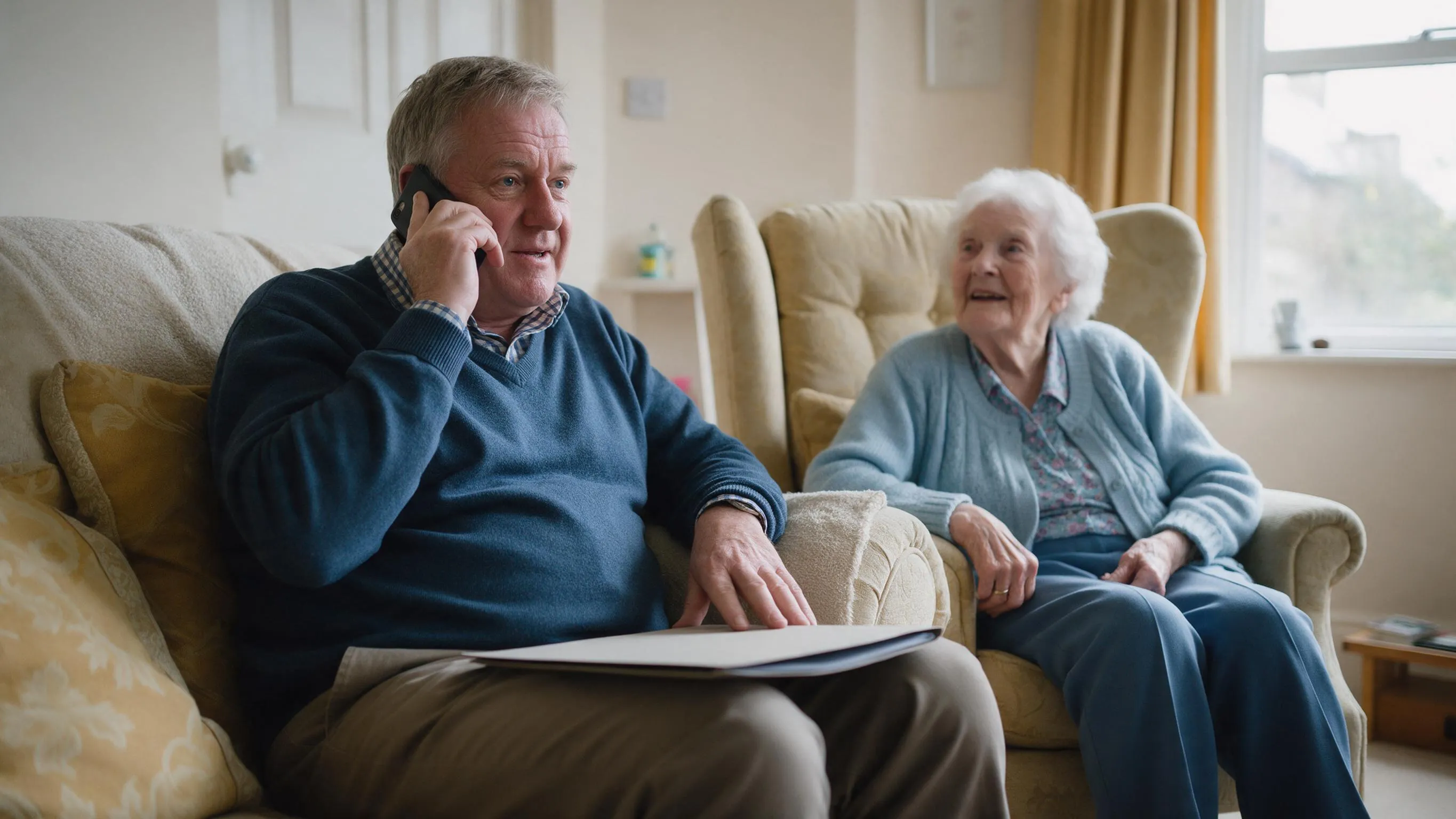
- Ask for a mandatory reconsideration within one month of the date on the decision letter, by phoning the number on the letter or writing to the office that made the decision. A late request can be accepted for a good reason, such as a hospital stay or bereavement. The whole award is looked at again, so it could go down as well as up; get advice first if the person already has the lower rate.
- Wait for the mandatory reconsideration notice, which says whether the decision has changed and why.
- Appeal to the independent tribunal (Social Security and Child Support) within one month of that notice, online or on form SSCS1. It is free and you can choose whether to attend. Appeals usually take at least six months to be heard.
Free help is available from Age UK, Independent Age and Citizens Advice. A letter you can adapt:
[Name], [address]. National Insurance number: [number]. Date of birth: [date].
Request for mandatory reconsideration: Attendance Allowance
I am asking for a mandatory reconsideration of the decision dated [date] to [refuse Attendance Allowance / award the lower rate]. I believe the decision is wrong because it does not reflect the help I need [at night / with personal care / to stay safe]. In particular: [for example, I need help to the toilet two or three times every night and have fallen twice in the past month when trying to go alone]. I enclose [a letter from Dr … dated …, a one-week care diary and my medication list], which I have not sent before. Please award [the higher rate].
Yours faithfully, [signature]. [If writing for someone else: “I am writing as [name]’s attorney under a registered Lasting Power of Attorney.”]
If needs increase later, for example when night-time help begins, ask DWP to look at the award again rather than starting a new claim.
Your Attendance Allowance checklist
- National Insurance number, address and phone number
- GP surgery name and address
- Up-to-date list of medicines
- Names of the consultant, specialist nurse, memory clinic or occupational therapist
- Copies of recent letters, any care plan and a record of falls
- A one-week diary of help needed, day and night
- Dates of any hospital, hospice or care home stays
- Bank or building society details
- Lasting Power of Attorney or appointee details, if claiming for someone else
- Form returned within six weeks, with a copy kept
- After the award: Pension Credit, Council Tax discounts and Carer’s Allowance checked
What to do next
- Check the person is over State Pension age and has needed help for six months, or may have 12 months or less to live.
- Phone 0800 731 0122 for a form, or apply online, to fix the start date.
- Keep a diary and gather the documents above.
- Return the form within six weeks, then check the other help it unlocks.
How we can help
Attendance Allowance can go towards the cost of care from any provider. Day and Nightcare is a CQC-registered home care provider, rated Good, supporting people at home since 2008. We provide fully managed live-in care anywhere in England from £1,550 a week, and home care visits, waking nights and sleep-ins across Oxfordshire, funded privately, by councils (including direct payments) or by NHS Continuing Healthcare. Call us on 01865 715780 to arrange a free initial assessment and a written quote.
Common questions
Can you get Attendance Allowance if you have savings or a good pension?
Yes. Attendance Allowance is not means-tested, so income, savings, pensions and the value of the home make no difference. It depends only on the help a person needs because of an illness or disability. It is tax-free and does not reduce the State Pension. Many people who pay for their own care qualify and use the money towards the cost of that care.
Does Attendance Allowance stop if someone has live-in care?
No. Attendance Allowance carries on while a person is cared for in their own home, including live-in care, whether they pay for it themselves or the council helps to fund it. It stops only after 28 days in hospital, or after 28 days in a care home that the council or the NHS is paying for. People who pay their own care home fees keep it.
Can you get Attendance Allowance for dementia?
Yes. People with dementia often qualify because they need prompting, supervision or someone to keep them safe, even when they can still manage tasks physically. On the form, describe the risks: forgetting to eat or take medicines, leaving the cooker on, getting lost, or being awake and confused at night. Night-time supervision can mean the higher rate. An award can also help the person qualify for a Council Tax discount for severe mental impairment.
Can Attendance Allowance be backdated?
Generally no. Payment can only start from the date of the claim, and only once the six-month qualifying period has been met. If you phone 0800 731 0122 for a claim form, the claim is treated as starting on the day of your call, as long as the completed form is returned within six weeks. It is worth calling as soon as you think someone might qualify, then taking your time over the answers.
Can I claim Attendance Allowance for my mum or dad?
You can help them claim, and you can make the claim for them if you hold a registered Lasting Power of Attorney for property and financial affairs or have been made their DWP appointee. If the person can understand the claim, they should sign it themselves, but you can help write the answers. Under the special rules for end of life, anyone can make the claim on their behalf, without needing their permission.
Does Attendance Allowance count as income when the council charges for care?
It can. If the council arranges care at home, its financial assessment can include Attendance Allowance as income. But the council must leave the person with at least the minimum income guarantee and must allow for disability-related costs that its own services do not cover. Some councils also ignore the night-time part of the higher rate when they are not paying for any night care. Ask for the council's charging policy and a full disability-related expenditure assessment.
Sources and further information
- GOV.UK: Attendance Allowance
- GOV.UK: Benefit and pension rates 2026 to 2027
- GOV.UK: Disability benefits helplines
- GOV.UK: Pension Credit, what you'll get
- GOV.UK: Social care charging for care and support 2026 to 2027 (local authority circular)
- GOV.UK: How to ask for mandatory reconsideration
- GOV.UK: Appeal a benefit decision
- Independent Age: Attendance Allowance
Prepared by the Day and Nightcare care team. Last updated 30 October 2026; sources last checked 30 October 2026. This guide is general information about care in England, not financial, legal or medical advice.