
Care at home is often paid for from several sources at once. The NHS, the council and the benefits system each have their own rules, and families regularly miss help simply because nobody mentioned it. The figures here are for 2026/27 in England; in Scotland, Wales and Northern Ireland the rules differ.
Key figures for 2026/27
| Help | 2026/27 amount | Good to know |
|---|---|---|
| Attendance Allowance | £76.70 or £114.60 a week | State Pension age and over; not means-tested |
| PIP daily living / mobility | £76.70 or £114.60 / £30.30 or £80.00 a week | New claims usually under State Pension age |
| Pension Credit | Tops income up to £238.00 (single) or £363.25 (couple) a week | Extra £86.05 for severe disability, £48.15 for carers |
| Carer’s Allowance | £86.45 a week | Earnings limit £204 a week |
| Council capital limits | £23,250 upper, £14,250 lower | The home is not counted for care at home |
| Minimum income guarantee | £241.45 a week | Single person over Pension Credit age |
| Disabled Facilities Grant | Up to £30,000 | Means-tested for adults |
| NHS-funded nursing care | £267.68 a week | Nursing homes only |
Could the NHS pay for all of it?
NHS Continuing Healthcare (CHC) is care arranged and paid for entirely by the NHS for adults whose needs are mainly health needs. It is not means-tested and can pay for care at home, including live-in care. It depends on needs, not on a diagnosis.
- Ask the GP, district nurse, hospital team or social worker for the CHC Checklist, a short screening tool (wording below). A positive result leads to a full assessment, and the integrated care board (ICB) should normally decide within 28 days.
- If someone is deteriorating quickly and may be nearing the end of life, ask for the Fast Track Pathway Tool. Care should usually be arranged within 48 hours.
- If the answer is no, you can ask the ICB to look again, usually within six months of the decision letter, and then ask NHS England for an independent review.
- If someone paid for care when they should have been assessed, you can ask the ICB to look at that past period (from 1 April 2012). Refunds include interest.
Two further NHS routes: after-care under section 117 of the Mental Health Act must be free, and in a nursing home the NHS pays £267.68 a week towards nursing. See NHS Continuing Healthcare.
Will the council help? The care needs assessment
Anyone who appears to need care can ask the council for a free care needs assessment, whatever their income or savings. Contact the adult social care team at the council where the person lives; if you are not sure which council that is, GOV.UK’s “find your local council” tool tells you from a postcode (link below). If needs are eligible, a financial assessment works out the weekly charge. For care at home:
- The home they live in is not counted.
- Savings over £23,250: the person usually pays the full cost, but the council must still arrange care if asked.
- Between £14,250 and £23,250: £1 a week is added to income for every £250 of savings (“tariff income”).
- After paying the charge and housing costs such as rent and council tax, the person must keep at least the minimum income guarantee.
Councils can be more generous than these minimums, and some cap weekly charges. See Council funding for care.
Make sure the financial assessment counts everything
- Disability-related expenditure (DRE). Where disability benefits are counted as income, the council should let the person keep enough to pay the extra costs of their disability: a community alarm, above-average heating or water, extra laundry and bedding, a special diet, privately paid cleaning or gardening, equipment repairs, extra transport, and any care or respite the council does not arrange. Keep receipts and list everything.
- Night-time care. If the person gets the higher rate of Attendance Allowance but the council funds only daytime care, ask how its charging policy treats the night-time part. Some councils ignore it; otherwise, night care you pay for privately can be claimed as DRE.
- Income that must be ignored: earnings, the mobility part of PIP or DLA, Pension Credit savings credit, and War Pension Scheme payments to veterans (except Constant Attendance Allowance).
- Couples: only the person receiving care is assessed. A partner’s own money is not counted.
Free care after hospital and free equipment
- Reablement and intermediate care must be free for up to six weeks, whether or not the person has ongoing needs. If you are invoiced for this period, query it. See Reablement and intermediate care.
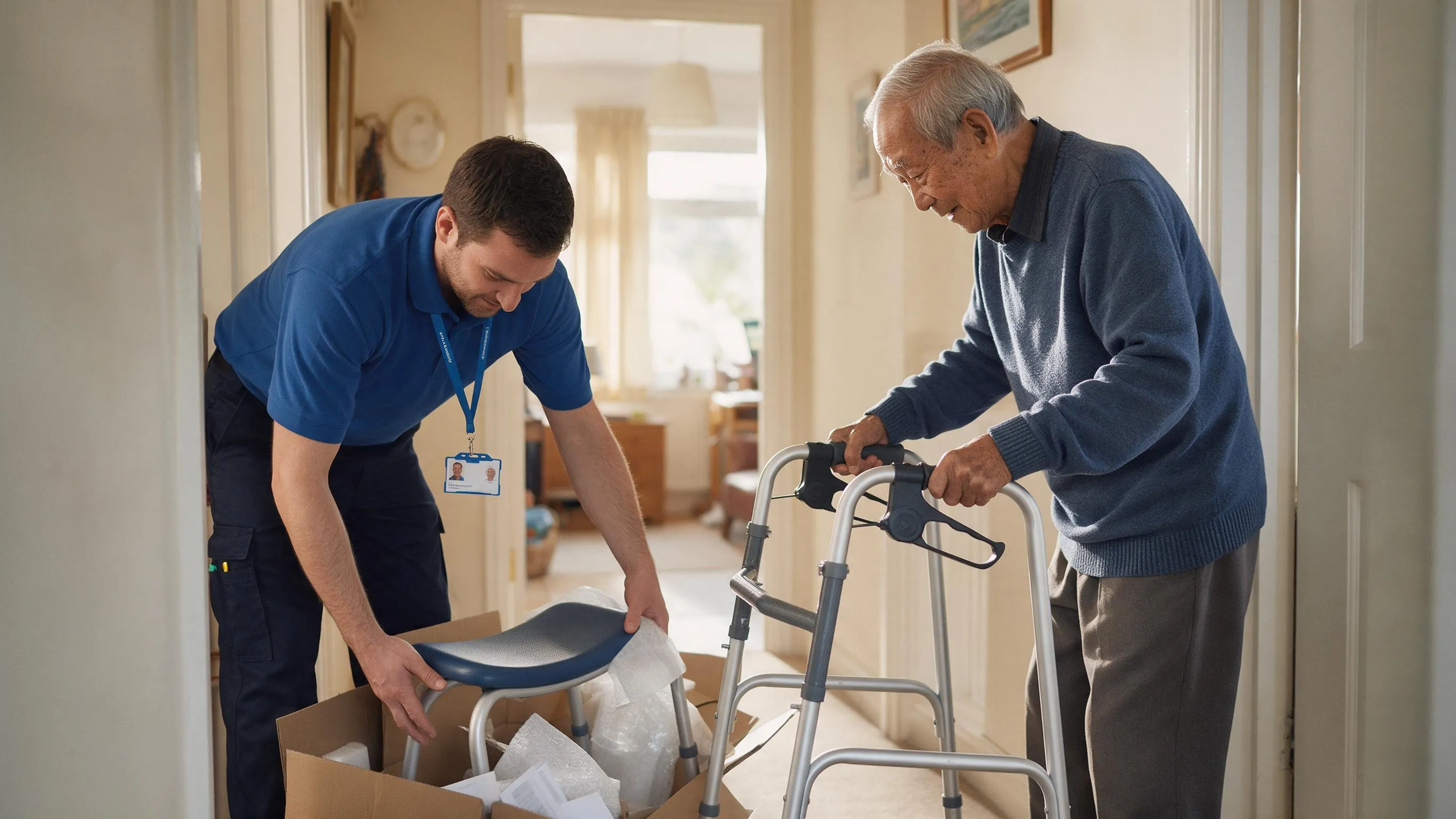
- Community equipment, such as a commode, perching stool or raised toilet seat, must be provided free, as must minor adaptations costing £1,000 or less, such as grab rails. Ask the council’s adult social care team for an occupational therapy assessment.
- Disabled Facilities Grant: up to £30,000 for larger work such as a level-access shower or stairlift, applied for through the council. It is means-tested for adults, the council must decide within six months, and it does not affect benefits. Do not start work until the grant is approved.
- VAT relief: a disabled person or someone with a long-term illness pays no VAT on equipment designed for disabled people for their own use, such as adjustable beds and stairlifts, and on some building work such as ramps. Tell the supplier before you buy: you confirm eligibility in writing, and they may give you a form for this. Age alone does not qualify.
See Equipment and home adaptations.
Claim the benefits that are not means-tested
- Attendance Allowance (State Pension age and over): £76.70 a week for help by day or supervision at night; £114.60 for help day and night, or if a doctor or nurse says the person is nearing the end of life. Payment starts from the claim date, not before, so call 0800 731 0122 for a form as soon as needs begin: the claim counts from the day you call if the form is back within six weeks.
- Personal Independence Payment for people under State Pension age: daily living £76.70 or £114.60, mobility £30.30 or £80.00 a week. Start a claim on 0800 917 2222.
See Attendance Allowance and PIP.
Check Pension Credit and what it unlocks
Pension Credit tops weekly income up to £238.00 for a single person or £363.25 for a couple. People who get Attendance Allowance may receive an extra £86.05 a week, and carers an extra £48.15. Savings up to £10,000 are ignored; above that, every £500 counts as £1 a week of income. Owning a home does not stop a claim, and it can be backdated three months. Claim on 0800 99 1234.
It can open the door to Housing Benefit, Council Tax Reduction, a free TV licence at 75 or over, help with NHS dental treatment, glasses and hospital travel, Cold Weather Payments and the Warm Home Discount.
One trap: the extra severe disability amount stops if someone is paid Carer’s Allowance for looking after the person, and other adults living in the home can affect it too. Get a benefits check first. See Other benefits and help for older people.
Reduce the council tax bill
Apply to the council that sends the bill:
- Severe mental impairment: someone with dementia or another severe mental impairment, certified by a doctor and receiving a qualifying benefit such as Attendance Allowance, is ignored for council tax. Living alone, they pay nothing; if everyone else in the home is also ignored, such as an eligible live-in carer, the bill is halved; with one other adult, 25% comes off.
- Disabled Band Reduction: an extra bathroom, kitchen or room needed by a disabled person, or extra wheelchair space, drops the bill by one band (17% off in Band A).
- Live-in carers looking after someone who is not their partner, spouse or child under 18 can be ignored, so a discount may still apply.
See Council tax discounts for care.
Support for family carers
- Carer’s Allowance: £86.45 a week for caring at least 35 hours a week. It cannot be paid in full alongside a State Pension, but claiming can still increase Pension Credit. It can be backdated three months. Call 0800 731 0297.
- Carer’s assessment: free from the council for any carer. It can lead to breaks, practical help or a direct payment. If replacement care is charged for, the person cared for pays, not the carer.
See Carer’s Allowance, Carer’s assessment and live-in respite care.
Ways to make care at home cost less

- Direct payments give control over the council’s share, including choosing a managed live-in care agency. See Direct payments and personal budgets.
- Couples can share one carer where one person can safely meet both people’s needs. See live-in care for couples.
- Mix paid care with family help. Family might cover some days, or visiting home care may be enough until needs grow.
- Be honest about alternatives. For someone who needs two carers around the clock, a nursing home may cost less and suit them well. See Live-in care vs a care home.
Common mistakes that cost families money
- Delaying an Attendance Allowance claim: it is not backdated.
- Paying for care for months before asking for a CHC Checklist.
- Assuming the house counts for care at home. It does not.
- Leaving disability-related costs off the financial assessment form.
- Giving money away once care is foreseeable: the council can treat it as still owned.
- Starting adaptations before a grant is approved.
Who to call: numbers and opening hours
Checked on the official pages on 30 October 2026. For the DWP lines, Relay UK users dial 18001 first.
| Who | Number | Open |
|---|---|---|
| Attendance Allowance helpline | 0800 731 0122 | Mon to Fri, 8am to 6pm |
| PIP new claims | 0800 917 2222 | Mon to Fri, 8am to 5pm |
| Pension Credit (Pension Service) | 0800 99 1234 | Mon to Fri, 8am to 6pm |
| Carer’s Allowance Unit | 0800 731 0297 | Mon to Fri, 8am to 6pm |
| Citizens Advice Adviceline (England) | 0800 144 8848 | Usually Mon to Fri, 9am to 5pm |
| Independent Age helpline (free advice) | 0800 319 6789 | Mon to Fri, 8.30am to 5.30pm |
| Oxfordshire County Council social care | 01865 519800 | Mon to Thu 8.30am to 5pm, Fri 8.30am to 4pm |
For a free, anonymous benefits check online, GOV.UK lists three benefits calculators: entitledto, Turn2us and Policy in Practice (link below).
Wording you can use
Phoning the council: “I’d like to ask for a care needs assessment for [myself, or the person’s full name], [date of birth, address]. [I am / They are] struggling with [washing, getting to the toilet at night, remembering tablets] and [have fallen twice this month]. [If you are a family carer: I’m the main carer and would also like a carer’s assessment.] How long is the assessment likely to take, and could you send me your charging policy and financial assessment form?”
Emailing the GP surgery about CHC: “I’m writing about [full name, date of birth]. [Their / My] health needs have increased: [for example, frequent chest infections, choking risk, distressed behaviour at night]. Please could you or the community nursing team complete an NHS Continuing Healthcare Checklist and send it to the integrated care board, and send me a copy? [They agree to this / I hold their health and welfare Lasting Power of Attorney.]”
Documents to have ready
- National Insurance number, date of birth and bank details
- Benefit and pension award letters for this year
- Recent statements for every bank, building society and savings account
- Council tax bill, and rent or mortgage details
- Receipts or a list of disability-related costs
- GP and hospital contact details, and a list of medicines
- A one-week diary of help needed, by day and by night
- Lasting Power of Attorney or DWP appointee papers, if you act for them
What to do next
- Run a benefits calculator, then claim Attendance Allowance or PIP.
- If health needs are significant, ask the GP for an NHS Continuing Healthcare Checklist.
- Ask the council for a care needs assessment and a carer’s assessment.
- Gather the documents above for the financial assessment, including every disability-related cost.
- Apply for council tax discounts and, on a low income, Pension Credit.
- Ask for an occupational therapy assessment for equipment and adaptations.
- Before giving money away or using savings or property to pay for care, read Paying for care from savings and property and speak to a regulated adviser who specialises in later-life care.
How we can help
Day and Nightcare is a CQC-registered home care provider, rated Good, supporting people at home since 2008. We provide care funded privately, by councils (including direct payments) and by NHS Continuing Healthcare, and we are happy to talk through how care could fit the funding you have. Our fully managed live-in care is available anywhere in England from £1,550 a week, with a written quote after a free initial assessment. Call 01865 715780 or contact us.
Useful contacts and next steps
- GOV.UK: Find your local council. Enter the postcode where the person lives to find the council responsible for their adult social care, then use that council’s website or phone line to request a care needs assessment.
- GOV.UK: Benefits calculators. Links to the three free, anonymous calculators GOV.UK lists (entitledto, Turn2us and Policy in Practice), which estimate the benefits someone may be able to claim.
Common questions
Is live-in care cheaper than a care home?
It depends on the person's needs and on local care home fees. Live-in care is one weekly fee for one-to-one support at home, while a care home fee covers a room, meals and shared staff. For a couple, one live-in carer can sometimes support both people, which can compare well with two care home places. For someone who needs two carers day and night, a nursing home may cost less. The fairest test is to compare written quotes for the same level of care. Our fully managed live-in care starts from £1,550 a week.
Can we get any help with care costs if savings are over £23,250?
Yes. Savings make no difference to NHS Continuing Healthcare, Attendance Allowance, PIP, free reablement, free community equipment, council tax discounts or Carer's Allowance for a family carer. The council must still assess care needs, and for care at home it must arrange care if asked, although the person pays the full cost and may be charged an arrangement fee. Once savings fall to £23,250, the council can start to contribute, so contact it a few months before that point.
Can a family member be paid to provide care?
Sometimes. A direct payment can be used to pay a relative who lives elsewhere, but a close family member who lives in the same household can only be paid for care if the council decides it is necessary. A family carer may instead be able to claim Carer's Allowance of £86.45 a week if they care for at least 35 hours a week and earn £204 a week or less after tax, National Insurance and expenses. Check the effect on the cared-for person's Pension Credit first.
Do we have to pay for care while waiting for an NHS Continuing Healthcare decision?
Usually, yes, under whatever arrangement is already in place. The integrated care board (ICB) should normally make its decision within 28 days of receiving a positive Checklist. If it takes longer without a good reason and the person is then found eligible, the NHS should refund the care costs from day 29 until the date of the decision. Keep every invoice and a note of key dates in case you need to claim.
Will claiming Attendance Allowance just go straight to the council?
Rarely all of it, and it is almost always worth claiming. If the council arranges care at home, it can count Attendance Allowance as income, but it must leave the person with the minimum income guarantee and should allow for disability-related costs. The award can also unlock extra Pension Credit and council tax help, and a family carer may then qualify for Carer's Allowance. If the person pays for all their own care, the council takes none of it.
Sources and further information
- GOV.UK: Benefit and pension rates 2026 to 2027
- GOV.UK: Social care charging for care and support 2026 to 2027 (local authority circular)
- GOV.UK: Care and support statutory guidance
- GOV.UK: National framework for NHS continuing healthcare and NHS-funded nursing care
- GOV.UK: Pension Credit, what you'll get
- GOV.UK: Council Tax discounts for disabled people
- GOV.UK: Disabled Facilities Grants
- GOV.UK: VAT relief for disabled people
Prepared by the Day and Nightcare care team. Last updated 30 October 2026; sources last checked 30 October 2026. This guide is general information about care in England, not financial, legal or medical advice.