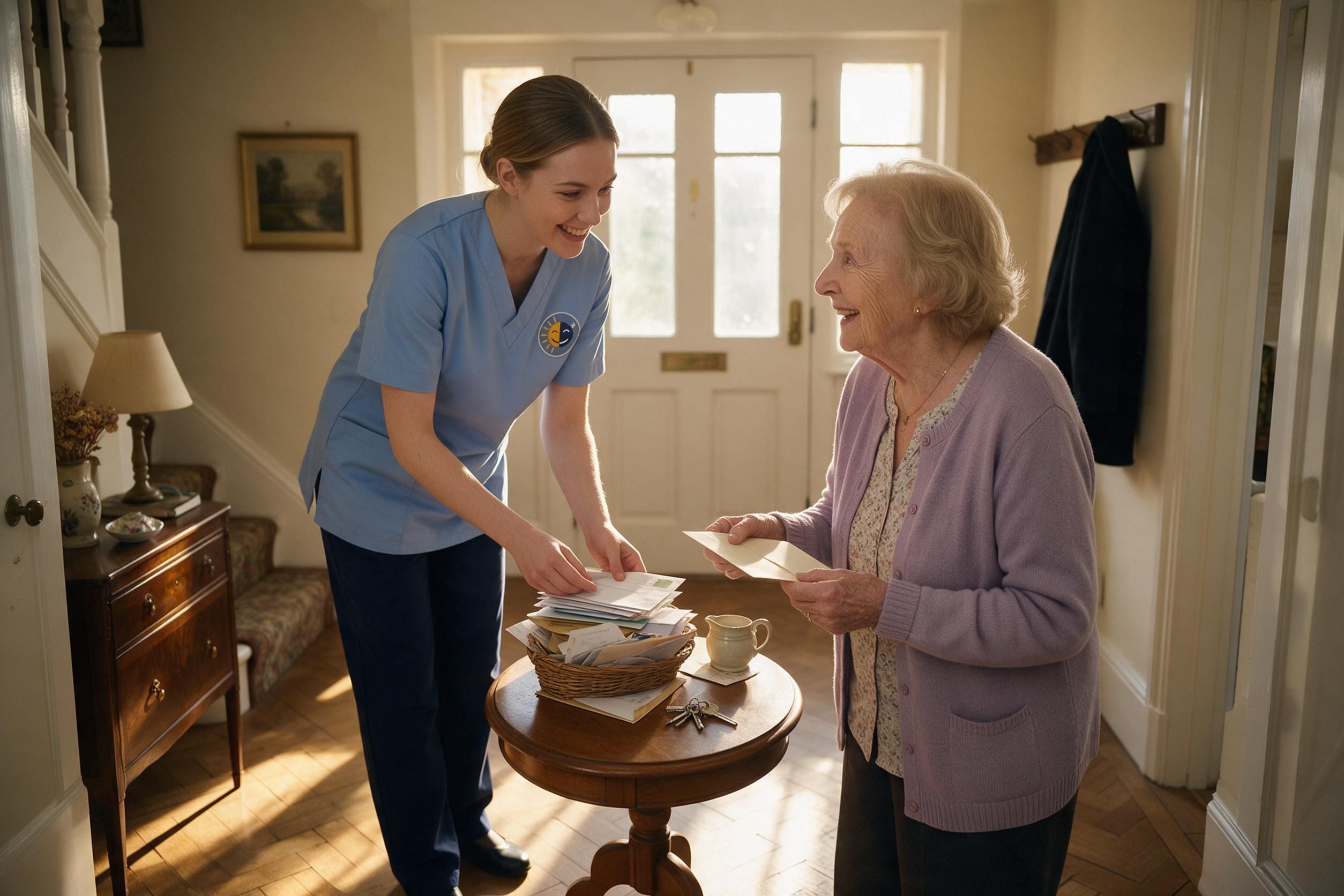
How Council Tax discounts work
A full Council Tax bill assumes at least two adults live in the home. If only one adult is counted, the bill is reduced by 25% (the single person discount). Some people are “disregarded”, which means they are not counted at all, even though they live there. If everyone in the home is disregarded, the discount is usually 50%, and in some cases there is no bill.
None of these discounts is applied automatically. The bill payer, or someone acting for them, has to apply to the council that sends the bill. In England that is the district, borough, city or unitary council, not the county council. Its phone number and address are on the bill.
The severe mental impairment disregard: who qualifies
This is the discount families most often miss. In law, a person is severely mentally impaired if they have a severe impairment of intelligence and social functioning, however it is caused, which appears to be permanent. It commonly applies to people living with:
- dementia, including Alzheimer’s disease and vascular dementia;
- Parkinson’s disease with dementia, or significant cognitive problems after a stroke;
- a severe learning disability or brain injury.
Two conditions must both be met:
- A doctor’s confirmation. A registered medical practitioner, usually the GP or a consultant, signs the council’s form or a letter confirming the impairment.
- A qualifying benefit. The person must be entitled to one of a list of benefits. The ones most relevant to older people are Attendance Allowance (either rate), the daily living part of PIP (either rate) and the middle or highest care rate of Disability Living Allowance. Certain other disability and incapacity benefits also count; the council can confirm.
If the person does not yet get a qualifying benefit, claim Attendance Allowance first. The person does not need to be the one who pays the bill.
How much the discount is worth
- They live alone: no Council Tax at all. Visits from carers or family do not change this.
- They live only with others who are also severely mentally impaired, or with full-time students: no Council Tax.
- They live with one other adult who is not disregarded, such as a husband or wife: 25% off.
- Everyone else living there is disregarded, for example a qualifying carer: 50% off.
On a bill of £2,000 a year, for example, 25% off is worth £500 a year, 50% off is worth £1,000, and an exemption is worth the whole bill.
Carers who live in and the single person discount
Some carers who live in the home are also disregarded. A carer is not counted if they:
- live in the same home as the person they care for;
- provide care for at least 35 hours a week on average;
- care for someone entitled to Attendance Allowance, PIP daily living, the middle or highest care rate of DLA, or certain similar benefits;
- are not the person’s husband, wife or partner, or the parent of a child under 18 they care for.
So an adult son or daughter who moves in to care for a parent can be disregarded, and a parent who lived alone keeps the 25% single person discount. Some council websites still say the person must get the higher rate of Attendance Allowance; since 2013 the rules in England accept either rate.
For paid live-in care, a care worker who works on a rota and has their own home elsewhere is not normally treated as a resident at all. If a care worker’s main home is with you, they can be disregarded under the carer rule above, and a separate rule covers low-paid care workers placed by a council or charity. Either way, a live-in carer should not usually cost you a discount, but tell the council about the arrangement and ask it to confirm.
If a paid live-in carer moves in: what happens to the bill
Families often worry that a live-in carer will cost them a discount. Usually it does not, but the answer turns on one question: is the carer “resident”? For Council Tax, a resident is an adult whose sole or main home is the property.
- A care worker on a rota who keeps their own home elsewhere is usually not resident, so they are not counted at all. A single person discount, a severe mental impairment discount or an exemption normally carries on as before.
- A care worker whose main home is with you is resident, but can still be disregarded under the carer rule above if they give at least 35 hours of care a week to someone entitled to a qualifying benefit and are not that person’s partner. The law does not say the carer has to be unpaid. In February 2026 the government wrote to councils asking them to make sure their information on the carer disregard is accurate and up to date.
- The separate rule for paid care workers only covers carers provided through a council, a charity or another public body (or employed by the person after an introduction by a charity) who work at least 24 hours a week for £44 a week or less. It does not fit most agency live-in carers.
Take extra care when someone with dementia lives alone and pays no Council Tax at all. That exemption applies only while the home is lived in solely by people with a severe mental impairment (or with certain others, such as students). If a care worker becomes resident there, the exemption may end; if the care worker is disregarded, a 50% discount would usually apply instead. Councils can take different views on rota carers, so tell the council before the carer starts and ask for its decision in writing.
What to say to the council:
“My mother has dementia and is exempt from Council Tax under the severe mental impairment rules. From [date], live-in care workers from [care company] will stay with her on a rota of [two weeks on, two weeks off]. They keep their own homes elsewhere and are paid by the company. Please confirm in writing whether this changes her exemption or discount, and why.”
The Disabled Band Reduction Scheme
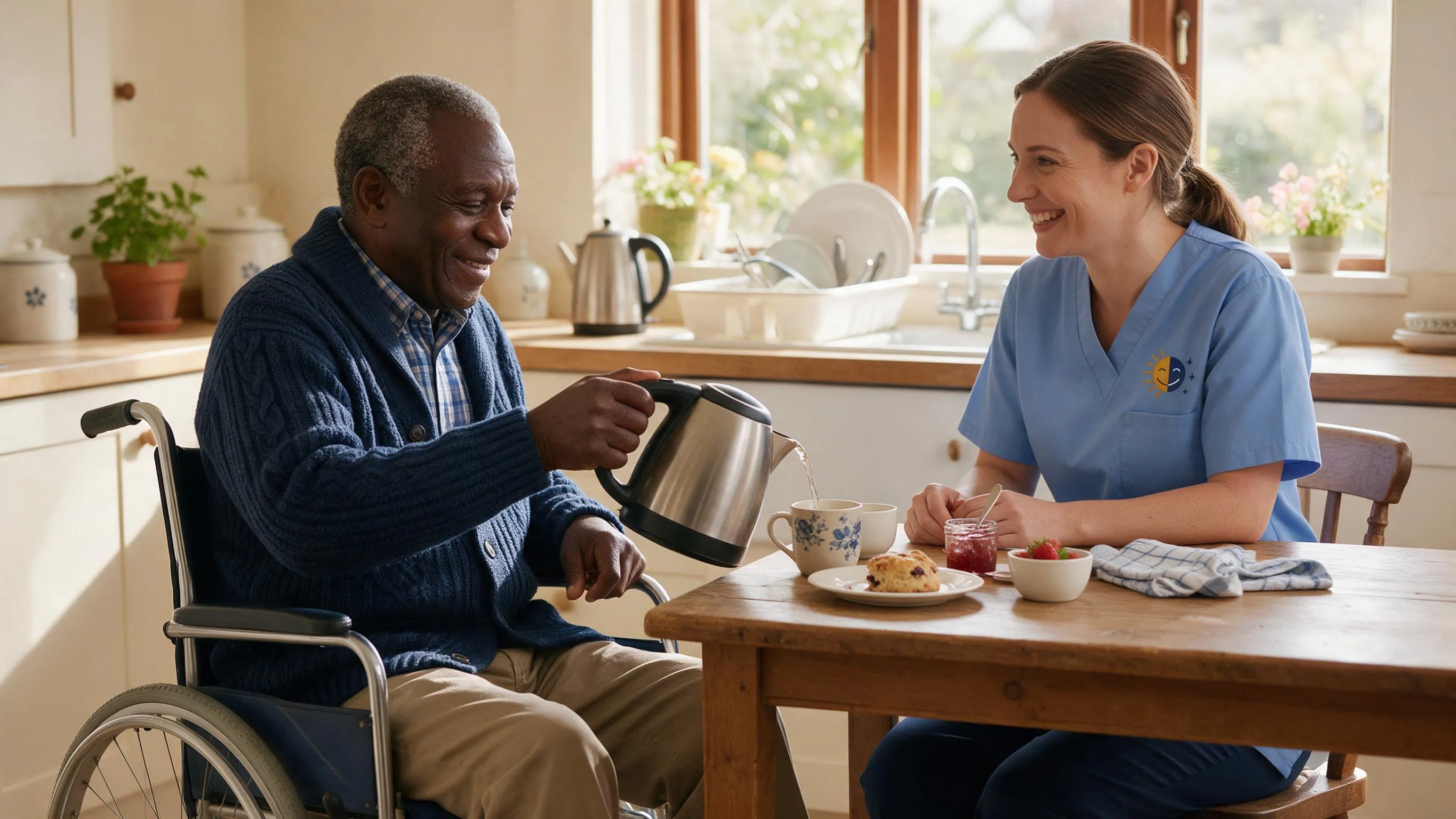
If a disabled adult or child lives in the home, and it has a feature they need, the bill can be charged at the next band down (Band D is charged as Band C, for example). Homes already in Band A get 17% off instead. The home must have one of these:
- an extra bathroom, kitchen or other room needed for the disabled person, such as a downstairs bedroom or a room for dialysis equipment;
- extra space inside for using a wheelchair.
It is not means-tested, the disabled person does not need to be the bill payer, and it can be combined with other discounts. The council may arrange a short visit to check. What to say when you call:
“I’d like to apply for the Disabled Band Reduction. My mother lives here and uses a wheelchair indoors, and we turned the dining room into her bedroom because she can no longer use the stairs. Could you send me the application form, and can it be backdated to when she moved in?”
Council Tax Reduction for low incomes
Council Tax Reduction (sometimes called Council Tax Support) can cut the bill by up to 100% for people on low incomes. For people over State Pension age, the rules are set nationally; someone who gets the Guarantee Credit part of Pension Credit can usually have the whole bill covered, less any deductions for other adults in the home. For working-age people, each council runs its own scheme. Disability and carer benefits can increase the amount, so claim Pension Credit and Carer’s Allowance where you can, and apply to the council separately.
If a home is left empty because of care
An empty home is usually exempt from Council Tax if the owner or tenant:
- has moved permanently into a care home or hospital;
- has moved elsewhere to receive care, for example to live with a son or daughter;
- has moved out to provide care for someone else.
After a death, an empty home is exempt until probate is granted and for up to six months afterwards. A self-contained annexe lived in by a dependent relative who is 65 or over, or disabled, is also exempt.
How to claim, step by step
- Find the council that sends the bill. In Oxfordshire, Council Tax is run by Cherwell District Council, Oxford City Council, South Oxfordshire District Council, Vale of White Horse District Council and West Oxfordshire District Council. On 29 October 2026 the government said it is minded to replace them with three new unitary councils from 1 April 2029, with a final decision expected by Christmas; until then, apply to your current council.
- Get the form. Search the council’s website for “discounts and exemptions” or “severe mental impairment”, or phone the number on the bill and ask for the form to be posted.
- Ask the doctor. For severe mental impairment, ask the GP or consultant to complete the medical section or write a short letter. Some GP practices charge for this.
- Gather proof of the qualifying benefit (the award letter) and any Lasting Power of Attorney.
- Send the form with a covering letter asking for backdating (see the letter below), and keep copies.
- Check the revised bill. Keep paying the current bill until it changes. If you hear nothing within a month, phone and ask.
Documents to have ready:
- Council Tax account number (on the bill) and the property address
- Names of everyone aged 18 or over who lives there, and any carers who stay
- The doctor’s completed form or letter
- The Attendance Allowance, PIP or DLA award letter, showing the start date
- Lasting Power of Attorney, if you are acting for the person
- For the Disabled Band Reduction: a description, or photos, of the room or space used
A letter to claim the severe mental impairment discount
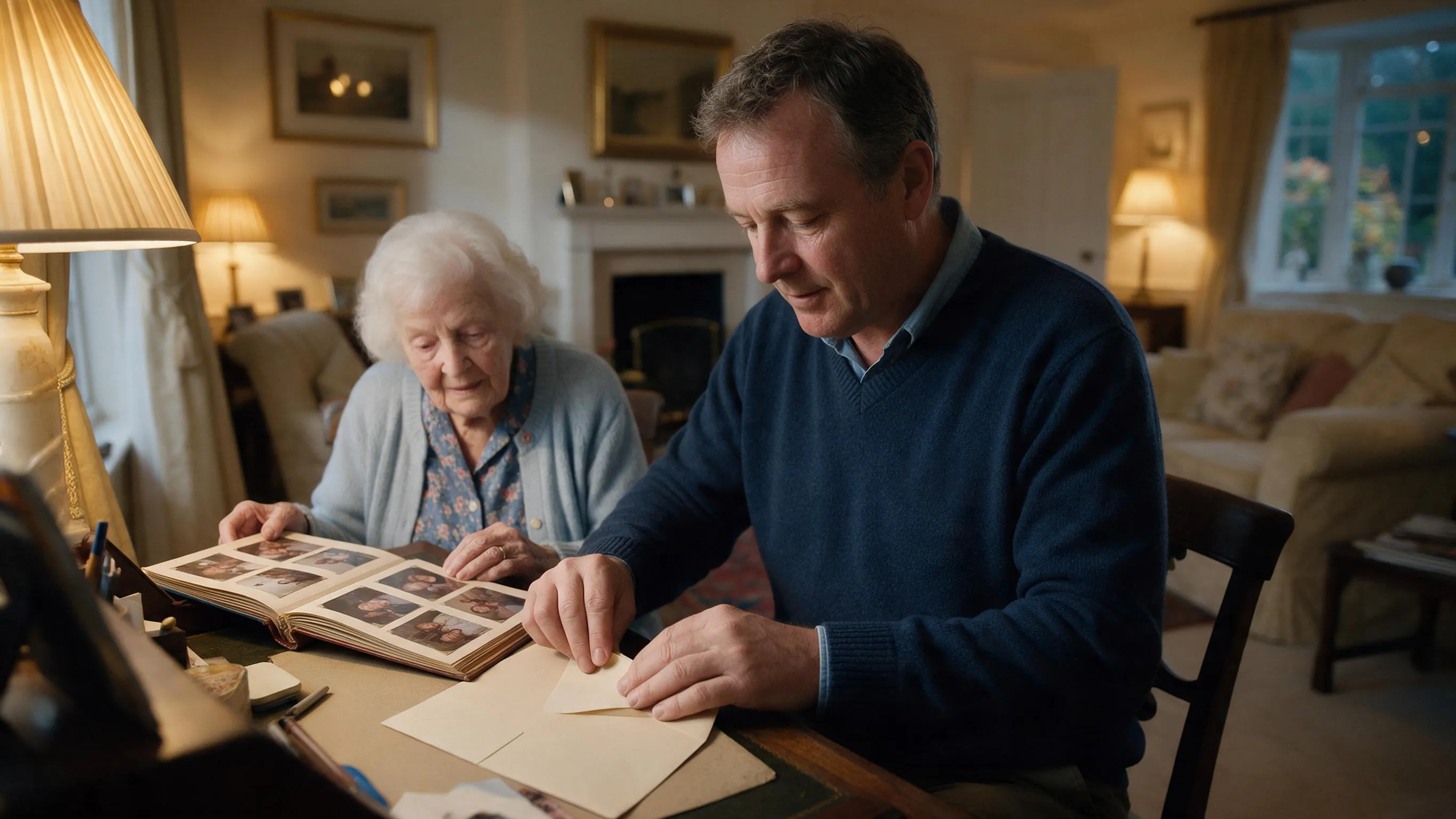
Council Tax section, [council name and address from the bill]
Account number: [number]. Property: [address]. Date: [date].
Application for Council Tax disregard: severe mental impairment
I am writing on behalf of [full name], who lives at the above address [and is the bill payer / with (name), who is the bill payer]. [Name] has [dementia / Alzheimer’s disease], and I believe they qualify to be disregarded as a severely mentally impaired person.
Medical confirmation: [Dr name] has confirmed the impairment, and their [certificate / completed form] is enclosed. Qualifying benefit: [name] has been entitled to [Attendance Allowance] since [date]; the award letter is enclosed. Household: [name] lives [alone / with (name), who is not disregarded / with (name), a carer who lives in].
Please apply the [exemption / discount] and backdate it to [date], when both conditions were first met, and send a revised bill [and refund any overpayment to (bank details or address)].
Yours faithfully, [name, relationship, phone number]. [I act under a registered Lasting Power of Attorney, copy enclosed.]
Backdating and challenging a decision
Discounts and exemptions are an entitlement, so if the conditions were met earlier, ask for the change to be backdated. For the severe mental impairment disregard, the discount can apply from the date both conditions were first met, but not before the qualifying benefit started; a 2021 High Court case (Brown v Hambleton District Council) confirmed this. Councils differ in how far back they go, and some will consider claims for past years after the person has died, through their estate.
If you disagree with the council:
- Write to the council explaining why the decision is wrong. It should reply within two months.
- If you are still unhappy, appeal free of charge to the Valuation Tribunal online, within two months of the council’s decision, or within four months of first writing to the council if it has not replied. Appeals currently take about nine months from start to decision, and hearings are currently held remotely.
What to do next
- Check whether anyone in the home has dementia or another severe impairment, a disability that needs extra space, or a carer who lives in.
- Claim Attendance Allowance or PIP first if it is not already in payment.
- Apply to the council using the checklist and letter above, asking for backdating.
- Tell the council about changes, such as a move into a care home or a death.
How we can help
Day and Nightcare is a CQC-registered home care provider, rated Good, supporting people at home since 2008. We provide home care visits, waking nights and sleep-ins across Oxfordshire, and 24-hour care with carers working in shifts anywhere in England, and fully managed live-in care anywhere in England from £1,550 a week, including live-in dementia care. Call us on 01865 715780 for a free initial assessment and a written quote.
Common questions
Does someone with dementia have to pay Council Tax?
Not if they live alone and qualify for the severe mental impairment disregard. They need a doctor to confirm the impairment and must be entitled to a qualifying benefit such as Attendance Allowance. If they live with one other adult who is not disregarded, such as a spouse, the household usually gets a 25% discount instead. Visits from carers do not change this. Councils do not apply it automatically, so you need to apply.
Will we lose the single person discount if a live-in carer moves in?
Usually not. A live-in care worker who works on a rota and keeps their own home elsewhere is not normally treated as living with you for Council Tax. A carer whose main home is with you, and who provides at least 35 hours of care a week to someone getting a qualifying disability benefit, can be disregarded. Either way, tell the council about the arrangement so it can confirm the position in writing.
Can a Council Tax discount for dementia be backdated?
Often, yes. The discount can apply from the date the person first met both conditions: a doctor's confirmation of severe mental impairment and entitlement to a qualifying benefit. A 2021 High Court case confirmed it cannot start before the qualifying benefit, so claiming Attendance Allowance promptly matters. Councils differ in how far back they will go, so ask clearly for backdating when you apply and keep copies of your evidence.
Is the Disabled Band Reduction means-tested?
No. The Disabled Band Reduction depends only on the home and the disabled person's needs, not on income or savings. The home must be the main home of a disabled adult or child, and have an extra bathroom, kitchen or other room needed for them, or extra space inside for a wheelchair. The bill is then charged at the band below, or reduced by 17% if the home is already in Band A.
Do you pay Council Tax on a home that is empty because the owner has moved into a care home?
Usually not. A home left empty because the owner or tenant has moved permanently into a care home or hospital is exempt, as is a home left empty because the person has moved elsewhere to receive care, for example to live with a relative. After someone dies, an empty home is exempt until probate is granted and for up to six months afterwards, if it is not sold or let.
Sources and further information
- GOV.UK: Council Tax (discounts, disregards and exemptions)
- GOV.UK: Council Tax Reduction
- legislation.gov.uk: The Council Tax (Discount Disregards) Order 1992, article 3 (severe mental impairment)
- legislation.gov.uk: The Council Tax (Additional Provisions for Discount Disregards) Regulations 1992, Schedule (care workers and carers)
- legislation.gov.uk: The Council Tax (Exempt Dwellings) Order 1992, article 3
- Valuation Tribunal Service: Council Tax liability appeals
- GOV.UK: Council tax information letter 2/2026, carers disregard (18 February 2026)
- Oxford City Council: New minded-to decision for three unitary councils for Oxfordshire and West Berkshire (29 October 2026)
Prepared by the Day and Nightcare care team. Last updated 30 October 2026; sources last checked 30 October 2026. This guide is general information about care in England, not financial, legal or medical advice.