What is frailty?
Frailty is a health state in which the body gradually loses its built-in reserves. In everyday terms, it is about resilience: how well someone bounces back from illness, injury or upheaval.
A fit older person with a urinary infection may feel unwell for a few days. Someone living with frailty may become confused, fall, stop eating and lose the ability to walk, all from the same infection. The trigger is small; the effect is large. That is why frailty matters, and why spotting it early helps.
Frailty is not the same as having several long-term conditions, although the two often go together. Nor is it a diagnosis that should change how a person is treated as an individual. It is a way of recognising who needs extra care to stay well.
Signs of frailty to look out for
Health professionals often describe five signs. Having three or more suggests frailty; one or two may mean someone is at risk.
- Losing weight without trying.
- Weakness, such as difficulty opening jars or getting out of a chair.
- Walking more slowly than before.
- Feeling exhausted much of the time.
- Being much less active.
Frailty also often shows itself through a fall, sudden confusion (delirium), a sudden loss of mobility, new incontinence, or side effects from medicines that were previously fine. If any of these happen, it is worth asking the GP whether frailty is part of the picture.
How frailty is identified
GP practices in England use a tool called the electronic frailty index, which looks at existing health records to flag people aged 65 and over who may be living with mild, moderate or severe frailty. A clinician then confirms it in person, often using the Clinical Frailty Scale. People with more complex needs may be offered a comprehensive geriatric assessment by a team specialising in older people’s health, which looks at physical health, mood, memory, medicines, mobility, home and support together, and produces a plan.
If you are worried about a relative, it is reasonable to ask the GP: “Has Mum been assessed for frailty, and is there a plan?”
How to slow frailty: keep moving
Activity is the single most powerful tool. Muscles that are not used weaken quickly in later life, especially during illness or a hospital stay. The NHS advises older adults to be active every day, and to do activities that build strength, balance and flexibility on at least two days a week.
For someone who is frail, this can start very small:
- Standing up from a chair several times, using the arms if needed.
- Walking to the end of the garden or round the house a little further each day.
- Seated exercises with the radio on.
- Carrying shopping, gardening, or doing housework at their own pace.
Ask the GP or a physiotherapist about a safe programme, and about local strength and balance classes. Breaking up long periods of sitting matters too.
Eating well to build strength
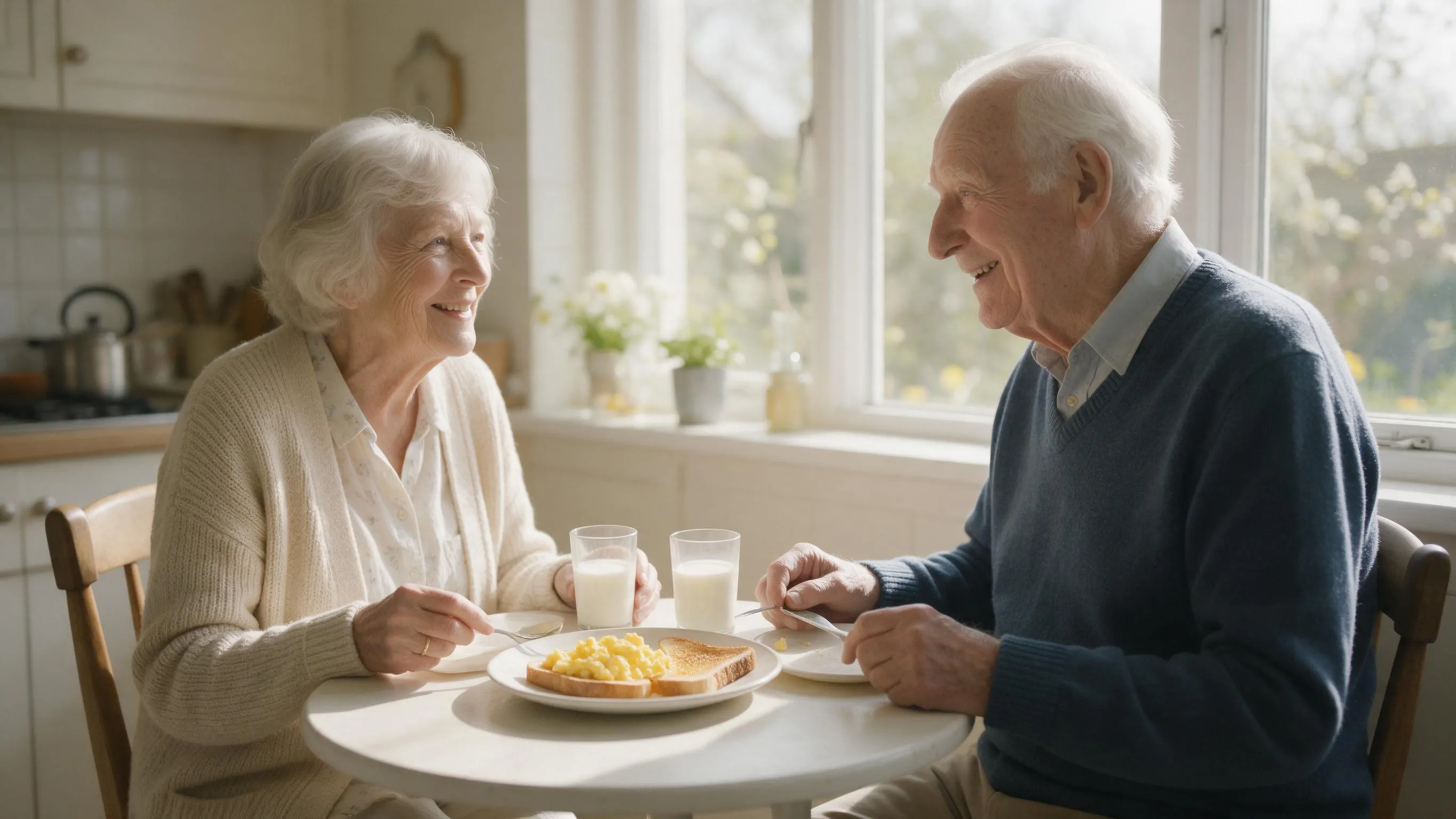
Weight loss and poor appetite both speed up frailty. The NHS says that losing 5% to 10% of body weight over three to six months without trying is a sign of malnutrition. Helpful habits:
- Protein at every meal and snack, such as eggs, cheese, milk, yoghurt, fish, meat, beans or lentils.
- Small meals and snacks more often if appetite is poor.
- Full-fat milk and yoghurt rather than low-fat versions when someone is losing weight.
- Enough drinks through the day.
- A daily vitamin D supplement for people who are rarely outdoors, as the NHS recommends; ask the GP or pharmacist which one suits, especially if they take other medicines.
See our nutrition and hydration guide for practical ideas.
Ask for a medication review
People living with frailty are more sensitive to side effects, and medicines that once helped may now cause dizziness, confusion or falls. Ask the GP or practice pharmacist for a structured medication review. The aim is to check each medicine is still needed, still helping and safe at its current dose, and to agree any changes with the person. Never stop medicines without advice.
Other ways to stay well
- Vaccinations: have the flu, COVID-19 and pneumococcal vaccines when offered, and the RSV vaccine if aged 75 or over.
- Sight and hearing: regular checks; poor senses add to falls and isolation.
- Mood and company: loneliness and low mood are linked with frailty, so staying connected matters. See our loneliness and wellbeing guide.
- Recovering from setbacks: after an illness or hospital stay, ask about reablement, which is free for up to six weeks and helps rebuild strength and confidence.
Planning ahead
Because frailty can make health change suddenly, it helps to think ahead while the person can say what matters to them. Useful steps include:
- Talking about what matters most: staying at home, avoiding hospital where possible, or having every treatment available.
- Making Lasting Powers of Attorney for finances and for health and welfare.
- Writing an advance statement of wishes and, if wanted, an advance decision to refuse specific treatments.
- Asking the GP about an emergency plan, such as a ReSPECT form where it is used locally.
- Keeping a list of medicines, conditions and contacts by the phone.
Our guides to advance care planning and Lasting Power of Attorney explain each step.
How care at home can help
In frailty, small changes are early warning signs: eating a little less, sleeping more, a bit more confused, slower on the stairs. A regular carer who knows the person well is often the first to notice and can raise concerns before they become a crisis. Care at home can also make the healthy habits happen every day: preparing protein-rich meals, encouraging the physiotherapist’s exercises, supporting medicines and keeping the person company.
For some people, a few home care visits are enough. For those whose frailty is more advanced, or who live alone and are at risk of falls, live-in care means a carer is in the home through the day and close by at night. A care home may suit better when someone needs nursing care around the clock.
Checklist: a simple monthly check-in
Families and carers can run through this once a month and take it to the GP if things are slipping:
- Weight: the same scales, the same time of day; is it falling?
- Eating and drinking: finishing meals? Drinking regularly? Pale urine?
- Moving: getting out of a chair, walking and managing stairs as well as last month?
- Falls: any falls, trips or near misses?
- Mood and memory: brighter, flatter or more confused than usual?
- Medicines: taken as prescribed? Any dizziness or drowsiness?
- Sleep and continence: any new problems?
- Company: how many days without seeing or speaking to anyone?
When to call the GP, 111 or 999
Call 999 if the person:
- Suddenly becomes confused, very drowsy or cannot be woken properly.
- Has severe difficulty breathing, chest pain or signs of a stroke.
- Has fallen and may have hurt their head, neck, back or hip, or cannot get up.
Contact the GP the same day or call NHS 111 (free, 24 hours) if there is:
- A sudden change in walking, eating, drinking or continence.
- Signs of infection, such as a temperature, shivering, a new cough or pain passing urine.
- Dizziness on standing that does not go away, or dark urine and drinking very little.
Book a routine GP appointment about weight loss, increasing tiredness, falls or concerns about medicines.
How to get NHS and council help, step by step
- Frailty review: ask the GP whether frailty has been assessed and whether there is a care plan. For complex needs, ask about a referral to the older people’s or frailty team.
- Medicines: ask for a structured medication review with the GP or practice pharmacist.
- Strength and falls: ask about the local falls service or a strength and balance programme.
- Eating: if weight is falling, ask the GP to check for causes and refer to a dietitian.
- Support at home: ask the council’s adult social care team for a free care needs assessment, including equipment and telecare.
- Connection: ask the GP practice about a social prescribing link worker, who can connect the person with local groups and services.
- Planning ahead: ask the GP to talk through an emergency plan and record the person’s wishes.
Where to get support
- Age UK Advice Line: 0800 678 1602 (free). 8am to 7pm, every day of the year.
- Independent Age Helpline: 0800 319 6789 (free). Monday to Friday, 8.30am to 5.30pm.
- Carers UK Helpline: 0808 808 7777. Monday to Friday, 9am to 6pm.
Help with costs
- Attendance Allowance, £76.70 or £114.60 a week, for people over State Pension age who need help with personal care. It is not means-tested.
- A free council care needs assessment, followed by a financial assessment. The person’s home is not counted when care is at home.
- Free equipment and minor adaptations costing £1,000 or less if the council assesses a need.
- NHS Continuing Healthcare if needs become mainly health needs.
What to do next
- Ask the GP whether frailty has been assessed and whether there is a care plan.
- Request a medication review.
- Start a little daily activity and ask about strength and balance support.
- Check weight monthly and boost protein and calories if it is falling.
- Talk about wishes and put Lasting Powers of Attorney in place.
- Ask the council for a care needs assessment and claim Attendance Allowance if eligible.
How we can help
Day and Nightcare has supported older people at home since 2008. We offer home care visits from one hour, waking nights and sleep-ins across Oxfordshire, and 24-hour care with carers working in shifts anywhere in England, and fully managed live-in care anywhere in England from £1,550 a week. Call 01865 715780 to arrange a free assessment.
Common questions
Is frailty just another word for being old?
No. Frailty is a particular health state, not an age. Around 10% of people aged over 65 live with frailty, rising to between a quarter and a half of those over 85, which means many people in their eighties and nineties are not frail at all. Some younger people with several long-term conditions are. Frailty also says nothing about someone's intelligence or their right to make their own decisions.
Can frailty be reversed?
Sometimes, and it can almost always be slowed. The British Geriatrics Society describes frailty as a long-term condition whose severity can get better or worse. People with mild frailty have most to gain, but even those who are more frail can benefit from regular strength and balance activity, eating enough protein and calories, and stopping medicines that are no longer helping. Progress usually depends on keeping these habits going.
What is the Clinical Frailty Scale?
It is a nine-point scale that health professionals use to describe how fit or frail someone is, from very fit to terminally ill, based on how they managed in the weeks before an illness. Hospitals and GPs use it to help plan care and decide which treatments are likely to help. It is a starting point for a conversation, not a judgement, and families can help by describing how the person usually manages.
Does living with frailty mean someone cannot stay at home?
No. Many people living with frailty live at home, often with some support. Age UK stresses that frailty does not mean a person lacks capacity or cannot live independently. The right support at home, such as help with meals, washing, medicines and staying active, can reduce the risk of falls and hospital admissions. A care needs assessment from the council is a good first step.
What is a ReSPECT form?
ReSPECT stands for Recommended Summary Plan for Emergency Care and Treatment. It records a person's wishes and clinical recommendations for an emergency in which they cannot speak for themselves, including whether CPR should be attempted. It is made through a conversation with a doctor or nurse, stays with the person at home and can be reviewed at any time. It is not legally binding, and it is used in many, but not all, areas of England.
Sources and further information
- Age UK: Understanding frailty
- British Geriatrics Society: Introduction to frailty
- NHS England: Electronic Frailty Index
- NHS: Physical activity guidelines for older adults
- NHS: Malnutrition
- Resuscitation Council UK: ReSPECT for patients and carers
Prepared by the Day and Nightcare care team. Last updated 30 October 2026; sources last checked 30 October 2026. This guide is general information about care in England, not financial, legal or medical advice.