
What is advance care planning?
Advance care planning is a series of conversations, and sometimes documents, about the care you would want in the future. It is for anyone, at any age, but it becomes especially important for people living with a long-term or progressive illness, frailty or dementia, and for anyone approaching the end of life.
NHS England’s universal principles for advance care planning describe it as voluntary and person-centred: you choose whether to take part, what to talk about and who to involve. Plans can be changed at any time, and should be reviewed when your health or circumstances change.
Advance care planning can include several things, which work together:
- an advance statement of your wishes and preferences
- an advance decision to refuse treatment, which can be legally binding
- a ReSPECT form or other emergency care plan agreed with a clinician
- a decision about resuscitation (DNACPR)
- a Lasting Power of Attorney for health and welfare, so someone you trust can decide for you
Advance statements: what matters to you
An advance statement is a written record of your wishes, preferences, beliefs and values about future care. It can cover anything that matters to you, for example:
- where you would like to be cared for, and where you would prefer to die
- your daily routines: when you like to get up, what you like to eat, how you like to dress
- your faith, cultural practices or spiritual needs
- who you would like to be with you, and who you would like to be consulted
- practical matters, such as who will look after a pet
An advance statement is not legally binding, but anyone deciding in your best interests must take it into account. You do not have to sign it, though a signature and date show that it reflects your wishes.
An advance statement you can start today
There is no official form. You can write it on paper or type it, in your own words. This starter may help:
My advance statement
My name: … Date of birth: … NHS number: …
What matters most to me: for example, being at home with my cat, being able to see the garden, having my family close.
Where I would like to be cared for: for example, at home if at all possible, with help from carers; a hospice if my symptoms become hard to manage at home.
My daily routine and comforts: for example, I like to get up late, have tea with milk and no sugar, listen to Radio 4 and have my hair brushed each morning.
My faith, beliefs and culture: for example, I would like a visit from my priest, and I would like to be washed by women carers only.
People I would like to be consulted: names, relationship and phone numbers.
Other wishes: for example, who should look after my dog; music I would like played.
Signed: … Date: …
Keep a copy, give copies to your GP and family, and update it whenever your wishes change.
Advance decisions to refuse treatment

An advance decision to refuse treatment (ADRT), sometimes called a living will, lets you refuse specific medical treatments in the future, in case you lose the capacity to decide. It is set out in sections 24 to 26 of the Mental Capacity Act 2005.
To make one, you must be 18 or over and have capacity at the time. It must say clearly which treatment you are refusing and in what circumstances. If you are refusing life-sustaining treatment, it must:
- be in writing
- be signed by you
- be signed by a witness
- include a statement that the decision applies even if your life is at risk
A valid advance decision that applies to the situation is legally binding. A few points are worth knowing:
- It can only refuse treatment. It cannot demand a particular treatment.
- It cannot refuse basic care, such as warmth, shelter, keeping you clean, or being offered food and drink by mouth.
- It cannot ask for anything illegal, such as help to end your life.
- A later health and welfare LPA that gives your attorney authority over the same treatment takes precedence.
What an advance decision usually includes:
- your full name, date of birth, address, NHS number and GP details
- a statement that you are making the decision while you have capacity, and that it applies if you later lose capacity to decide
- each treatment you are refusing, described clearly (for example, “artificial nutrition through a tube”, “mechanical ventilation”, “cardiopulmonary resuscitation”)
- the circumstances in which each refusal applies (for example, “if I have advanced dementia and can no longer recognise my family”)
- for life-sustaining treatment, the words: “I refuse this treatment even if my life is at risk as a result”
- your signature and the date, and a witness’s signature and date
- the names of people who know about it, and where copies are kept
The charity Compassion in Dying offers a free form and guidance (0800 999 2434). Ask your GP to read it, to check it is clear, and to add it to your record.
ReSPECT forms
ReSPECT stands for the Recommended Summary Plan for Emergency Care and Treatment. It is a short form, completed with a doctor or nurse, that records what matters to you and the clinical recommendations for your care in a future emergency when you may not be able to say what you want. It usually includes a recommendation about CPR, alongside wider goals of care: for example, whether you would want to go to hospital for certain treatments, or be cared for at home.
ReSPECT is not legally binding, but it helps ambulance crews, out-of-hours doctors and hospital staff make quick decisions that fit your wishes. It is used in many parts of England. Keep the form where it can be found quickly at home, and make sure it travels with you if you go into hospital.
DNACPR decisions
Cardiopulmonary resuscitation (CPR) is an attempt to restart the heart and breathing, using chest compressions, electric shocks and help with breathing. It can save lives, but for people who are very frail or seriously ill it often does not work and can cause harm, such as broken ribs, and a death that is less peaceful than they would have wished.
A DNACPR decision means CPR will not be attempted. You can decide in advance that you do not want CPR. A doctor can also decide that CPR would not work or would do more harm than good, and must explain this to you unless doing so would harm you. A DNACPR decision is about CPR only: all other care continues. The form itself is not legally binding; if you want a legally binding refusal of CPR, make an advance decision.
Choosing your preferred place of care
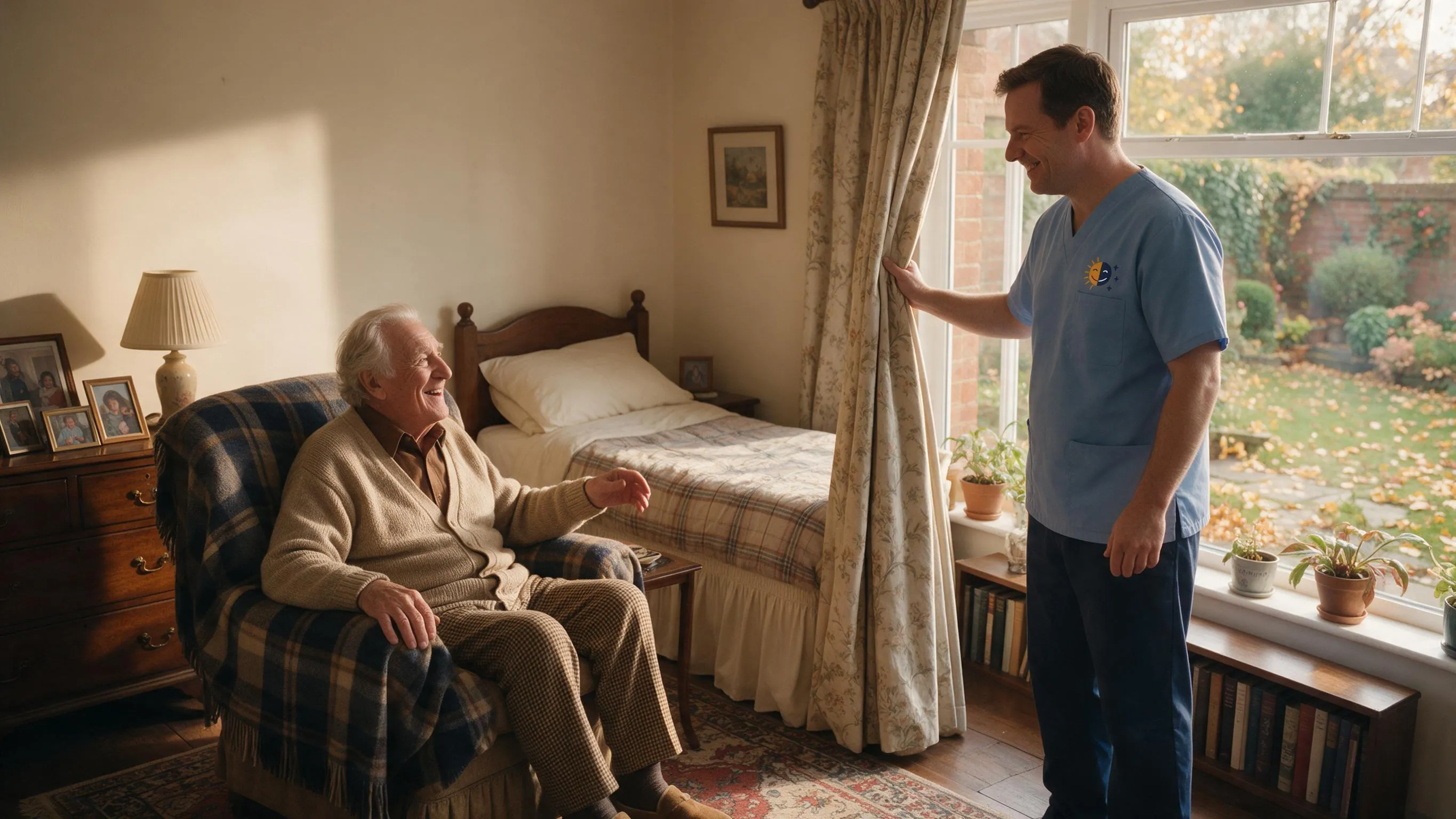
Many people, when asked, would like to be cared for at home towards the end of life. Others feel safer in a hospice or a care home. There is no right answer, and wishes can change. What matters is that the people caring for you know your preference, so they can plan around it. Tell your GP, so it can be recorded, and include it in your advance statement.
If home is your wish, it is worth knowing what makes it possible: district nurses, hospice at home services, just in case medicines and, for many families, a live-in carer who is there day and night.
How to start the conversation
Talking about the future can feel daunting, for the person and for their family. Some gentle ways in:
- Choose a calm, unhurried moment, perhaps prompted by a programme, a friend’s illness or a hospital appointment.
- Start with what matters: “What makes a good day for you?” or “What would worry you most if you became ill?”
- Ask open questions and listen more than you speak.
- Accept that it may take several conversations.
- Write things down afterwards and check you have understood.
- Involve the GP, practice nurse or specialist nurse, who are used to these conversations.
Questions to ask the GP or specialist nurse
- What is likely to happen with my condition, and what changes should I plan for?
- Which treatments might I be offered in future, and what would they involve?
- Would CPR be likely to work for me? What would it mean if it did?
- Should we complete a ReSPECT form together?
- Can my wishes and preferred place of care be added to my record, so out-of-hours services can see them?
- Who should my family call at night or at weekends if I become unwell?
Where to keep your plans
- Give copies to your GP, your attorney and close family.
- Ask the GP to add your wishes to your medical record.
- Keep originals somewhere easy to find, and tell people where they are.
- Share them with any care provider, so your care plan reflects them.
- Review everything when your health changes, or at least every year or two.
What to do next
- Think about what matters most to you, and who you would want to speak for you.
- Write an advance statement, even a short one.
- Talk to your GP about whether a ReSPECT form or an advance decision would help.
- Make a Lasting Power of Attorney for health and welfare while you can.
- Share copies, and review them when things change.
How we can help
When we plan care with you after a free initial assessment, we take time to understand your needs, your routines and what matters to you, so that your care can reflect your wishes. Live-in care, available anywhere in England from £1,550 a week and including care towards the end of life, is at the heart of what we do, and across Oxfordshire we also offer home care visits, waking nights and sleep-ins. Call us on 01865 715780.
Common questions
Is an advance statement legally binding?
No, but it still carries real weight. Anyone making a decision in your best interests under the Mental Capacity Act must take your past wishes, feelings, beliefs and values into account, and an advance statement is clear evidence of them. It is the right place for preferences such as where you would like to be cared for, your routines, your faith and who you want with you. Only an advance decision to refuse treatment can be legally binding.
Does a DNACPR decision mean no other treatment?
No. A DNACPR (do not attempt cardiopulmonary resuscitation) decision is about CPR only. If your heart or breathing stops, healthcare staff will not try to restart it, but every other appropriate treatment and care continues, including antibiotics, pain relief, fluids and hospital care where that is right for you. If you are unsure what a form means for you, ask the doctor or nurse to explain it.
Can my family overrule my advance decision to refuse treatment?
No. If an advance decision is valid and applies to the situation, it is legally binding and your family cannot overrule it. It can stop being valid if you withdraw it, act in a way that clearly contradicts it, or later make a health and welfare Lasting Power of Attorney giving your attorney authority over the same treatment. That is why it helps to tell your family and attorney about it and review it from time to time.
Do I need a solicitor to make an advance decision?
No. You can write an advance decision yourself, and the charity Compassion in Dying offers free forms and support on 0800 999 2434. If you are refusing life-sustaining treatment, it must be in writing, signed by you and a witness, and include a clear statement that the decision applies even if your life is at risk. It is wise to discuss it with your GP, who can check it is clear and add it to your record.
Can a doctor make a DNACPR decision without asking us?
A doctor can make a DNACPR decision if they believe CPR would not work or would cause more harm than benefit, but they must tell the person and involve them unless that would cause them harm. If the person lacks capacity, the family or attorney should be consulted. Decisions must be made for each individual, never applied to groups of people. You cannot insist on CPR, but you can ask for an explanation, a second opinion and a review.
Sources and further information
- NHS: Advance statement about your wishes
- NHS: Advance decision to refuse treatment (living will)
- NHS: Do not attempt cardiopulmonary resuscitation (DNACPR) decisions
- Resuscitation Council UK: ReSPECT
- Compassion in Dying: Advance decision (living will)
- NHS England: Universal principles for advance care planning
- legislation.gov.uk: Mental Capacity Act 2005, sections 24 to 26
Prepared by the Day and Nightcare care team. Last updated 30 October 2026; sources last checked 30 October 2026. This guide is general information about care in England, not financial, legal or medical advice.