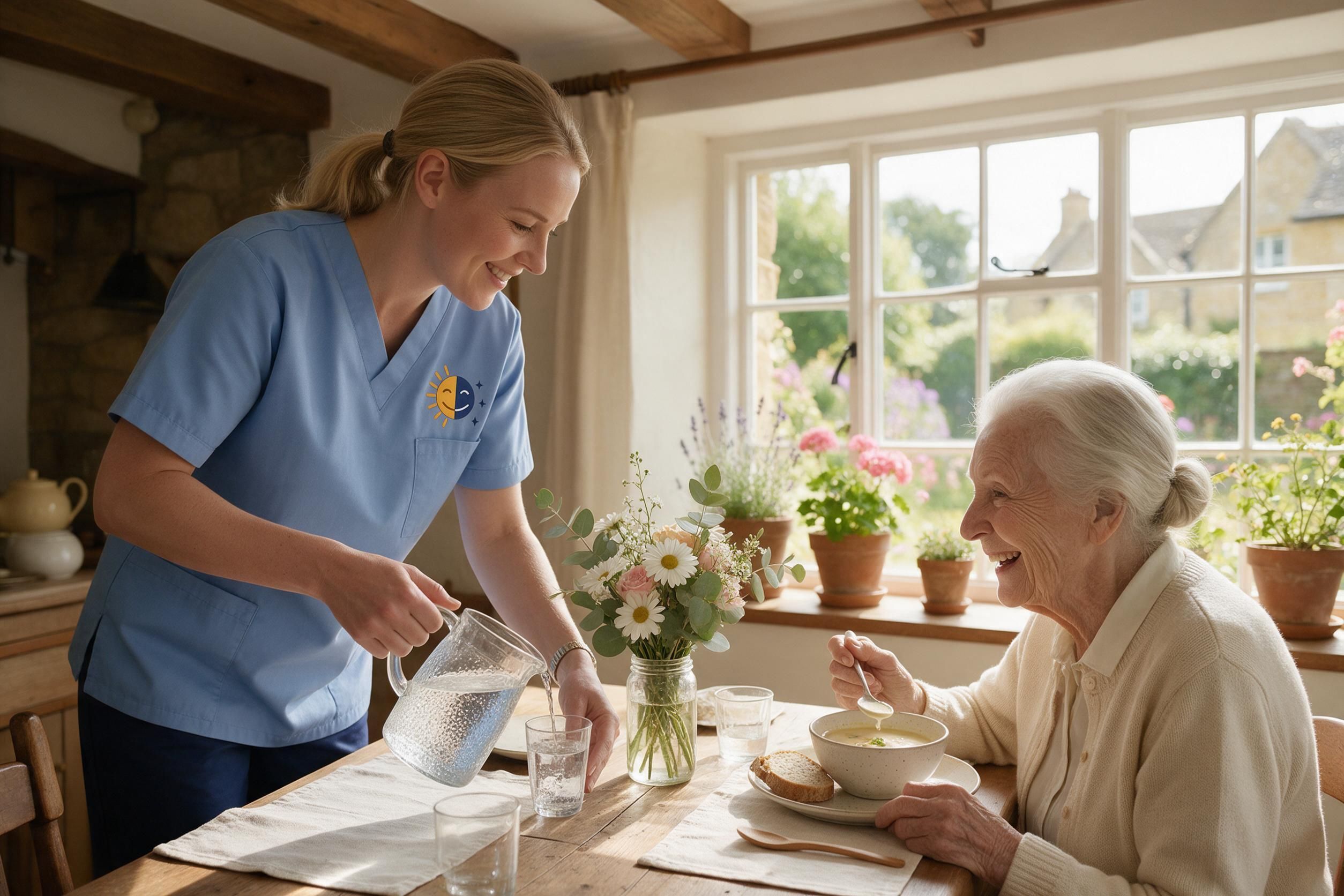
Why older people are at risk
Malnutrition means the body is not getting enough energy, protein, vitamins or minerals to stay healthy. Age UK estimates that around one in ten people over 65 are malnourished or at risk of malnutrition, and most of them live in their own homes rather than in hospital or care homes. It is easy to miss, because it often creeps up slowly, and it can happen to people of any size: someone overweight can still be malnourished.
Common reasons include a smaller appetite, long-term conditions, pain, medicines, difficulty chewing or swallowing, reduced mobility, struggling with shopping or cooking, money worries, bereavement, loneliness and memory problems.
Dehydration is just as important. The sense of thirst becomes weaker with age, some people drink less to avoid trips to the toilet, and people who rely on others for drinks are at particular risk. Even mild dehydration can cause tiredness, dizziness, constipation, confusion and urinary infections, and it makes falls more likely.
Malnutrition and dehydration often go together, and both slow recovery from illness, weaken muscles and increase the risk of pressure damage to the skin.
Warning signs to look out for
Malnutrition:
- Losing weight without trying. The NHS describes losing 5% to 10% or more of body weight over three to six months as a key sign.
- Clothes, belts, rings or dentures becoming loose.
- Losing interest in food and drink, or leaving most of each meal.
- Tiredness, weakness and getting ill more often, or taking longer to recover.
- Food going out of date in the fridge, or an empty fridge.
Dehydration:
- Dark yellow, strong-smelling urine, or passing urine less often.
- A dry mouth, lips and tongue.
- Feeling dizzy or light-headed, headaches and tiredness.
- New or worse confusion.
Practical ways to help someone eat well
- Little and often: three small meals and two or three snacks a day are often easier than three large meals.
- Fortify food: add grated cheese, butter, cream, milk powder, eggs or nut butter to everyday dishes to boost energy and protein without increasing the portion.
- Protein at every meal: eggs, milk, cheese, yoghurt, fish, meat, beans or lentils help maintain muscle.
- Nourishing drinks: milky drinks such as hot chocolate, milky coffee or milkshakes between meals.
- Make it appealing: small portions on a plate with a coloured rim, favourite foods, and a calm, unhurried table.
- Eat together: company often improves appetite, and you can see how much is eaten.
- Make it easier: finger foods, adapted cutlery or plates from an occupational therapist, and well-fitting dentures.
- Keep the mouth healthy: regular dental checks and daily mouth care.
- Stock up: keep a few days of easy food in the cupboard and freezer.
Practical ways to help someone drink more
- Offer a drink with every activity: on waking, with medicines, at each meal, with visitors and before bed.
- Keep a drink within reach and in sight, in a cup or glass that is easy to hold.
- Offer variety: water, squash, tea, coffee, milk, soup, fruit juice with a meal.
- Include water-rich foods such as jelly, yoghurt, ice lollies, fruit and soup.
- If you are worried, keep a simple record of drinks for a few days.
Food the person enjoys

Eating is about pleasure, culture, memory and choice as well as nutrition. Ask what the person has always enjoyed, what they eat on special days, what their faith or culture means for food, and what they dislike. Favourite meals, familiar mealtimes and food from their own background can all lift appetite and mood. A small treat that is eaten is worth more than a “healthy” meal that is left.
Swallowing problems and texture-modified diets
Difficulty swallowing (dysphagia) is common after a stroke and in conditions such as Parkinson’s and dementia. The NHS lists signs including coughing or choking when eating or drinking, food coming back up, a feeling of food sticking, a gurgly or wet voice after eating or drinking, and, over time, weight loss and repeated chest infections. If you notice these, ask for an urgent GP appointment or contact NHS 111.
A speech and language therapist (SALT) can assess swallowing and recommend the safest textures of food and thickness of drinks. In the UK these are described using the IDDSI framework, an international scale from 0 to 7: drinks range from thin (0) to extremely thick (4), and foods from liquidised (3) to regular (7). Follow the recommendation exactly every time, including for snacks and drinks given by visitors, and ask the SALT before changing anything.
Other good practice:
- Sit fully upright to eat and drink, and for at least a short time afterwards.
- Offer small mouthfuls, slowly, with no rushing and few distractions.
- Keep the mouth clean, because good oral care reduces the risk of chest infections.
- Ask the pharmacist about medicines that are hard to swallow; do not crush tablets without advice.
Our guides to Parkinson’s care and stroke recovery cover swallowing in more detail.
Keeping an eye on weight
Weighing someone once a month, on the same scales, at the same time of day and in similar clothes, is the simplest way to spot a problem early. Write it down. If weighing is not possible, notice how clothes, rings and belts fit. Health professionals often use a screening tool called MUST (the Malnutrition Universal Screening Tool), developed by the British Association for Parenteral and Enteral Nutrition (BAPEN), which also offers a self-screening version online.
Checklist: an easy-food store cupboard
Keeping a few days of simple, nourishing food at home means there is always something to eat, even on a bad day:
- Long-life milk, milk powder and milky drink sachets.
- Porridge oats, breakfast cereal and crackers.
- Tinned fish, beans, soup and rice pudding.
- Custard pots, jelly and long-life desserts.
- Nut butter, cheese portions and eggs.
- Frozen ready meals, frozen vegetables and bread in the freezer.
- Small cartons of fruit juice and bottles of water.
When to call the GP, 111 or 999
- Call 999 if someone is choking and cannot breathe, cough or speak and it does not clear, or has signs of severe dehydration such as confusion, cold or blotchy skin, or being very sleepy and hard to wake.
- Ask for an urgent GP appointment or call NHS 111 (free, 24 hours) about signs of swallowing problems, or signs of dehydration such as dizziness on standing that does not go away, dark urine or passing much less urine than usual.
- Book a GP appointment about unplanned weight loss, poor appetite lasting more than a few days, or difficulty chewing.
How to get NHS help, step by step

- Weigh first: take two or three monthly weights, or note how clothes fit, to show the GP.
- See the GP: they can check for causes such as infection, medicines, constipation, low mood or dental problems, and may test blood.
- Dietitian: if weight is falling or eating is difficult, ask for a referral. Supplement drinks are only prescribed when a clinician recommends them.
- Speech and language therapist: if there is coughing, choking or a wet voice at meals, ask the GP for a referral; some services accept self-referral.
- Teeth and dentures: book a dental check if eating is painful or dentures are loose.
- Help with meals: ask the council’s adult social care team for a care needs assessment, and an occupational therapist for adapted cutlery, plates and kitchen equipment.
How care at home helps
Many people eat better simply because someone is there. A carer can shop, cook meals the person likes, sit and eat with them, offer drinks through the day and notice when they are eating less. A live-in carer can prepare fresh meals and snacks throughout the day and follow any texture-modified diet consistently, which is hard to achieve with short visits. For others, home care visits at mealtimes are enough.
Help with costs
- Attendance Allowance, £76.70 or £114.60 a week and not means-tested, can help pay for meals, shopping help or care.
- A free council care needs assessment may lead to support with meals and shopping, including meals delivered to the home.
- Prescribed supplement drinks are available on NHS prescription when a clinician recommends them.
Where to get support
- Age UK Advice Line: 0800 678 1602 (free). 8am to 7pm, every day of the year. It can point you to local lunch clubs and services.
- Independent Age Helpline: 0800 319 6789 (free). Monday to Friday, 8.30am to 5.30pm.
- Carers UK Helpline: 0808 808 7777. Monday to Friday, 9am to 6pm.
- The council’s adult social care team, for meals and shopping support.
What to do next
- Weigh the person and write it down; repeat monthly.
- Look in the fridge and cupboards, and notice what is being eaten and drunk.
- Introduce small meals, fortified food and regular drinks.
- Book a GP appointment if weight is falling or eating or swallowing has changed.
- Ask about lunch clubs, meals at home or care at mealtimes.
How we can help
Day and Nightcare provides home care visits from one hour across Oxfordshire, and fully managed live-in care anywhere in England from £1,550 a week, as well as waking nights and sleep-ins in Oxfordshire, and 24-hour care with carers working in shifts anywhere in England. Call 01865 715780 to arrange a free assessment.
Common questions
How much should an older person drink each day?
The NHS suggests 6 to 8 cups or glasses of fluid a day as a guide, and more in hot weather or during illness. Water, milk, tea and coffee all count, as does some fluid from food such as soup and yoghurt. Pale yellow urine is a good sign. If a doctor has advised a fluid limit, for example for heart failure or kidney disease, follow that advice instead.
Are nutritional supplement drinks a good idea?
They can help, but usually as a second step. Most dietitians start with 'food first': fortifying ordinary meals and adding nourishing snacks and milky drinks. If that is not enough, the GP, nurse or dietitian may prescribe supplement drinks, usually taken between meals so they do not spoil the appetite. Ask before buying them, especially if the person has diabetes or kidney problems.
Should older people follow low-fat, low-sugar advice?
Not always. Healthy eating advice for the general population may not suit someone with a small appetite or who is losing weight without trying. For them, full-fat milk and yoghurt, cheese, puddings and energy-dense snacks can be exactly what is needed. If someone has diabetes, heart disease or another condition affected by diet, ask the GP or dietitian for advice that balances both needs.
Why has my relative lost interest in food?
There are many possible reasons: illness, pain, side effects of medicines, constipation, a sore mouth or loose dentures, changes in taste and smell, low mood, loneliness, bereavement or dementia. Some people struggle with shopping and cooking, or feel it is not worth cooking for one. Mention a poor appetite to the GP, as several of these causes are treatable, and try eating together when you can.
What help is there with shopping and cooking?
Quite a lot. The council may arrange meals delivered to the home after a care needs assessment. Local Age UKs and community groups run lunch clubs, which combine a hot meal with company. Online supermarket deliveries, frozen and ready meals can be nutritious and convenient. Home care visits can include preparing meals and encouraging someone to eat, and a live-in carer can cook fresh food every day.
Sources and further information
- NHS: Malnutrition
- NHS: Dehydration
- NHS: Water, drinks and your health
- NHS: Swallowing problems (dysphagia)
- Age UK: Malnutrition signs, causes and prevention
- BAPEN: Introducing 'MUST'
- IDDSI: The IDDSI framework
Prepared by the Day and Nightcare care team. Last updated 30 October 2026; sources last checked 30 October 2026. This guide is general information about care in England, not financial, legal or medical advice.