Why do older people fall?
Most falls have more than one cause. Common ones include:
- Muscles weakening with age and less activity.
- Balance problems, and conditions such as arthritis, stroke, Parkinson’s or dementia.
- Low blood pressure, especially feeling dizzy on standing up.
- Side effects of medicines, particularly when someone takes several.
- Poor eyesight or hearing.
- Needing the toilet urgently, especially at night.
- Trip hazards at home, poor lighting and unsuitable footwear.
- Being unwell, for example with an infection or dehydration.
- Too much alcohol.
Around a third of people aged 65 and over, and around half of people aged 80 and over, fall at least once a year. The encouraging news is that many of the causes above can be reduced. NICE guidance asks health services to look at each person’s own risk factors and offer help to reduce them, rather than relying on a simple score.
How to make the home safer
Walk through the home with fresh eyes, ideally at night as well as in the day.
- Floors: remove or secure loose rugs and mats, tidy trailing wires, and keep walkways clear of clutter.
- Lighting: use bright bulbs, light switches at the top and bottom of the stairs, and plug-in night lights or motion-sensor lights between bedroom and bathroom.
- Stairs: firm handrails on both sides, with nothing left on the steps.
- Bathroom: non-slip mats, grab rails by the toilet, bath and shower, and a shower seat if standing is tiring.
- Bedroom: a bed at the right height, a lamp within reach, and a commode or urinal if night-time trips are risky.
- Kitchen: everyday items stored between waist and shoulder height, so there is no climbing or bending low.
- Outside: clear, well-lit paths and a rail by the front step.
An occupational therapist can assess the home and recommend equipment. Our home safety checklist and equipment and home adaptations guide go into more detail.
Footwear and clothing
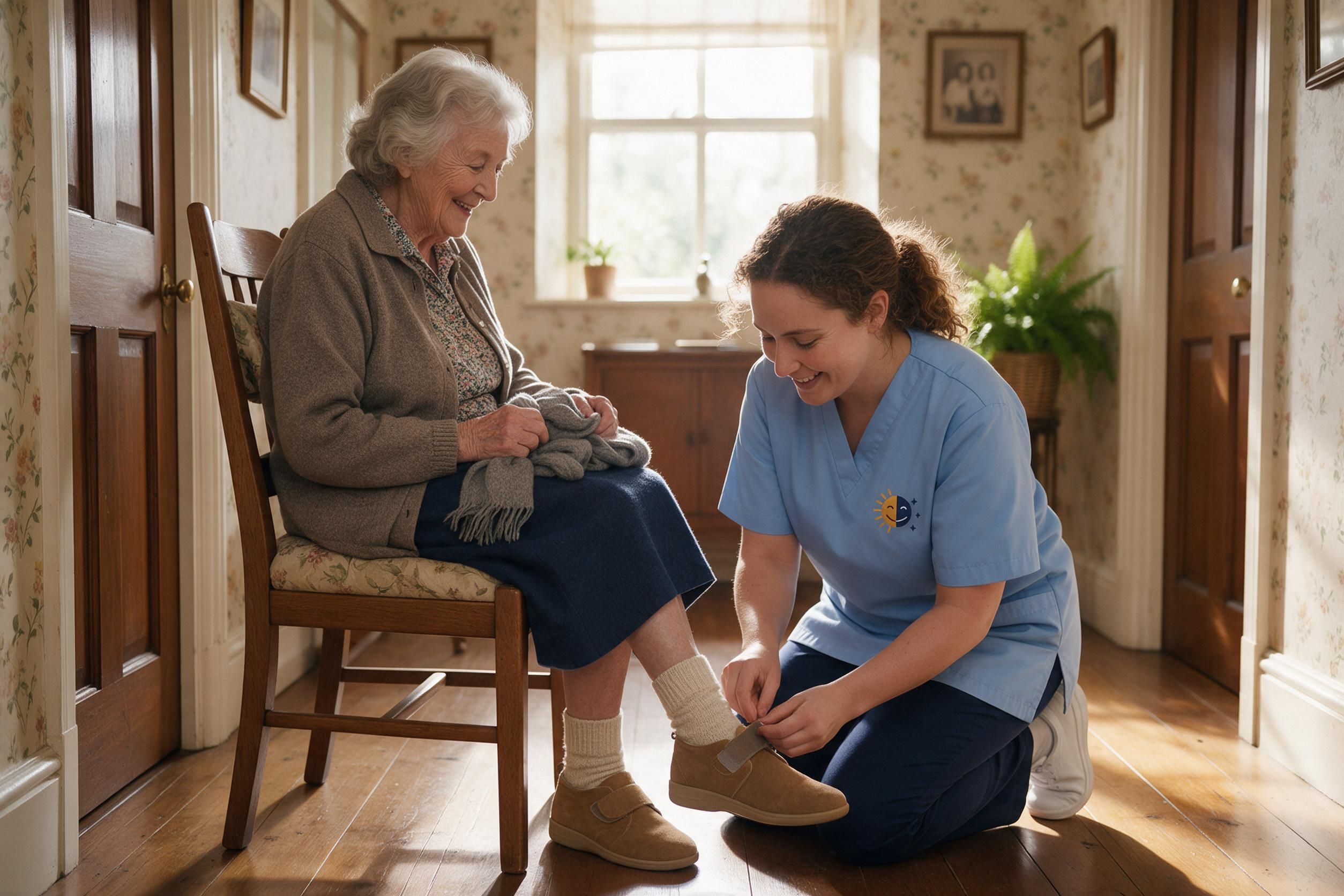
Shoes and slippers should fit well, fasten securely and have a thin, firm, non-slip sole. Backless slippers and worn-out shoes are common culprits. Trousers and dressing gowns should not trail on the floor. Swollen feet need properly fitting footwear, so ask the GP or a podiatrist if shoes have become hard to find.
Eyesight and hearing
Changes in vision affect balance and judging steps. NHS sight tests are free for everyone aged 60 and over, and opticians can visit at home if someone cannot leave the house unaccompanied because of illness or disability. Keep glasses clean, wear the right pair for the task, and take extra care on steps with bifocals or varifocals. Hearing loss also affects balance and awareness, so have hearing checked if it seems to be changing. See our sight and hearing loss guide.
Ask for a medication review
Some medicines can cause dizziness, drowsiness, low blood pressure or unsteadiness, including some sleeping tablets, sedatives, antidepressants and blood pressure medicines. The risk increases when several medicines are taken together. Ask the GP or pharmacist for a medication review, especially after a fall or if the person takes several medicines. Never stop a medicine without advice; there may be a safer dose or alternative. Our medication management guide has practical tips.
Strength and balance exercise
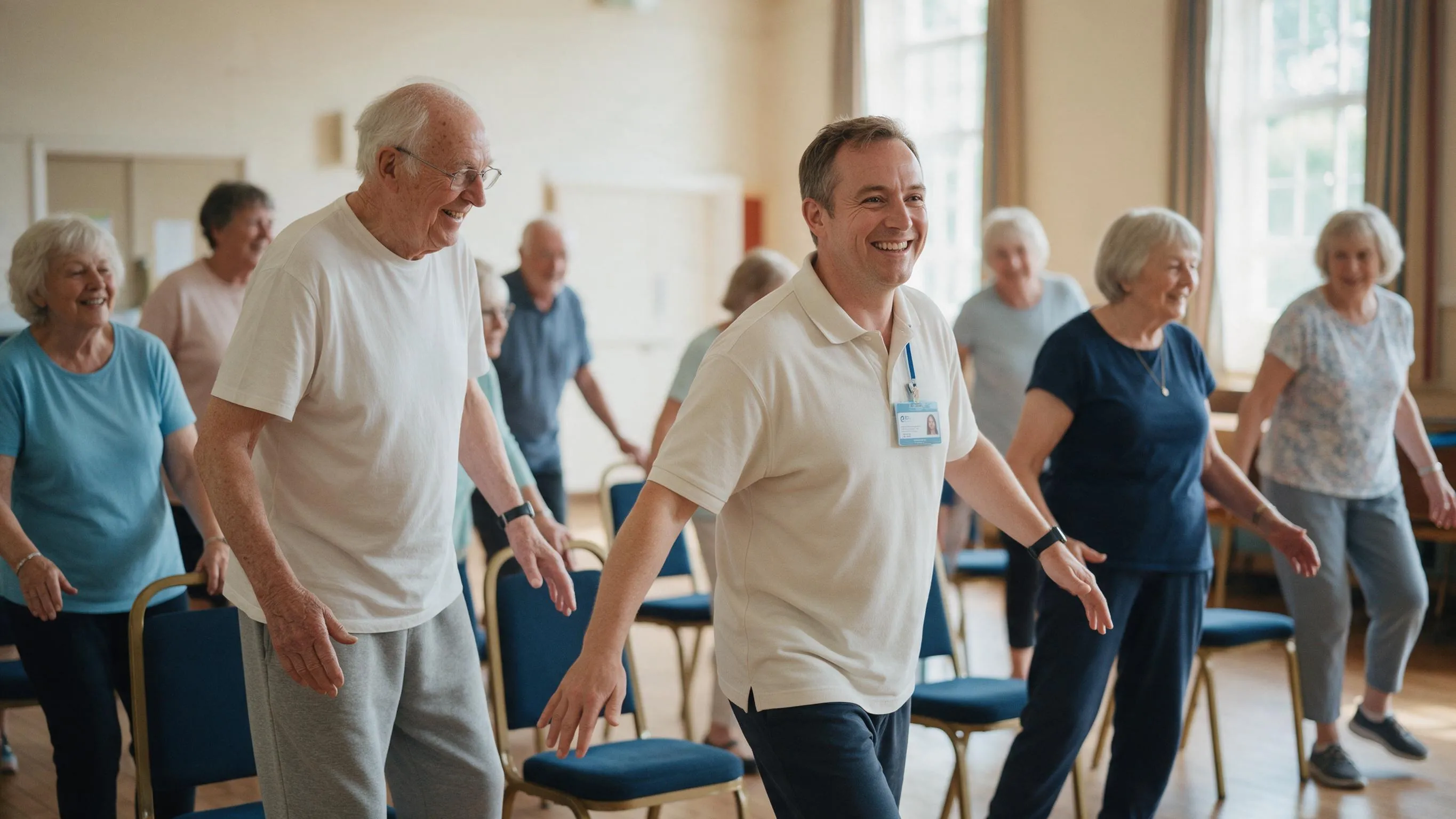
This is one of the most effective ways to prevent falls. The NHS advises older adults to be active every day, and to do activities that improve strength, balance and flexibility on at least two days a week. Ask the GP or local falls service about a strength and balance programme, which may be run in groups, at home or online. Gentle activities such as tai chi, dancing, gardening and walking all help. Sit less, and break up long periods in a chair.
If someone has not exercised for a while or has health conditions, speak to the GP before starting.
Nights and getting up safely
Many falls happen at night or when getting up. Encourage the person to sit on the edge of the bed for a moment before standing, to turn the light on first, and to use a walking aid if they have one. Keeping well hydrated in the day, rather than drinking a lot late in the evening, can reduce night-time toilet trips. If someone is often up in the night and unsteady, a waking night carer can be there to help.
What to do after a fall, and when to call 999 or 111
If you have fallen:
- Stay calm, take your time and check yourself for pain or injury.
- If you are not hurt and feel able, roll onto your side, get onto your hands and knees, crawl to a sturdy chair, put one foot flat on the floor and push up slowly. Then sit and rest.
- If you cannot get up, call for help using a phone or alarm, or shout or bang on the floor. Keep warm with anything to hand, keep moving your arms and legs, and change position about every 30 minutes.
If you find someone who has fallen, do not try to lift them yourself.
- Call 999 if they may have injured their head, neck, back or hip, or cannot get up.
- Call NHS 111 if they are in pain, may be injured or seem unwell.
- See the GP afterwards about any fall, or about worries with balance and walking. The GP can refer to a falls service, which may check strength, bones, eyesight, blood pressure and medicines, and arrange exercise and home safety checks.
Checklist: a falls plan for the home
- An alarm or mobile phone carried at all times, including to the bathroom and at night.
- A key safe, with the code held by family, carers and the alarm service.
- A list of who to call, in order, kept by the phone and given to the alarm service.
- A throw or blanket kept low down in the rooms used most.
- Practising how to get up from the floor, with a physiotherapist if possible.
- Daily contact: someone who checks in at an agreed time each day.
How to get NHS and council help, step by step

- Falls assessment: after any fall, or if balance is worrying you, ask the GP for an assessment and a referral to the local falls service. In some areas you can refer yourself; the GP surgery can tell you how the local service works.
- Medicines: ask the GP or a community pharmacist for a medication review.
- Eyes: book a free NHS sight test with any optician (aged 60 and over); ask for a home visit if the person cannot go out unaccompanied.
- Hearing: ask the GP for a hearing check and referral.
- Home and equipment: ask the council’s adult social care team for a care needs assessment, including an occupational therapist’s home assessment, and ask about telecare.
- Larger adaptations: ask the council about a Disabled Facilities Grant.
Personal alarms and telecare
A personal alarm, worn on the wrist or round the neck, lets someone call for help if they fall. Options include alarms that ring a family member’s phone, alarms linked to a 24-hour monitoring centre, and automatic falls detectors that raise the alert even if the person cannot press the button. A key safe means responders can get in. Ask the council’s adult social care team about local telecare services. Our technology and telecare guide compares the options.
How care at home can help
Care cannot remove every risk, and it should never take away someone’s independence. But the right support can make a real difference: a carer can help with bathing and dressing safely, encourage exercises from the physiotherapist, make sure meals and drinks are taken, keep the home clear and be there at night. For people who have fallen several times or who are frail, live-in care means help is always close by. For others, a few home care visits at key times are enough.
Help with costs
- Free equipment and minor adaptations costing £1,000 or less, if the council assesses a need.
- A means-tested Disabled Facilities Grant of up to £30,000 in England for larger adaptations.
- No VAT on alarms and equipment designed for disabled people, for those who qualify.
- Attendance Allowance (£76.70 or £114.60 a week, not means-tested) for people over State Pension age who need help with personal care.
Where to get support
- Age UK Advice Line: 0800 678 1602 (free). 8am to 7pm, every day of the year.
- Independent Age Helpline: 0800 319 6789 (free). Monday to Friday, 8.30am to 5.30pm.
- NHS 111: free, 24 hours a day, by phone or at 111.nhs.uk, for urgent advice after a fall.
What to do next
- Tell the GP about any fall and ask for a falls assessment and a medication review.
- Book a free NHS sight test if it has been more than two years.
- Walk round the home and fix the quick wins: rugs, wires, lighting and the route to the toilet.
- Ask about a local strength and balance programme.
- Arrange a personal alarm and a key safe.
- Ask the council for a care needs assessment if daily tasks have become risky.
How we can help
Day and Nightcare provides home care visits from one hour, waking nights and sleep-ins across Oxfordshire, and 24-hour care with carers working in shifts anywhere in England, and fully managed live-in care anywhere in England from £1,550 a week. A regular carer can help someone stay active and move safely at home. Call 01865 715780 to arrange a free assessment.
Common questions
Why is a fall taken so seriously in later life?
Because a fall is often a sign that something else has changed, such as an infection, low blood pressure, a heart rhythm problem, a new medicine or weakening muscles. Falls can also lead to fractures, especially of the hip, and lying on the floor for a long time can cause pressure damage, dehydration and loss of confidence. Tell the GP about any fall, even if there was no injury, so the cause can be looked into.
Can fear of falling make things worse?
Yes. After a fall, many people understandably start doing less. But less movement leads to weaker muscles and poorer balance, which makes another fall more likely. The answer is usually more confidence, not less activity: a strength and balance programme, practising how to get up from the floor, a personal alarm and a safer home. Ask the GP about the local falls service.
Do personal alarms cost money?
It depends on the type. Basic alarms can be inexpensive to buy, while monitored alarms linked to a 24-hour response centre usually have an installation cost and a monthly charge. Some councils provide basic monitoring services after an assessment. People who are disabled or have a long-term illness do not pay VAT on alarms for their own use. If the home has a digital phone line, check the alarm is compatible.
Will we have to pay for grab rails and equipment?
Often not. In England, if the council assesses that someone needs equipment or a minor adaptation, such as grab rails, it must be provided free of charge as long as it costs £1,000 or less. Bigger changes, such as a level-access shower or stairlift, may qualify for a Disabled Facilities Grant of up to £30,000, which is means-tested. Ask the council's adult social care team for an assessment.
Should older people take vitamin D?
The NHS advises everyone to consider taking a daily vitamin D supplement in autumn and winter. People who are not often outdoors, for example because they are frail or housebound, or who live in a care home, are advised to take it all year round. Vitamin D helps keep bones and muscles healthy. Check with the GP or pharmacist first if the person takes other medicines or has kidney problems.
Sources and further information
- NHS: Falls
- NICE: Falls, assessment and prevention in older people (NG249)
- NHS: Personal alarms, security systems and keysafes
- NHS: Vitamin D
- GOV.UK: Falls, applying All Our Health
- GOV.UK: Disabled Facilities Grants
- legislation.gov.uk: Care and Support (Charging and Assessment of Resources) Regulations 2014, regulation 3
Prepared by the Day and Nightcare care team. Last updated 30 October 2026; sources last checked 30 October 2026. This guide is general information about care in England, not financial, legal or medical advice.