Before you start
It is their home, so do this with the person, not to them. Some risks are worth reducing straight away; others are part of living the life they want, and a small risk can be worth keeping for the sake of independence and dignity. Walk round in the evening as well as the day, because lighting and tiredness change things. Note what needs doing, who will do it, and by when.
Help is available for many of the fixes. The council’s adult social care team can arrange an occupational therapy assessment, the fire and rescue service can visit, and many areas have a home improvement agency with a handyperson service.
Throughout the home: falls
Falls are the most common cause of injury at home in later life. Check:
- Floors are clear of clutter, trailing wires and loose rugs or mats.
- Lighting is bright, with switches easy to reach and night lights between the bedroom and bathroom.
- Chairs and the bed are a good height to get up from.
- Everyday items are kept between waist and shoulder height, so there is no need to climb or bend low.
- Slippers and shoes fit well, stay on and have a good grip.
- Walking aids are in good repair and kept within reach.
Medicines, eyesight, hearing and muscle strength matter as much as the home itself. Ask the GP about a medication review and a referral to the falls service after any fall. Our falls prevention guide explains more.
Fire safety
- At least one working smoke alarm on every floor, tested monthly and replaced when past its expiry date. A heat alarm suits the kitchen.
- No overloaded sockets or extension leads plugged into each other.
- Heaters kept well away from curtains, bedding and furniture, and never used for drying clothes.
- Electric blankets checked regularly and replaced if worn. Never use one with a hot water bottle.
- Cooking never left unattended. Loose sleeves and tea towels kept away from the hob.
- Candles in proper holders, away from anything that could catch, and never left burning.
- Smoking only when sitting up and alert, never in bed, with deep, heavy ashtrays.
- A clear escape route, with door and window keys kept in an agreed place nearby.
- A bedtime routine: close internal doors, switch off and unplug appliances not designed to stay on.
Emollient creams used for dry skin can soak into clothing, bedding and dressings and make them catch fire more easily. This applies to paraffin-free creams too. If the person uses them, wash fabrics often and take extra care near flames and heaters.
Free home fire safety visits
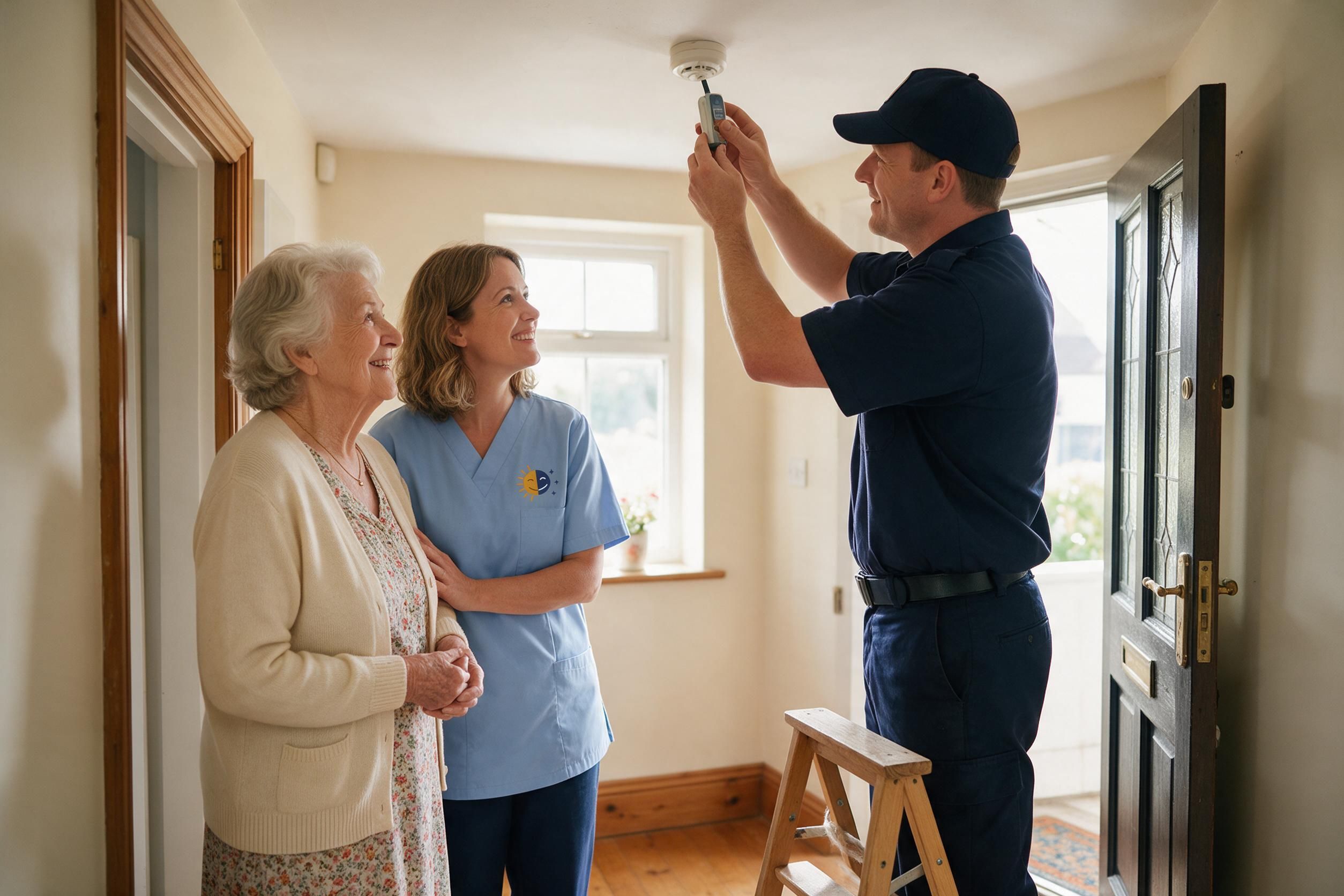
Most fire and rescue services in England offer free home fire safety or Safe and Well visits. A firefighter checks for fire risks, fits or tests smoke alarms, and talks through how to escape. In Oxfordshire, visits can also cover falls, flooding and power cuts, and anyone can book one, including on behalf of a relative. People aged 65 and over, and those with disabilities or mobility problems, are among those the service particularly wants to reach.
How to book a free visit, step by step:
- Find your fire and rescue service. It is the service for the county or area where the person lives. Never use 999 to book a visit.
- Book online or by phone. In Oxfordshire, use the online form at service.oxfordshire.gov.uk/safeandwell, or call 01865 519800, the county council number Oxfordshire Fire and Rescue Service gives for general enquiries. Elsewhere, use the “home fire safety visit” or “Safe and Well” page on your fire service’s website, or its non-emergency number.
- Have ready: the person’s name, address and phone number, their age, any disability or health condition, whether they smoke or use oxygen or emollient creams, and whether they live alone.
- Get their agreement if you are booking for someone else, and arrange for a family member or carer to be there if that would help.
- On the day, the firefighter will show their identification. Check it before letting them in.
If you are worried about a high fire risk, say so when you book; Oxfordshire also accepts urgent requests in the evenings and at weekends.
Gas and carbon monoxide
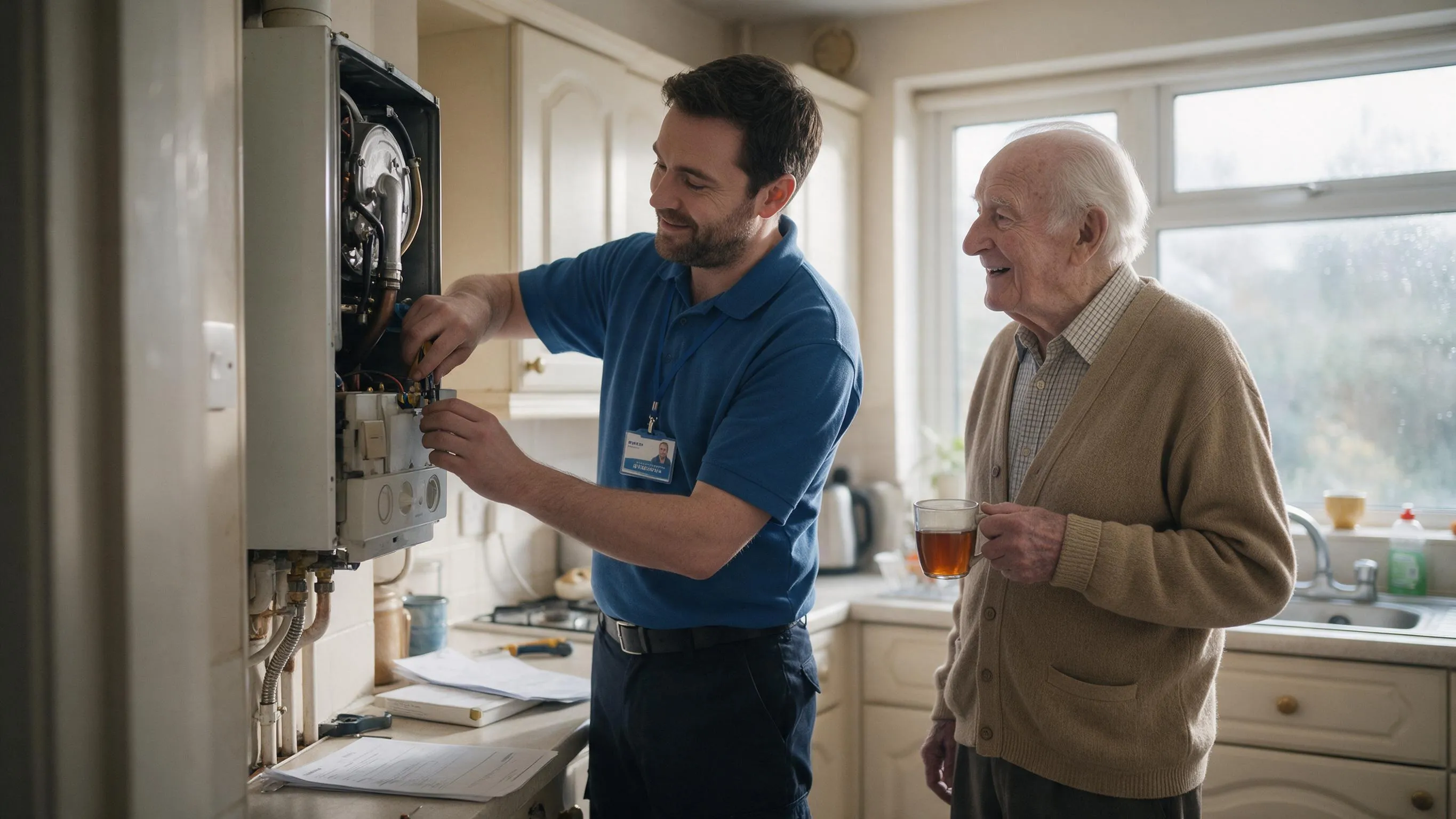
- Have boilers, gas fires and cookers serviced regularly by a Gas Safe registered engineer, usually once a year.
- Fit a carbon monoxide alarm in every room with a gas, oil, coal or wood-burning appliance.
- Know the signs of carbon monoxide poisoning: headache, dizziness, sickness, tiredness and confusion, which can ease when the person goes outside.
- If you smell gas or suspect a leak, call the National Gas Helpline on 0800 111 999.
If the person rents, their landlord must have gas appliances checked every year and fit smoke alarms and, where required, carbon monoxide alarms.
Electrics
- Look for scorch marks, buzzing sockets, cracked plugs or frayed cables.
- Do not run cables under rugs, where damage cannot be seen.
- Use chargers that came with the device or reputable replacements.
- Ask a registered electrician to check older wiring, especially if fuses trip often.
Heating, cold and hot water
- Heat the rooms used regularly to at least 18°C, and keep the bedroom warm at night.
- Keep a room thermometer where it can be seen.
- Wear layers, eat hot meals and drink hot drinks through the day.
- Check the heating works before winter, and keep a spare heater safe for emergencies.
- In hot weather, keep curtains closed on sunny windows and drink plenty of fluids.
- Consider a thermostatic mixing valve on the bath or shower to prevent scalds.
Join the Priority Services Register with the energy supplier. It is free and open to people of State Pension age, disabled people, those with long-term health conditions and others who need extra help, and gives priority support in an emergency and advance notice of planned power cuts. Our guide to other benefits and help for older people covers help with heating costs.
Room-by-room checklist
Print this page and tick each item as you go.
Hallway and stairs
- Firm handrails on both sides of the stairs, running the full length.
- Light switches at the top and bottom of the stairs.
- Nothing left on the steps, and carpet firmly fixed.
- A clear path to the front door, with a chair or shelf to put bags on.
Living room
- Chairs firm and high enough to rise from easily.
- The phone, lamp, glasses and remote within easy reach.
- No trailing cables across the floor.
Kitchen
- Frequently used items stored at waist height.
- A perching stool if standing is tiring.
- A kettle tipper or lighter kettle if lifting is difficult.
- Food in date and the fridge working properly.
Bathroom and toilet
- Non-slip mats in and beside the bath or shower.
- Grab rails by the toilet, bath and shower.
- A raised toilet seat, bath board or shower seat if needed.
- A lock that can be opened from outside in an emergency.
Bedroom
- A lamp within reach of the bed.
- A clear route to the toilet at night, with night lights.
- A commode or urinal if night-time trips are risky.
- A phone or alarm button within reach of the bed.
Garden, paths and outside
- Paths even, clear of moss and leaves, and lit at night.
- Handrails beside outside steps.
- A key safe, so carers or paramedics can get in.
- Bins and the gate easy to reach without stretching.
Many of these items can be provided free after a council assessment. Our guide to equipment and home adaptations explains how.
Scams and the front door
Doorstep criminals often target older people. Help the person to feel confident saying no.
- Fit a door chain or bar and a door viewer, or a video doorbell if they would like one.
- They do not have to open the door to anyone they are not expecting.
- Check ID by phoning the company on a number from a bill, never the number on the caller’s card.
- Ask energy and water suppliers about a password scheme for genuine callers.
- Never buy, agree to work or hand over money at the door.
- Put up a “no cold callers” sign, which many councils provide.
If something does go wrong, report it to Report Fraud, the national fraud and cybercrime reporting service, on 0300 123 2040 or at reportfraud.police.uk, or report a rogue trader through the Citizens Advice consumer helpline, which passes reports to Trading Standards. If the caller is still there, or the person feels threatened, call the police on 999. Our guide to safeguarding and scams covers phone, post and online scams too.
Numbers to keep by the phone
- Emergencies (fire, police, ambulance): 999.
- National Gas Helpline: 0800 111 999, free, 24 hours a day, if you smell gas or suspect carbon monoxide.
- NHS 111: urgent health advice, day or night.
- Report Fraud: 0300 123 2040.
- Citizens Advice consumer helpline: 0808 223 1133, Monday to Friday, 9am to 5pm (closed bank holidays), for rogue traders and doorstep sellers.
- Oxfordshire Fire and Rescue Service (general enquiries, through the county council): 01865 519800.
- Age UK Advice Line: 0800 678 1602.
What to do next
- Walk through the home with the person, using this checklist.
- Book a free home fire safety visit with the local fire and rescue service.
- Test the smoke and carbon monoxide alarms, and book a gas safety check.
- Ask the council for an occupational therapy assessment for equipment or rails.
- Join the Priority Services Register with the energy supplier.
- Talk about doorstep safety, and agree who they will call if unsure.
How we can help
A carer who is in the home every day is well placed to notice new risks early and to help someone live safely in their own way. Day and Nightcare provides fully managed live-in care anywhere in England, and home care visits from one hour, sleep-ins and waking nights across Oxfordshire, and 24-hour care with carers working in shifts anywhere in England. We are CQC-registered, rated Good, and have supported people at home since 2008. Call 01865 715780 to arrange a free initial assessment.
Common questions
How do I get a free home fire safety visit?
Contact your local fire and rescue service. Most offer free home fire safety checks or Safe and Well visits, usually prioritising older people, disabled people and those living alone. In Oxfordshire you can book a Safe and Well visit online through the county council, including on behalf of someone you are worried about. A firefighter checks for fire risks, fits or tests smoke alarms and talks through how to escape safely.
How often should smoke alarms be tested?
Test every smoke alarm at least once a month by pressing the test button, and replace alarms that are past their expiry date, which is usually ten years. If the person cannot reach the alarm safely, a family member, neighbour or carer should do it for them. People with hearing loss can get alarms with flashing lights or vibrating pads, so ask the fire and rescue service about these.
What temperature should an older person's home be?
The NHS suggests heating the rooms you use regularly to at least 18°C, which matters even more for people who are older or have a health condition. Keep the bedroom warm at night and close bedroom windows. A simple room thermometer helps, especially if the person does not feel the cold as much as they used to. Get help early if heating bills are a worry.
Who can fit grab rails and make small changes for free?
In England, if a council assessment shows that someone needs equipment or a minor adaptation, such as grab rails or a short ramp, it must be provided free of charge as long as it costs £1,000 or less. Ask the council's adult social care team for an assessment. Many areas also have a home improvement agency or handyperson service that can carry out small jobs safely.
What should we do if we smell gas?
Open doors and windows, do not use light switches, flames or electrical devices, turn off the gas at the meter if you can, and leave the property. Then call the National Gas Helpline on 0800 111 999, which is free and open day and night. If anyone has symptoms such as headache, dizziness or sickness, get medical advice, and call 999 if they are seriously unwell.
Sources and further information
- Oxfordshire County Council: Keep safe and well (Safe and Well visits)
- NHS: How to prevent falls
- NHS: Keep warm, keep well
- NHS: Carbon monoxide poisoning
- Ofgem: Join your supplier's Priority Services Register
- Age UK: Doorstep scams
- GOV.UK: Report Fraud, the new service from City of London Police
- Citizens Advice: Consumer helpline
Prepared by the Day and Nightcare care team. Last updated 30 October 2026; sources last checked 30 October 2026. This guide is general information about care in England, not financial, legal or medical advice.