
What safeguarding means
Safeguarding means protecting an adult’s right to live in safety, free from abuse and neglect. Under section 42 of the Care Act 2014, councils in England must make enquiries when they have reason to think an adult with care and support needs is experiencing, or at risk of, abuse or neglect, and cannot protect themselves because of those needs.
Councils lead, but safeguarding is everyone’s responsibility: family, neighbours, carers, GPs, banks and care providers all have a part to play. Good safeguarding is also personal. The person at risk should be at the centre, involved in decisions and supported to achieve the outcomes they want, an approach known as “making safeguarding personal”.
The types of abuse and neglect
The statutory guidance describes ten types:
- Physical abuse: hitting, pushing, rough handling, misuse of medication or inappropriate restraint.
- Domestic abuse: controlling, coercive or violent behaviour by a partner or family member, including financial and emotional abuse.
- Sexual abuse: any sexual activity the person has not agreed to, or could not agree to.
- Psychological abuse: threats, humiliation, intimidation, isolation or being cut off from friends and services.
- Financial or material abuse: theft, fraud, scams, pressure over wills, property or inheritance, or misuse of money, possessions or benefits.
- Modern slavery: trafficking, forced labour or domestic servitude.
- Discriminatory abuse: harassment or unfair treatment because of race, sex, age, disability, religion or sexuality.
- Organisational abuse: neglect or poor practice within a care service, including care at home.
- Neglect and acts of omission: failing to provide food, heating, medication, personal care or access to health services.
- Self-neglect: a person not caring for their own hygiene, health or surroundings, including hoarding.
Signs that something may be wrong
No single sign proves abuse, but any of these deserves a closer look:
- unexplained bruises, burns or injuries, or reluctance to be examined
- weight loss, dehydration, poor hygiene or untreated health problems
- the person seeming frightened, withdrawn, anxious or unusually quiet around a particular person
- someone always insisting on being present, or preventing visitors
- unpaid bills, lack of food or heating, or unexplained shortages of money
- unusual withdrawals, new names on bank accounts, or missing documents
- sudden changes to a will, property or financial arrangements
- new “friends” taking a sudden interest in the person’s money
Financial abuse by people they know
Financial abuse is the type most often investigated by the Office of the Public Guardian, and it is frequently carried out by someone the person knows and trusts. It can be as simple as a relative “borrowing” money that is never repaid, or as serious as an attorney using a Lasting Power of Attorney for their own benefit.
Attorneys and deputies must act in the person’s best interests, keep their money separate and keep records. If you are worried about how an attorney or deputy is acting, contact the Office of the Public Guardian on 0300 456 0300 or use its online form. Our Lasting Power of Attorney guide explains what attorneys may and may not do.
Scams that target older people
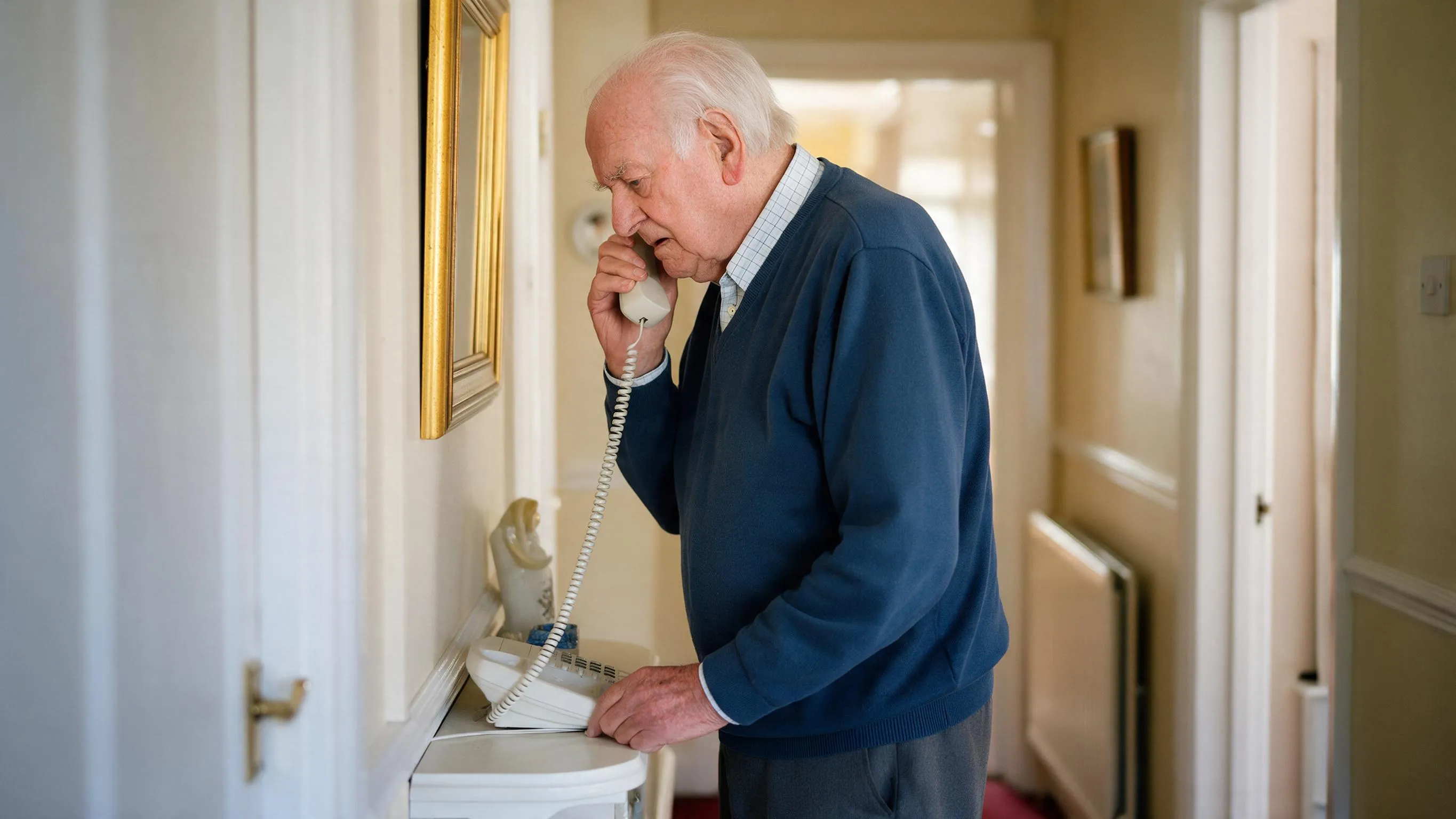
Scams are a form of financial abuse, and criminals often target older people, particularly those living alone or with memory problems. Common examples:
- Impersonation calls: someone claiming to be from the bank, the police or a government department, saying an account is at risk and money must be moved to a “safe account”.
- Courier fraud: the caller sends someone to collect cash, cards or valuables.
- Doorstep crime: rogue traders offering unnecessary or overpriced repairs, often with pressure to pay at once.
- Text and email scams: messages about parcels, refunds, energy rebates or unpaid bills with a link to click.
- Romance and friendship scams: online or by phone, building trust over weeks before asking for money.
- Investment and pension scams: promises of high returns or “free pension reviews”.
- Lottery, prize and postal scams: a fee is needed to release a prize that does not exist.
The warning signs are usually the same: unexpected contact, urgency, secrecy (“don’t tell your family”) and a request for money, bank details or a PIN.
Simple ways to protect against scams
- Agree a family rule: never give bank details, PINs or passwords to anyone who calls, texts or emails unexpectedly.
- Remember that banks and the police will never ask you to move money or hand over cards.
- If in doubt, hang up, wait, and call back on a number you trust, from a different phone if possible.
- Do not deal with cold callers at the door; ask for identification and check it independently.
- Consider a call blocker, and use a trusted family member as a second check for large payments.
- Forward suspicious emails to report@phishing.gov.uk and suspicious texts to 7726.
How to raise a concern
- If someone is in immediate danger, call 999.
- Raise a safeguarding concern with the local council’s adult social care team. Most councils have a safeguarding page and phone line, with an out-of-hours number.
- Report a crime to the police on 101, or 999 in an emergency.
- Report fraud or cyber crime to Report Fraud at reportfraud.police.uk or on 0300 123 2040. Report Fraud replaced Action Fraud in December 2025 and covers England, Wales and Northern Ireland; in Scotland, call Police Scotland on 101.
- Call the bank straight away if money has been lost; 159 connects you safely to most major banks.
- Report concerns about an attorney or deputy to the Office of the Public Guardian.
- Tell the Care Quality Commission (CQC) about concerns in a registered care service, as well as the council.
For confidential advice, the charity Hourglass runs a helpline for older people and families on 0808 808 8141, and the Age UK Advice Line is free on 0800 678 1602.
What to say when you raise a safeguarding concern
To find the right number, search for your council’s name and “report adult abuse” or “adult safeguarding”, or phone the council’s main number and ask for adult social care. You do not need proof, only a genuine worry. You might say:
“I would like to raise an adult safeguarding concern. It is about [name], who is [age] and lives at [address]. They have [care and support needs, for example dementia or frailty]. I am worried because [what you have seen or been told, with dates]. I think the risk is [what could happen]. [Name] does / does not know I am calling, and their view is [what they have said]. My name is [your name], I am their [relationship], and you can reach me on [number].”
Information to have ready:
- the person’s name, date of birth, address and GP
- what happened, when and where, in as much detail as you can, in the order it happened
- who you are worried about, if anyone, and their relationship to the person
- whether the person is safe now, and whether they know you are reporting
- any evidence, such as bank statements, letters, messages or photographs
- any police or Report Fraud reference number
Ask for a reference number and the name of the person you spoke to, and write down the date and time of your call.
If you think a scam has happened: the first hour

- Stop all contact with the caller or sender. Do not reply, call back on numbers they gave, or send more money.
- Call the bank straight away on the number on the back of the card, or dial 159. Ask them to stop or recall any payments and protect the accounts.
- Change passwords and PINs if any were shared, starting with email and online banking.
- Report it to Report Fraud at reportfraud.police.uk or on 0300 123 2040, and keep the crime reference number. If someone is at the door or a crime is in progress, call 999.
- Keep everything: texts, emails, letters, call times and the numbers used.
- Tell family or a trusted friend, so the person is not left to deal with it alone, and watch for follow-up “recovery” scams offering to get the money back for a fee.
- Consider a safeguarding concern if the person has care and support needs and is being repeatedly targeted.
If the person is reluctant
Many people who are being abused or scammed feel embarrassed, frightened or loyal to the person involved. Be patient and avoid blame. If they have the capacity to decide, their choices should be respected, but you can still keep in touch, offer information and seek advice. If they lack capacity, decisions must be made in their best interests.
What a good care provider does
When a care provider is supporting someone, it should help keep them safe. CQC-registered providers must protect people from abuse and must carry out checks, including criminal record (DBS) checks, on the staff they employ. In practice, look for a provider that:
- trains every carer to recognise abuse and to report concerns
- has clear safeguarding and whistleblowing policies, and a Registered Manager who acts on concerns
- keeps receipts and records for any shopping or money handled for the person
- does not allow carers to accept significant gifts, become involved in wills, or act as attorneys
- reports concerns to the council and notifies the CQC as the law requires
- tells families openly when something has gone wrong
See how to choose a care provider for more questions to ask.
What to do next
- If someone is in danger, call 999.
- Write down what you have seen or heard, with dates.
- Raise a safeguarding concern with the council, and report crimes or fraud.
- Contact the bank at once if money is involved.
- Put simple protections in place: call blockers, a family rule on bank details, and an LPA.
How we can help
Day and Nightcare is registered with the Care Quality Commission and rated Good. If you are ever worried about the safety or care of someone we support, please tell our Registered Manager straight away on 01865 715780; you can also contact the council or the CQC directly. If you are thinking about care at home, from home care visits across Oxfordshire to live-in care anywhere in England from £1,550 a week, our initial assessment is free.
Common questions
What happens after I report a safeguarding concern to the council?
The council first checks whether the person has care and support needs, is experiencing or at risk of abuse or neglect, and cannot protect themselves because of those needs. If so, it must make enquiries, or ask others such as the police or NHS to do so, and decide what action is needed. The person's own wishes are central throughout. You may not be told every detail afterwards, because of confidentiality, but you can ask to be told that your concern has been looked at.
Can I report a concern without giving my name?
Usually, yes. Councils and the police will take anonymous reports, although giving your details helps them come back to you with questions. If you want to report a crime anonymously, you can contact the independent charity Crimestoppers on 0800 555 111. If you work in care and are worried about your own employer, you also have legal protection as a whistleblower when you raise concerns in the right way.
Will the bank refund money lost to a scam?
Often, yes, but act quickly. Since October 2024, UK banks have had to refund most victims of authorised push payment scams, where someone is tricked into sending money by bank transfer, unless the victim acted fraudulently or with gross negligence. Contact the bank immediately (you can call 159 to reach most major banks safely), then report the scam to Report Fraud. Card payments have their own protections, so tell the card provider too.
What if the person does not want me to report it?
If they have the mental capacity to make that decision, their wishes should normally be respected, and you can talk to them about the options and keep in touch. But you should still report it if others are at risk, if a crime has been committed, if they are being coerced, or if there is a serious risk to life. You can also ask the council for advice without giving names. If the person lacks capacity, act in their best interests.
How can we cut down scam calls and post?
Register the phone number with the free Telephone Preference Service and the address with the Mailing Preference Service, which reduce legitimate marketing, and ask the phone provider about call-blocking. Many families install a call blocker that only lets known numbers through. Scam post can be returned unopened. None of these stop every criminal, so the most important protection is the rule never to give personal or bank details to anyone who makes contact unexpectedly.
Sources and further information
- GOV.UK: Care and support statutory guidance, chapter 14 (safeguarding)
- SCIE: Types and indicators of abuse
- GOV.UK: Report Fraud, the new service from City of London Police
- GOV.UK: Report a concern about an attorney, deputy or guardian
- National Cyber Security Centre: Report a scam email
- Age UK: Scams advice
- CQC: Give feedback on care
Prepared by the Day and Nightcare care team. Last updated 30 October 2026; sources last checked 30 October 2026. This guide is general information about care in England, not financial, legal or medical advice.