The first weeks at home after a stroke
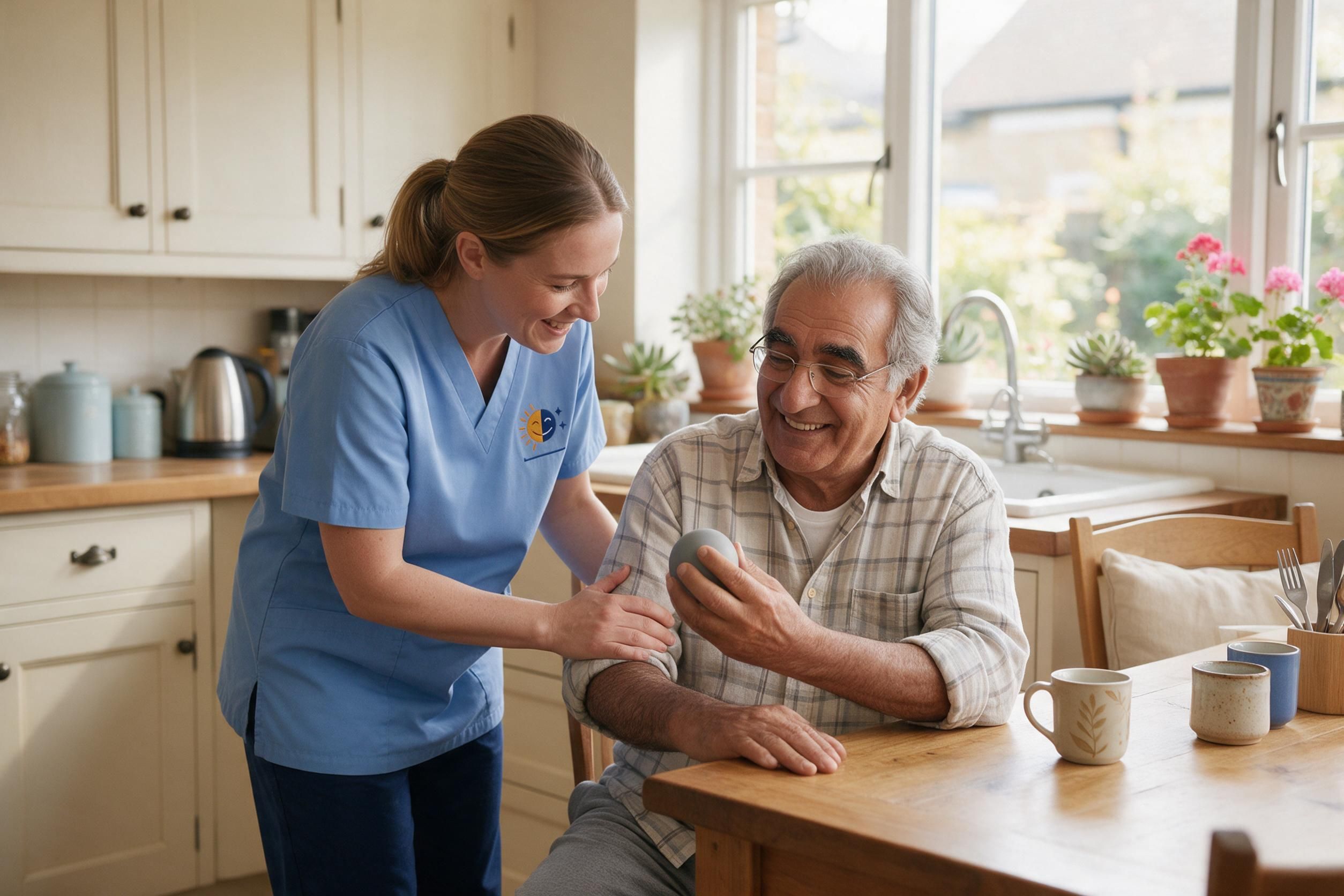
Coming home is a big step, and it can feel daunting for everyone. Hospital stays after a stroke are often short, so much of the recovery happens in the person’s own home. Before discharge, the hospital team should agree a recovery plan, arrange any equipment, and show the person and family how to manage safely. Ask for a copy of the plan and the discharge letter, and make sure you know who to call with questions.
In the early weeks it is normal for the person to tire very easily, to feel low or anxious, and to find that things they did without thinking now take effort and concentration. Some areas have an early supported discharge team that continues stroke therapy at home; others arrange community therapy or reablement. Our guides to leaving hospital and Discharge to Assess explain how this works.
A simple first-weeks checklist:
- Medicines: a clear list, a reliable routine and enough supply.
- Safety: a clear route to the bathroom, a commode or urinal if needed, and good lighting at night.
- Equipment: grab rails, a raised toilet seat, a shower chair or a walking aid, as advised by the occupational therapist.
- Contacts: the stroke team, GP, therapists and the Stroke Association helpline on one sheet by the phone.
- Rest: a daily routine with planned rest periods.
Rehabilitation and reablement
Rehabilitation helps the brain find new ways to do things, and it works best with regular practice. NICE guidance recommends that people who need it and are able to take part are offered at least three hours a day of rehabilitation therapy, on at least five days a week, across physiotherapy, occupational therapy, speech and language therapy and other therapies, and that therapy continues at a lower level for those who cannot manage this.
At home, recovery can be supported by:
- Physiotherapy for movement, balance and walking.
- Occupational therapy for everyday tasks such as washing, dressing and cooking, and for equipment.
- Speech and language therapy for communication and swallowing.
- Reablement, short-term practical support to rebuild skills and confidence, which in England is free for up to six weeks. See our reablement and intermediate care guide.
The exercises the therapists give are the most important part. Carers can help by encouraging practice little and often, and by letting the person do as much as they safely can for themselves, even when it is quicker to do it for them.
Mobility and moving safely
Many people have weakness or numbness on one side of the body. This affects balance, walking and getting in and out of bed, chairs and the bath. Some practical points:
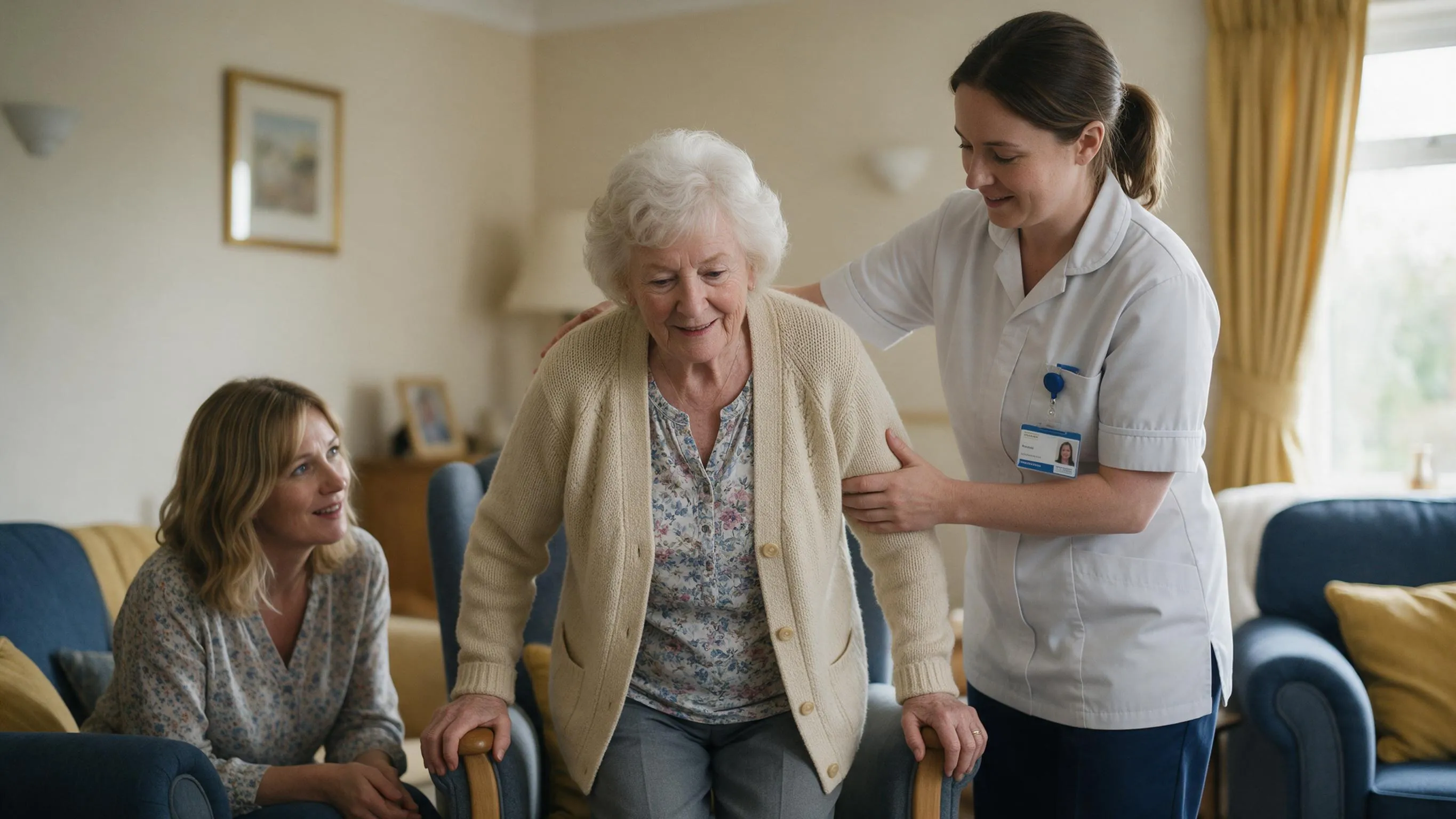
- Follow the therapist’s advice on how to stand, transfer and walk.
- Never pull on a weak arm or shoulder; support it on a cushion or armrest when sitting.
- If sight or awareness on one side is affected, ask the therapist which side to approach from and where to place drinks, the call bell and other everyday items.
- Wear supportive, well-fitting footwear and take extra care at night.
Falls are more likely after a stroke; our falls prevention guide explains how to reduce the risk.
Communication and aphasia
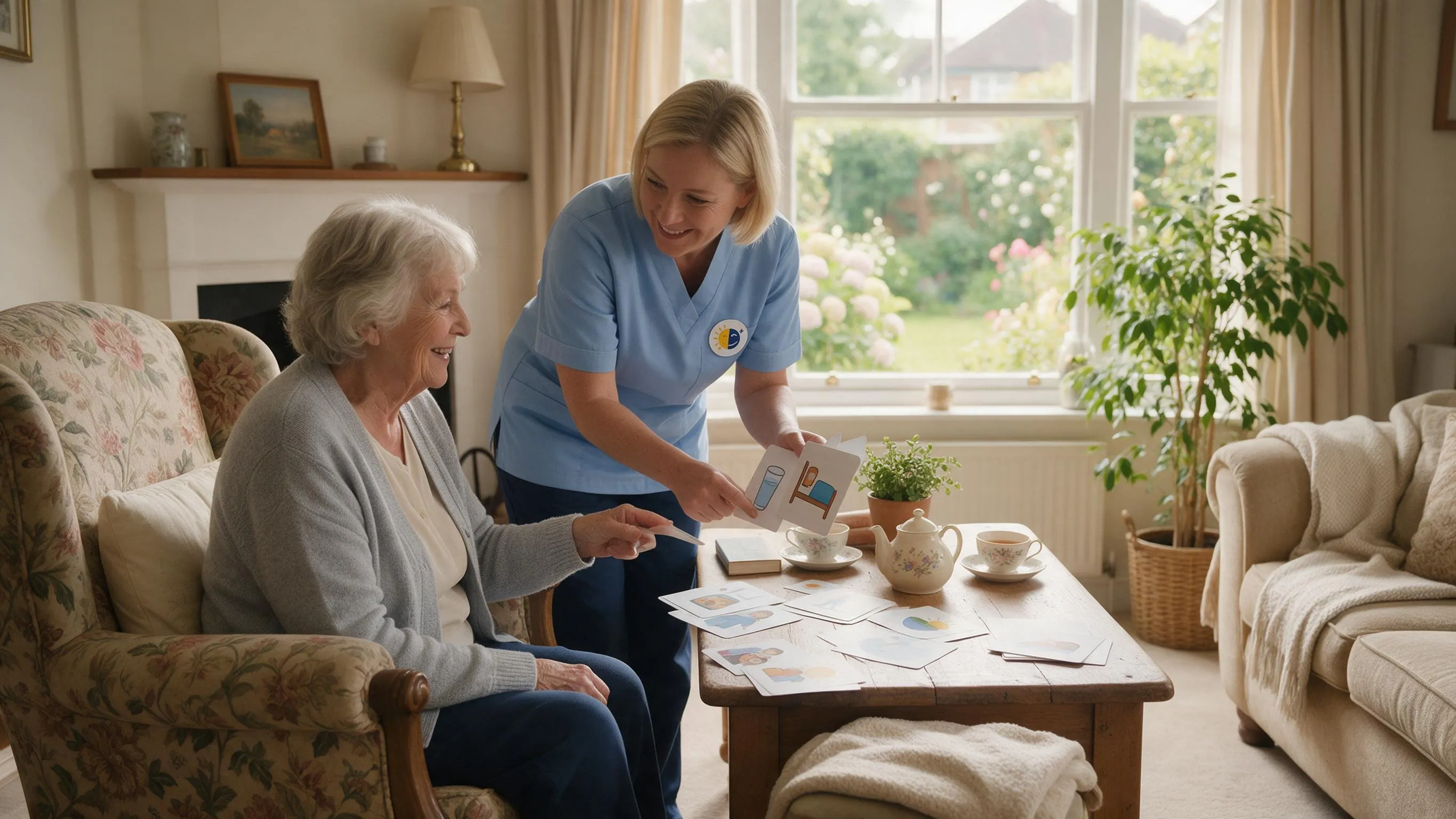
Aphasia is a language difficulty caused by damage to the brain. It can affect speaking, understanding, reading, writing and numbers, but it does not affect intelligence. The person still knows what they want to say. Other people may have dysarthria, where speech is slurred because of muscle weakness.
Ways to help:
- Find a quiet place, face the person and speak a little slower, in short sentences.
- Ask questions that can be answered “yes” or “no”, or offer written choices.
- Give time, and do not finish sentences unless asked.
- Use gestures, pictures, writing and objects.
- Check you have understood by summing up what you think they said.
- Include them in conversations and decisions; do not talk over them.
Fatigue
Tiredness after a stroke is very common and is not ordinary tiredness: it can come on suddenly and is not always relieved by sleep. It can be caused by the brain healing, by emotional effects, by medicines or by poor sleep. It often improves over time. Pacing helps: break tasks into smaller steps, plan the most important activity for the time of day the person has most energy, and build in rest before exhaustion sets in. A simple diary of activity and tiredness can show patterns.
Mood and emotional changes
Most people experience emotional changes after a stroke, such as low mood, anxiety, frustration, irritability or emotionalism, where they cry or laugh suddenly. Depression is common and treatable. Talking therapies, including cognitive behavioural therapy, can help, and people can refer themselves to NHS Talking Therapies. Speak to the GP if low mood lasts more than a couple of weeks, if the person withdraws, or if you are worried about their safety. Family carers’ mood matters too, so please look after yourself.
Preventing another stroke
Having had a stroke or TIA increases the risk of another, but much can be done:
- Take the prescribed medicines every day, which may include tablets for blood pressure, cholesterol and blood clotting.
- Have blood pressure checked regularly, at the GP surgery, a pharmacy or with a home monitor.
- Stop smoking; the NHS offers free support to quit.
- Keep alcohol within the NHS guideline of no more than 14 units a week, spread over several days.
- Eat a balanced diet with plenty of fruit and vegetables and less salt.
- Stay as active as safely possible.
- Keep diabetes and an irregular heartbeat (atrial fibrillation) under review with the GP.
When to call 999, 111 or the GP
Everyone in the home should know the signs of a stroke, remembered as FAST:
- Face: has the face dropped on one side? Can they smile?
- Arms: can they lift both arms and keep them there?
- Speech: is speech slurred or muddled?
- Time: call 999 straight away.
Call 999 for any FAST sign, even if it seems to settle, and do not drive the person to hospital yourself. Also call 999 if they suddenly become confused or drowsy, are choking and it does not clear, have chest pain or severe difficulty breathing, or have fallen and may be badly hurt.
Ask for an urgent GP appointment or call NHS 111 (free, 24 hours) if there are signs of a chest infection, coughing or choking when eating or drinking, signs of a urine infection, or new throbbing pain or swelling in one leg, which can be a blood clot (call 999 if this comes with breathlessness or chest pain).
Book a GP appointment about low mood, fatigue that is not improving, side effects of medicines, continence problems or blood pressure checks.
How to get NHS and council help, step by step
- Before discharge: ask the ward for the recovery plan, the name of the community stroke or early supported discharge team, and when therapy will start.
- Therapy at home: if nobody has been in touch within a few days, phone the number on the discharge letter, or ask the GP to chase the referral.
- Care and equipment: ask the council’s adult social care team for a care needs assessment and an occupational therapy assessment; ask for a carer’s assessment too.
- Speech or swallowing: ask the GP for a speech and language therapy referral if problems appear or return.
- Mood: self-refer to NHS Talking Therapies, or ask the GP.
- Review: expect a progress review at about six months, and ask the stroke team or GP if it is not offered.
- Driving: check the DVLA rules before driving again.
How support at home helps recovery
For people who are struggling, a period of live-in care after hospital can make home the right place to recover: a carer is there to help the person practise their exercises, move safely, rest, eat well and take medicines, around the clock. For others, visits at key times of day or night care are enough. Care should aim to restore independence, with support reduced as the person improves.
Help with costs
- Reablement and intermediate care: free for up to six weeks.
- Attendance Allowance (over State Pension age) or Personal Independence Payment (under it), neither of which is means-tested.
- A free council care needs assessment, then a financial assessment, for longer-term care.
- Free equipment and minor adaptations costing £1,000 or less if the council assesses a need, and a means-tested Disabled Facilities Grant for larger changes.
- NHS Continuing Healthcare if needs are primarily health needs.
Where to get support
- Stroke Association Support Helpline: 0303 3033 100. Monday to Friday 9am to 5pm, Saturday 10am to 1pm. For stroke survivors, families and carers.
- Age UK Advice Line: 0800 678 1602 (free). 8am to 7pm, every day of the year.
- Carers UK Helpline: 0808 808 7777. Monday to Friday, 9am to 6pm.
- Samaritans: 116 123 (free), 24 hours a day.
What to do next
- Ask for a copy of the discharge plan and a named contact in the stroke or community team.
- Check that therapy and reablement are arranged, and when they start.
- Make the home safe before or on the day of discharge.
- Claim Attendance Allowance or PIP and ask for a council care needs assessment and a carer’s assessment.
- Put the prevention medicines into a daily routine and book a blood pressure check.
- Note the six-month review in the diary and ask for it if it does not happen.
How we can help
Day and Nightcare has provided Discharge to Assess care since 2014 and for several years ran Oxfordshire’s Urgent Response service for several years, so we know how important the first weeks home are. We provide fully managed live-in care anywhere in England, from £1,550 a week, and home care visits, waking nights and sleep-ins across Oxfordshire, and 24-hour care with carers working in shifts anywhere in England. Call 01865 715780 to arrange a free assessment.
Common questions
How long does recovery from a stroke take?
It is different for everyone. Most improvement tends to happen in the first weeks and months, but many people keep making progress for much longer, especially with regular practice. Some effects, such as tiredness or word-finding difficulties, can last. The NHS says you should have a review of your progress at about six months; if it is not offered, ask the stroke team or GP. Progress can be slow and uneven, so celebrate small gains.
Can someone drive again after a stroke?
Not straight away. Anyone with a car licence must stop driving after a stroke or TIA for at least one month, and only restart when a doctor says it is safe. If problems such as weakness, sight, balance, memory or understanding still affect them after a month, or they have had a seizure, they must tell the DVLA. Bus and lorry drivers must tell the DVLA and stop for at least a year.
Is care after a stroke free?
Some of it is. NHS treatment and therapy are free, and reablement or intermediate care arranged by the council or NHS is free for up to six weeks. Longer-term help with personal care is means-tested by the council. If needs are mainly health needs, NHS Continuing Healthcare may pay for all care. Attendance Allowance or PIP can help with costs whatever your savings.
Why does my relative suddenly cry or laugh since the stroke?
This can be emotionalism, a common effect of stroke in which a person laughs or cries suddenly, sometimes without feeling sad or happy. It is caused by damage to the brain, not by weakness of character, and it often improves with time. Gentle distraction can help in the moment. Tell the GP or stroke team, as treatment is available, and also watch for signs of depression, which is common too.
What is a TIA, and is it serious?
A transient ischaemic attack (TIA), sometimes called a mini-stroke, causes stroke symptoms that go away, often within minutes. It is a warning sign that a stroke may follow, so it needs urgent medical attention. If you notice stroke symptoms, call 999 even if they seem to have stopped. Treatment after a TIA can greatly reduce the risk of a full stroke.
Sources and further information
- NHS: Stroke recovery
- NHS: Stroke symptoms
- NHS: Preventing a stroke
- NICE: Stroke rehabilitation in adults (NG236)
- GOV.UK: Stroke and driving
- Stroke Association: Stroke Support Helpline
- Stroke Association: Fatigue after stroke
Prepared by the Day and Nightcare care team. Last updated 30 October 2026; sources last checked 30 October 2026. This guide is general information about care in England, not financial, legal or medical advice.