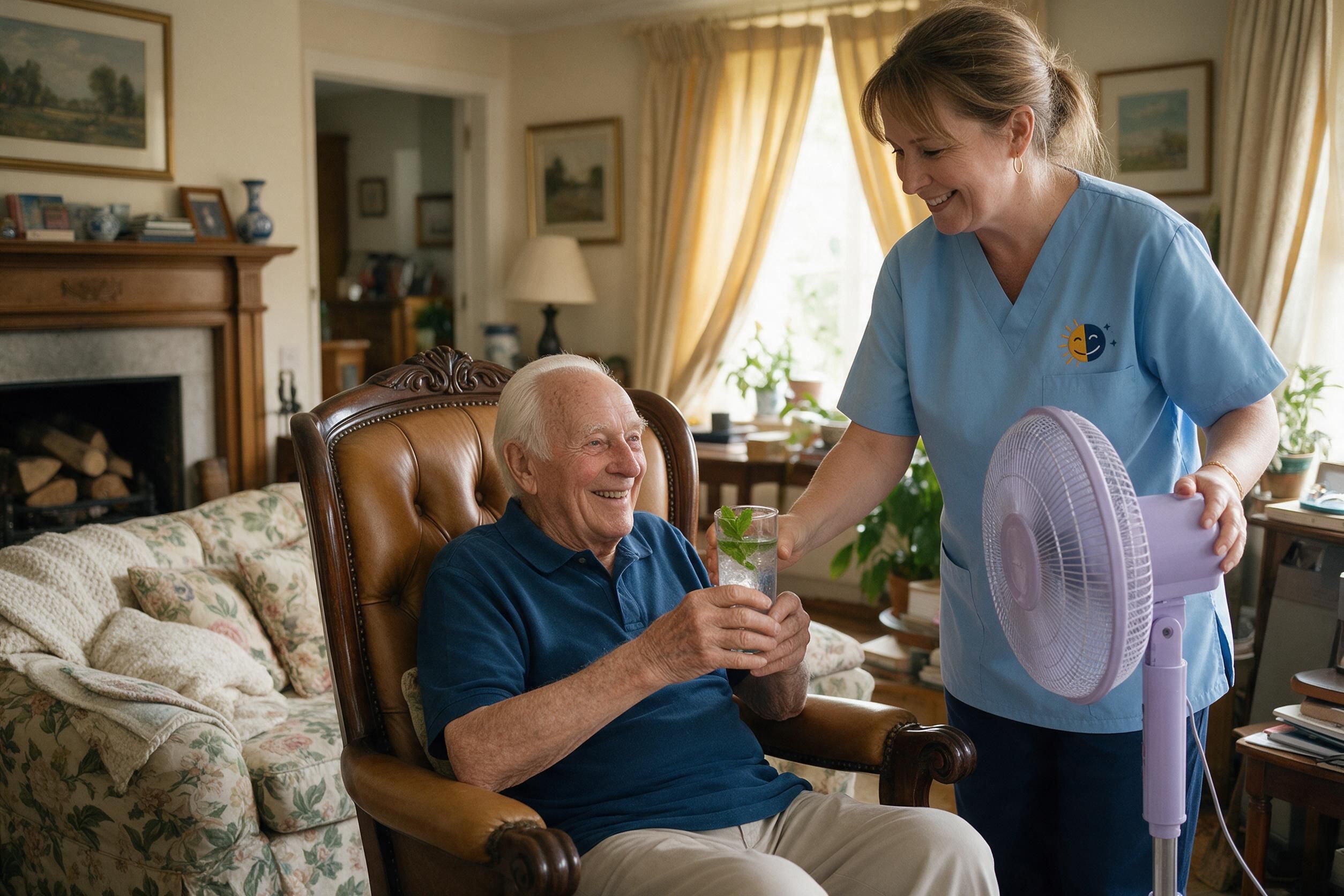
Why older people are more at risk
As we get older, the body is less able to control its temperature, and thirst becomes a less reliable signal. Many medicines and long-term conditions add to the risk. UKHSA lists those at higher risk in hot or cold weather as including:
- people aged 65 and over
- people with heart or breathing problems, dementia, diabetes, kidney disease, Parkinson’s disease or mobility problems
- people who live alone and may be unable to look after themselves
- people who are housebound, at risk of falls, or on several medicines
Cold weather raises the risk of heart attacks, strokes, chest infections and falls. Hot weather raises the risk of dehydration, heat exhaustion and heatstroke, and can make heart and breathing problems worse.
Get a warning in advance
The UK Health Security Agency (UKHSA) and the Met Office issue weather-health alerts for England:
- Heat-Health Alerts: 1 June to 30 September.
- Cold-Health Alerts: 1 November to 31 March.
- Extra alerts are issued outside these periods if the weather calls for it.
Alerts are colour-coded yellow, amber or red according to the level of risk. Anyone can register free on GOV.UK (“Weather-Health Alerting System”) to receive them by email. When an alert is issued, it is the moment to check on relatives and neighbours.
In hot weather
Keep the home cool:
- Close curtains and blinds on windows that get direct sun during the day.
- Open windows, if it is safe, when the air outside is cooler, usually at night, and let air flow through.
- Use an electric fan while the temperature is below 35°C, not aimed straight at the body.
- Move to the coolest room, especially for sleeping, and check its temperature.
- Turn off the heating, and lights and appliances that are not in use.
- Check medicines can be stored as the packaging says; some must be kept below 25°C or in the fridge.
Look after the body:
- Drink regularly through the day, enough for urine to be pale straw coloured. Water, diluted squash and lower-fat milk are good choices; limit alcohol.
- Eat cold, water-rich foods: salads, fruit, yoghurt, ice lollies.
- Stay in the shade between 11am and 3pm. Wear loose, light clothes and a wide-brimmed hat, and use sunscreen of at least SPF 30.
- Keep taking prescribed medicines unless a doctor or pharmacist says otherwise. Ask the pharmacist if you are unsure how hot weather affects them.
Heat exhaustion shows as tiredness, dizziness, headache, nausea, heavy sweating, cramps, a high temperature and intense thirst. Move the person somewhere cool, remove unnecessary clothing, give water or a rehydration drink, and cool the skin with cool water and a fan. They should feel better within 30 minutes. Call NHS 111 if you are struggling to treat it.
Heatstroke is an emergency. Call 999 if the person is still unwell after 30 minutes of cooling, or has a very high temperature, hot skin that is not sweating, fast breathing or a fast heartbeat, confusion, a fit or loses consciousness. While you wait, cool them with a cool, wet sheet, a fan or a sponge.
Dehydration is easy to miss
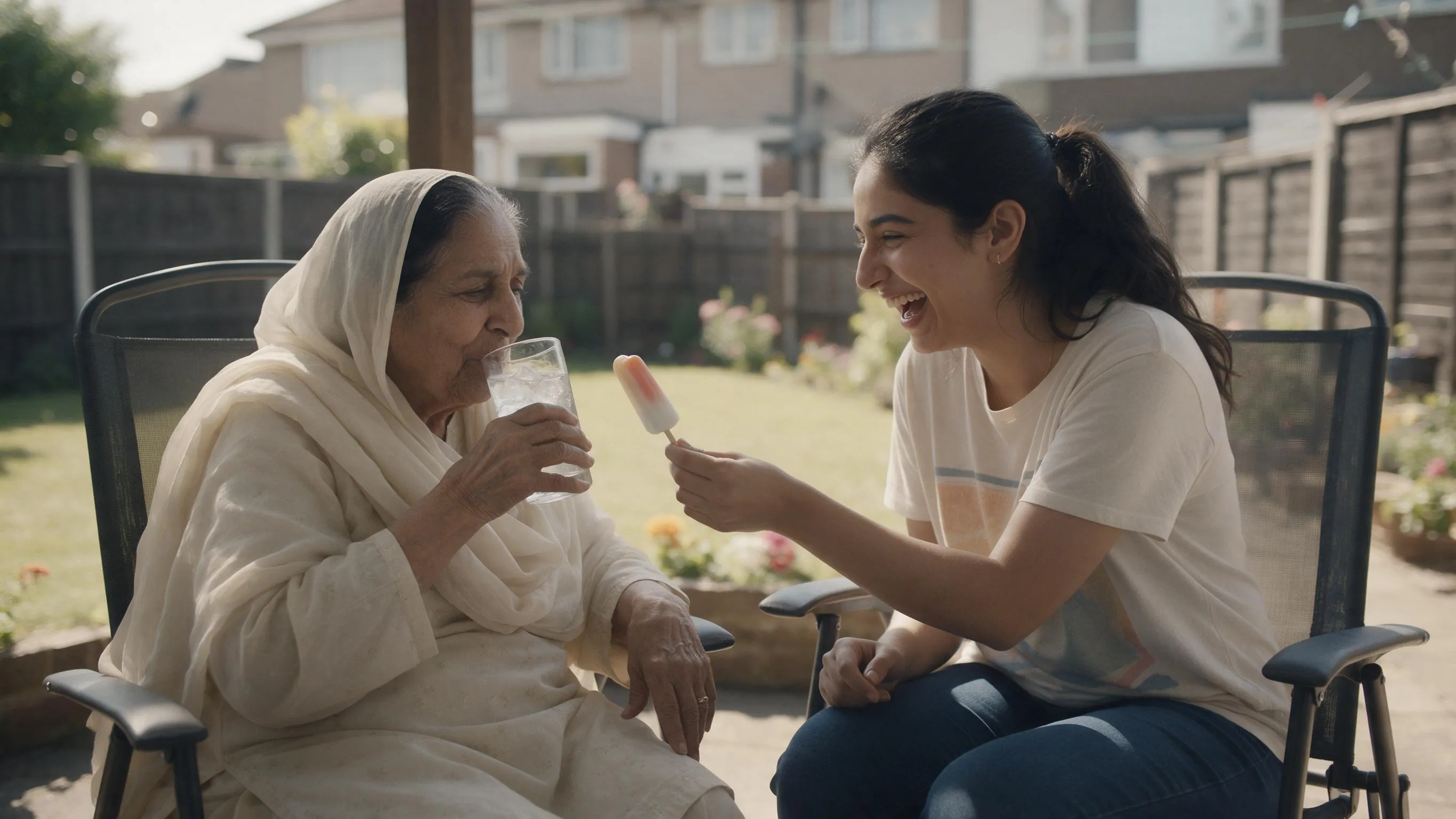
Older people can become dehydrated in any weather, and quickly in a heatwave or with an infection. Signs include dark, strong-smelling urine, passing urine less often, dizziness, tiredness and a dry mouth. Sudden confusion can be a sign too. Put drinks within easy reach, offer them little and often, and keep a simple note of what is drunk if you are worried. Our guide to nutrition and hydration has practical ideas.
In cold weather
Keep warm:
- Heat the rooms you use most, such as the living room and bedroom, to at least 18°C if you can.
- Keep bedroom windows closed at night.
- Fit draught excluders, and close curtains at dusk.
- Wear several thin layers rather than one thick one, plus a hat, socks and slippers with a good grip.
- Try not to sit still for more than an hour; stretching arms and legs helps if walking is hard.
- Have hot meals and hot drinks through the day.
Heat safely:
- Have boilers, gas fires and cookers checked by a Gas Safe registered engineer, and fit a carbon monoxide alarm.
- Keep portable heaters well away from curtains, furniture and clothes, and never use a cooker or oven to heat a room.
- Check electric blankets for wear, follow the instructions, and never use one with a hot-water bottle.
- Ask your fire and rescue service for a free home fire safety visit. See our home safety checklist.
Hypothermia: UKHSA lists shivering, slow breathing, tiredness or confusion, and pale, cold skin as typical signs. Call NHS 111 for advice, or 999 in an emergency.
Winter vaccines: the NHS offers a free flu vaccine at 65 or over, a COVID-19 vaccine at 75 or over, the RSV vaccine at 75 or over, and the pneumococcal vaccine at 65 or over, with wider eligibility for people with some health conditions. Book through the GP, a pharmacy or the NHS App.
Before snow and ice: stock up on food and prescriptions, arrange who will shop if pavements are icy, and keep important numbers by the phone.
Help with energy bills in 2026/27
- Winter Fuel Payment: £200 a household, or £300 if someone was born before 28 September 1946, for anyone born on or before 27 June 1960. It is mostly automatic, paid in November or December 2026, and HMRC takes it back if your own income is over £35,000. Claim line: 0800 731 0160, Monday to Friday, 8am to 6pm.
- Warm Home Discount: £150 off the electricity bill if, on 23 August 2026, you or your partner got Pension Credit, Universal Credit, Housing Benefit or income-related ESA and your name is on the bill. Letters go out between late October 2026 and early January 2027.
- Cold Weather Payment: £25 for each 7-day spell at or below zero degrees between 1 November 2026 and 31 March 2027, paid automatically with Pension Credit and some other benefits.
- Pension Credit: the gateway to much of this help, and it can be backdated by 3 months. Claim line: 0800 99 1234, Monday to Friday, 8am to 6pm. See benefits and help for older people.
- Priority Services Register: free extra help from your energy supplier and network operator, open to anyone over State Pension age or with a disability or long-term condition. It includes priority support in an emergency and, where possible, advance notice of planned power cuts. Ask your water company too. In a power cut, call 105.
- Insulation and heating upgrades: for free advice, call Find Ways to Save Energy in Your Home on 0800 098 7950 (Monday to Friday, 8am to 6pm; Saturday, 9am to 12pm), and ask your council about Warm Homes: Local Grant funding.
- Emergency help: your council’s Crisis and Resilience Fund, which replaced the Household Support Fund in April 2026, may help with energy costs in a crisis.
For a free benefits check or advice, the Age UK Advice Line is 0800 678 1602, open 8am to 7pm every day.
How family and carers can help
- Agree a check-in routine during alerts: a daily call or visit, more often in a red alert.
- Put a room thermometer in the living room and bedroom.
- Keep drinks, a phone and a torch within reach.
- Make sure prescriptions are ordered before bad weather or bank holidays.
- Consider a personal alarm for anyone who lives alone; see technology and telecare.
How live-in care helps
A live-in carer is in the home day and night, so the small things that keep people well in extreme weather happen without anyone having to remember: drinks offered regularly, rooms kept at a safe temperature, curtains drawn at the right time, hot meals in winter, and early signs of illness noticed and acted on. For someone who lives alone, that daily presence can matter most during a heatwave or a cold snap.
What to do next
- Register for UKHSA weather-health alerts on GOV.UK.
- Put a room thermometer in the main living room and the bedroom.
- Check entitlement to Pension Credit, the Winter Fuel Payment and the Warm Home Discount.
- Join the Priority Services Register with the energy supplier.
- Book winter vaccines and plan who checks in during an alert.
How we can help
We are a CQC-registered home care provider, rated Good, supporting people at home since 2008. We provide live-in care anywhere in England, from £1,550 a week, and home care visits, waking nights and sleep-ins across Oxfordshire. If you are worried about how a relative will cope through the winter or a summer heatwave, call us on 01865 715780 to arrange a free initial assessment.
Common questions
What temperature should an older person's home be in winter?
UKHSA and the NHS advise heating the rooms you spend most time in, such as the living room and bedroom, to at least 18°C if you can, and keeping bedroom windows closed at night. This is especially important for anyone over 65 or with a health condition. A cheap room thermometer takes away the guesswork. If the cost of heating is a worry, check entitlement to Pension Credit, the Winter Fuel Payment and the Warm Home Discount.
Is it safe to use a fan in a heatwave?
Yes, while the air temperature is below 35°C. UKHSA advises against aiming the fan directly at the body, because that can add to dehydration. Fans work best alongside other steps: closing curtains on sun-facing windows during the day, opening windows when it is cooler outside, usually at night, and moving to the coolest room for sleeping. Above 35°C, focus on cooling the skin with cool water and finding a cooler place.
How can I tell if an older person is dehydrated?
Look for dark yellow, strong-smelling urine, passing urine less often than usual, dizziness or light-headedness, tiredness, headache, and a dry mouth, lips and tongue. Older people may not feel thirsty even when they need fluids, and people who rely on others to bring drinks, or who take water tablets (diuretics), are more at risk. Offer drinks little and often. Call NHS 111 if you are worried, and 999 if they are confused, very drowsy or collapse.
Do I need to claim the Winter Fuel Payment?
Most people do not. It is paid automatically if you were born on or before 27 June 1960 and get the State Pension or certain benefits, such as Pension Credit or Attendance Allowance. You need to claim only if you do not get any qualifying benefit and have not had the payment before, or have deferred your State Pension since your last one. Claims for winter 2026 to 2027 close on 31 March 2027; ring 0800 731 0160.
What is a Cold-Health Alert?
It is an early warning from the UK Health Security Agency, issued with the Met Office, that cold weather is likely to affect people's health. Cold-Health Alerts run from 1 November to 31 March, and Heat-Health Alerts from 1 June to 30 September, with extra alerts outside those periods if needed. They are colour-coded according to how serious the risk is. Anyone can register free on GOV.UK to receive them by email.
Sources and further information
- GOV.UK (UKHSA): Weather-Health Alerting System
- GOV.UK (UKHSA): Beat the heat, staying safe in hot weather
- GOV.UK (UKHSA): Keeping warm and well, staying safe in cold weather
- NHS: Heat exhaustion and heatstroke
- NHS: Winter vaccinations and winter health
- GOV.UK: Winter Fuel Payment
- GOV.UK: Warm Home Discount Scheme
- Ofgem: Join your supplier's Priority Services Register
Prepared by the Day and Nightcare care team. Last updated 30 October 2026; sources last checked 30 October 2026. This guide is general information about care in England, not financial, legal or medical advice.