What pressure ulcers are and where they form
A pressure ulcer is an injury to the skin and the tissue underneath, caused by pressure, or pressure combined with the skin being dragged, over a period of time. They usually form over bony parts of the body:
- heels and ankles
- the base of the spine (tailbone) and buttocks
- hips
- elbows and shoulder blades
- the back of the head and the ears, in someone lying in bed
They usually develop gradually, but the NHS says they can appear within a few hours. Without care, a discoloured patch can become a blister, then an open wound that reaches muscle and bone. Nurses describe pressure ulcers in categories, from category 1 (the skin is unbroken but has a discoloured patch that does not fade when pressed) to category 4 (a deep wound reaching muscle or bone). Deep ulcers can take months to heal, so prevention matters.
Who is most at risk
The NHS lists people who:
- have difficulty moving, or spend most of the day in a bed or chair
- have had a pressure ulcer before
- have recently been seriously ill or had surgery
- are underweight
- have swollen, sweaty or broken skin, often linked to incontinence
- have poor circulation or fragile skin
- have reduced feeling, for example after a stroke, with diabetes or a spinal condition
Significant memory problems also increase the risk, because the person may not shift position or say when they are uncomfortable. If you think someone is at risk, the NHS suggests asking the GP for a risk assessment so a prevention plan can be put in place.
A daily skin check: what to look for
Check the skin once a day, ideally while helping with washing or dressing, and pay most attention to the bony areas listed above. Look for:
- a patch of skin that is discoloured: red on white skin, or purple or blue on black or brown skin
- a patch that does not change colour when you press it gently with a finger
- skin that feels warm, spongy or hard compared with the skin around it
- pain, tenderness or itching in one spot
- a blister, broken skin or a shallow wound
Check under and around anything that presses on the skin, such as oxygen tubing, a catheter, splints or tight footwear. Write down what you find, with the date, so changes are easy to spot.
Changing position: how often and how
Pressure is relieved only when the weight comes off the area. NICE recommends that people at risk change position frequently and at least every six hours, and people at high risk at least every four hours. The district nurse sets the right frequency for each person and it should be written in the care plan.
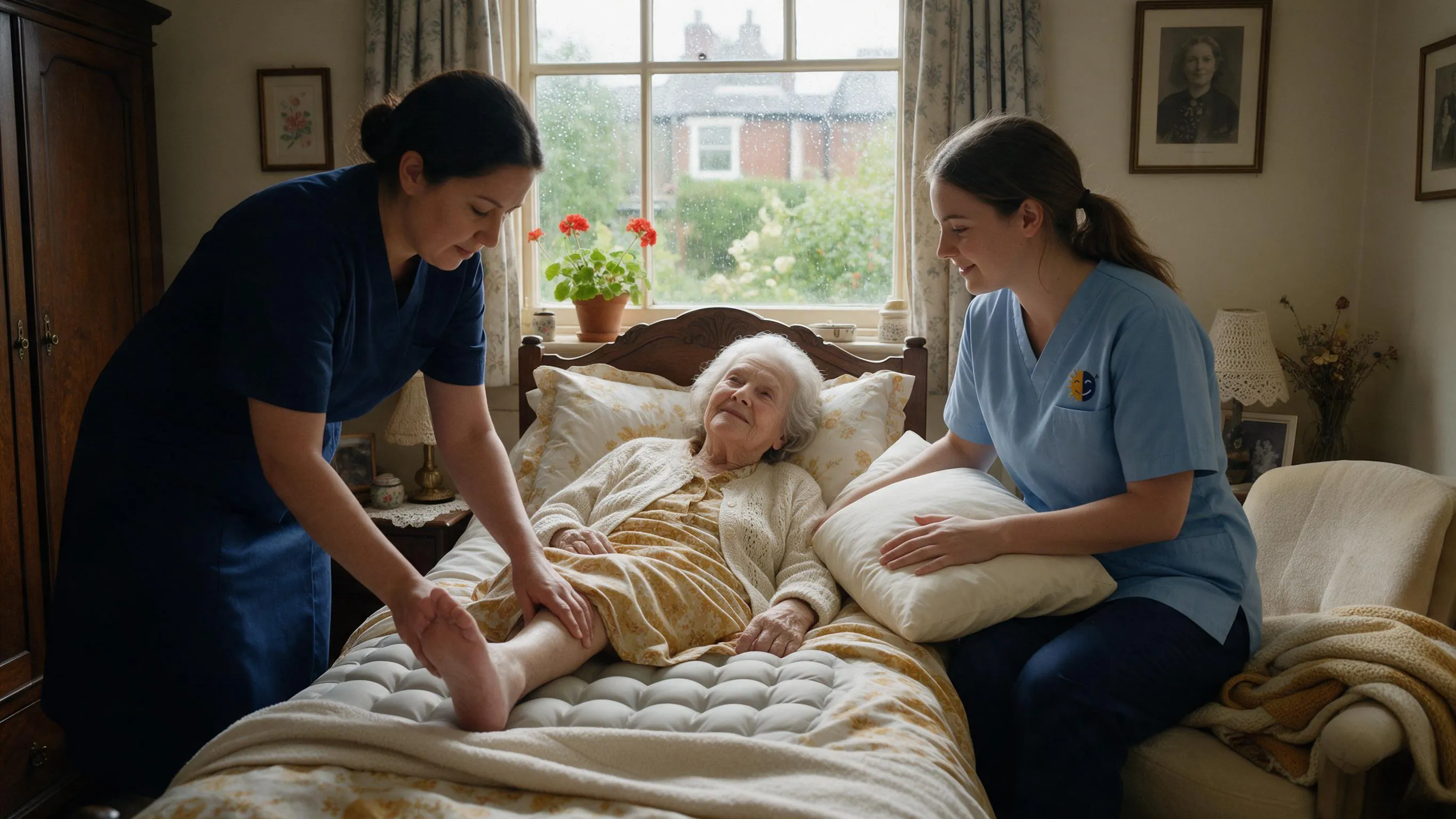
- In bed: turn from back to side to other side in a regular pattern, keeping weight off any red area.
- Heels: these are especially vulnerable. Ask the nurse how best to keep pressure off them.
- Sitting: someone sitting for long periods needs a suitable pressure-relieving cushion and should change position or stand regularly if they can.
- Encourage movement: small shifts of weight, standing and short walks all help, if safe.
- Do not drag: sliding someone across the sheets damages the skin. Use slide sheets and the moving and handling methods shown by a nurse or occupational therapist.
- At night: if turning is needed through the night, plan who will do it. This often decides the type of care needed.
Keeping skin clean and dry
- Wash gently with warm water and a mild cleanser, pat dry rather than rub, and dry carefully between skin folds.
- Change wet or soiled pads and clothing promptly. Moisture from urine, faeces or sweat makes skin much more likely to break down.
- Use a barrier cream if the nurse or GP recommends one.
- Do not massage or rub red areas. NICE advises against it.
- Keep bedding smooth and free of crumbs and creases.
Our guide to continence care with dignity covers products and skin care.
Eating and drinking

Healthy skin needs enough food, protein and fluid. Weight loss, a poor appetite or not drinking enough all raise the risk and slow healing. Offer drinks regularly and keep them within reach, aiming for pale urine. If someone is losing weight or eating little, ask the GP for a nutrition check and, if needed, a dietitian referral. See nutrition and hydration.
Equipment and how to get it from the NHS
Equipment is not a substitute for changing position, but it helps. Common items:
- Pressure-relieving mattress: NICE recommends a high-specification foam mattress for adults at high risk. Some people need an electric air mattress.
- Pressure-relieving cushion for anyone who sits for long periods or uses a wheelchair.
- Profiling bed, which raises and lowers and helps with turning and sitting up.
- Heel protection, slide sheets and other moving and handling aids.
How to get it: ask the GP practice to refer the person to the district (community) nursing team, or ask the occupational therapist or hospital team if they are being discharged. Equipment assessed as needed is usually lent free through the local community equipment service. See equipment and home adaptations.
If the mattress needs electricity, join the Priority Services Register with your energy supplier and the local electricity network operator. Ofgem says members can get priority support in an emergency and, where possible, advance notice of planned power cuts. Ask the nurse what to do if the power goes off, and report power cuts by calling 105, the free national power cut number.
When to call the district nurse, GP or NHS 111
Contact the GP or district nurse (non-urgent, but soon) if you think someone has a pressure ulcer or a patch that does not fade when pressed.
Ask for an urgent GP appointment or call NHS 111 (free, 24 hours) if a sore area shows any of these signs, which the NHS lists:
- hot, swollen or red skin around it (on brown or black skin it can look purple or blue)
- pus coming from it
- a high temperature
- severe or worsening pain
Words you can use
Asking the GP practice for a district nurse:
“My father, [name, date of birth], is mostly in bed or his chair now. There’s a red patch on his tailbone that doesn’t fade when I press it. Please could the district nursing team visit to assess his skin and whether he needs a pressure-relieving mattress and cushion?”
Asking about the plan:
“How often does he need turning, day and night? Could that be written in his care plan, and could someone show us how to move him safely?”
If you are worried about the care someone is getting
Raise concerns with the care provider and the district nurse first. Ask to see the care plan and the record of repositioning and skin checks. The government’s safeguarding protocol on pressure ulcers says families should be involved and listened to, and that carers can ask for training in preventing pressure ulcers and spotting the early signs. If you believe the person is being neglected, contact the council’s adult social care team to raise a safeguarding concern. See safeguarding and scams.
How live-in and night care help
A carer who is in the home all day can help someone change position regularly, check their skin while helping them wash and dress, keep drinks and snacks coming and spot early changes before they become wounds. Be honest about nights: a live-in carer can help occasionally at night, but if someone needs turning several times every night, a waking night carer is usually needed as well. See night care.
Checklist: pressure care at home
- Daily skin check of heels, hips, tailbone, elbows and ears, written down.
- Position changed as often as the care plan says, day and night.
- Pressure-relieving mattress and cushion in place and working.
- Skin kept clean and dry; pads changed promptly; no rubbing.
- Drinks within reach; meals and weight watched.
- Slide sheets used; nobody dragged across the bed.
- District nurse and GP numbers by the phone.
- Priority Services Register joined if equipment uses electricity.
What to do next
- Check the person’s skin today, especially heels and the base of the spine.
- Ask the GP practice for a pressure ulcer risk assessment or district nurse visit.
- Agree how often they need to change position, and who will help at night.
- Ask for an assessment for a pressure-relieving mattress and cushion before buying anything.
- Review eating, drinking and continence care.
How we can help
Day and Nightcare provides home care visits from one hour, waking nights and sleep-ins across Oxfordshire, and 24-hour care with carers working in shifts anywhere in England, and fully managed live-in care anywhere in England from £1,550 a week, funded privately, by councils (including direct payments) or by NHS Continuing Healthcare. If someone you care for is spending more time in bed or a chair and you would like to talk about support at home, call us on 01865 715780 to arrange a free assessment and a written quote.
Common questions
Are pressure ulcers the same as bed sores?
Yes. Pressure ulcers, pressure sores, pressure injuries and bed sores are different names for the same thing: damage to the skin and the tissue underneath caused by pressure over time. Despite the name, they do not only happen in bed. People who sit for long periods in a chair or wheelchair are also at risk, and medical devices such as oxygen tubing, catheters or splints can cause pressure damage where they press on the skin.
Can pressure ulcers be treated at home?
Many can, usually by the district nursing team. The NHS says treatment depends on how severe the ulcer is and can include changing position and moving regularly, specialist mattresses and cushions, dressings, creams, cleaning the wound and antibiotics if it is infected. Severe ulcers, or ones that do not heal with other treatment, may need surgery. Keep to the care plan the nurse sets, and report any change in the wound or in how the person feels.
What does a pressure ulcer look like on darker skin?
The NHS says early pressure damage usually looks red on white skin, but on black or brown skin it may look purple or blue, and redness can be hard to see. Feel as well as look: an area that is warmer or cooler than the skin around it, spongy or hard, or painful or itchy can be an early warning. Report it promptly, describing what you can feel as well as what you can see.
Is sore skin from incontinence the same as a pressure ulcer?
Not quite. Skin damage caused only by moisture, such as urine, faeces or sweat, is called moisture-associated skin damage, and nurses record it separately from pressure ulcers. But moist skin breaks down much more easily under pressure, and damage caused by moisture and pressure together is counted as a pressure ulcer. Both need prompt attention: change pads quickly, clean and dry the skin gently, and ask the nurse or GP about a barrier cream.
Does a pressure ulcer mean someone has been neglected?
Not necessarily. Pressure ulcers can develop despite good care, particularly in people who are very ill, frail or near the end of life. But they can also be a sign that care has not been planned or delivered properly. If you are worried, talk to the care provider and the district nurse first. If you think the person is being neglected, you can raise a safeguarding concern with the council's adult social care team.
Sources and further information
- NHS: Pressure ulcers (pressure sores)
- NICE: Pressure ulcers, prevention and management (CG179)
- GOV.UK: Safeguarding adults protocol, pressure ulcers and raising a safeguarding concern
- Ofgem: Join your supplier's Priority Services Register
- NHS: Dehydration
Prepared by the Day and Nightcare care team. Last updated 30 October 2026; sources last checked 30 October 2026. This guide is general information about care in England, not financial, legal or medical advice.