
How heart failure and COPD affect daily life
Both conditions tend to follow a pattern of good days and bad days, with longer stable spells broken by flare-ups. Common effects at home include:
- Breathlessness when walking, washing, dressing or climbing stairs, and sometimes when lying flat.
- Tiredness that makes ordinary tasks feel exhausting.
- Swollen ankles and legs (more common in heart failure).
- A persistent cough with phlegm and frequent chest infections (more common in COPD).
- Poor appetite, weight changes and disturbed sleep.
- Anxiety, which often rises with breathlessness and can make it worse.
Neither condition can be cured, but treatment can control symptoms and many people stay stable for years. The aim of care at home is to keep the person comfortable and active, to spot problems early, and to avoid unnecessary hospital stays.
How to manage breathlessness
Breathlessness is frightening, for the person and for those watching. Practical techniques taught by NHS respiratory and heart teams include:
- Positions: sitting upright and leaning forward with forearms resting on the knees or a table, or standing and leaning on a wall or worktop, lets the breathing muscles work more easily.
- Breathing control: gentle, relaxed breathing with the shoulders down and supported.
- Pursed-lip breathing: breathing in through the nose and out slowly through pursed lips, as if whistling.
- Paced breathing: matching breaths to steps on the stairs or during activity.
- Air movement: many people find a cool flow of air on the face, from a handheld fan or an open window, eases the feeling of breathlessness.
Stay calm, speak gently and give the person time. A written breathlessness plan from the respiratory or heart failure nurse is invaluable for everyone in the home.
Warning signs: heart failure
Weigh the person every morning, after using the toilet and before breakfast, in similar clothing, and write the result down. A sudden rise in weight usually means fluid is building up. The heart failure team will give a personal threshold; the British Heart Foundation’s guidance suggests acting on a gain of more than 2kg over three days. Ask for an urgent GP appointment or contact NHS 111 if the person:
- Has suddenly gained weight.
- Is more breathless with everyday activity or when lying down.
- Has more swelling in the legs or tummy.
- Is coughing up frothy pink phlegm.
Warning signs: a COPD flare-up
A flare-up (exacerbation) is when symptoms become suddenly worse than usual: more breathless, coughing more, more phlegm or a change in its colour. Other signs include more wheeze, tiredness, swollen ankles and confusion. Follow the person’s COPD self-management plan, which may include extra reliever inhaler use or starting a rescue pack, and let the GP or respiratory team know.
Medicines and vaccinations
- Give medicines exactly as prescribed, and keep a current list.
- Ask the pharmacist to check inhaler technique; many people do not get the full dose.
- Ask the team about the best time of day for water tablets (diuretics), so they do not disturb the night.
- Check with the GP or pharmacist before taking any over-the-counter remedy or supplement.
- Keep vaccinations up to date: the yearly flu vaccine, the pneumococcal vaccine, COVID-19 vaccines when offered, and the RSV vaccine for people aged 75 and over.
Our medication management guide explains prompting and administering medicines safely.
Home oxygen safety
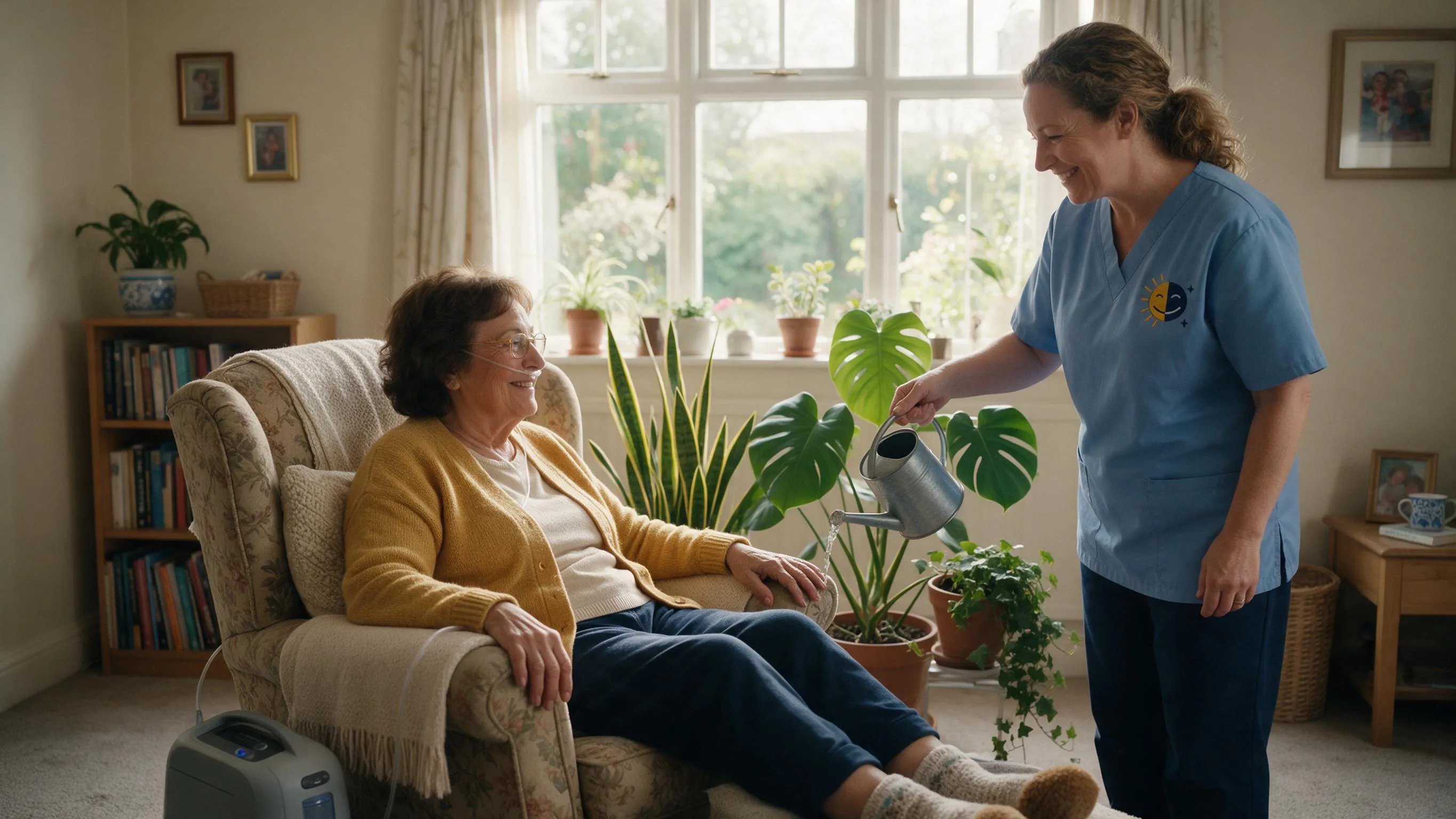
Extra oxygen in the air makes fires start more easily and burn much more fiercely, so a lit cigarette or a flame can cause a serious fire. If someone uses oxygen at home:
- No smoking or e-cigarettes by anyone in the room, ever.
- Keep oxygen equipment well away from naked flames, gas cookers, fires and heaters.
- Ask the oxygen team about skin creams: emollients soaked into clothing and bedding can make fabric burn more easily.
- Keep tubing tidy to avoid trips, and store cylinders as the supplier advises.
- Contact the local fire and rescue service about a free home fire safety visit, and fit working smoke alarms.
Saving energy for what matters
Pacing lets people do more of what they enjoy. An occupational therapist can advise, and simple changes help:
- Sit down to wash, dress, shave and prepare food; a perching stool and shower seat make a big difference.
- Plan the day, spread out tiring tasks, and rest before becoming exhausted.
- Keep frequently used items within easy reach, between waist and shoulder height.
- Wear a towelling dressing gown after a shower instead of drying off with a towel.
- Eat smaller meals more often, as a full stomach can make breathing harder.
Rehabilitation
The NHS says everyone diagnosed with heart failure should be offered cardiac rehabilitation, with exercise, advice and support. For COPD, pulmonary rehabilitation is a programme of exercise and education, usually two or more group sessions a week for at least six weeks. Both improve how far people can walk, how they feel and their confidence. Ask the GP or specialist nurse for a referral.
Checklist: a daily record
A simple daily note helps the person, carers and the heart or lung team spot changes early. Each morning, record:
- Weight (heart failure), on the same scales at the same time.
- Ankle and leg swelling: better, the same or worse?
- Breathlessness compared with a usual day, and how many pillows were needed at night.
- Cough and phlegm: more than usual, or a change in colour?
- How often the reliever inhaler was needed, and whether a rescue pack was started.
- Medicines taken, and any missed doses.
- Appetite, sleep and how the person feels in themselves.
How to get NHS help, step by step
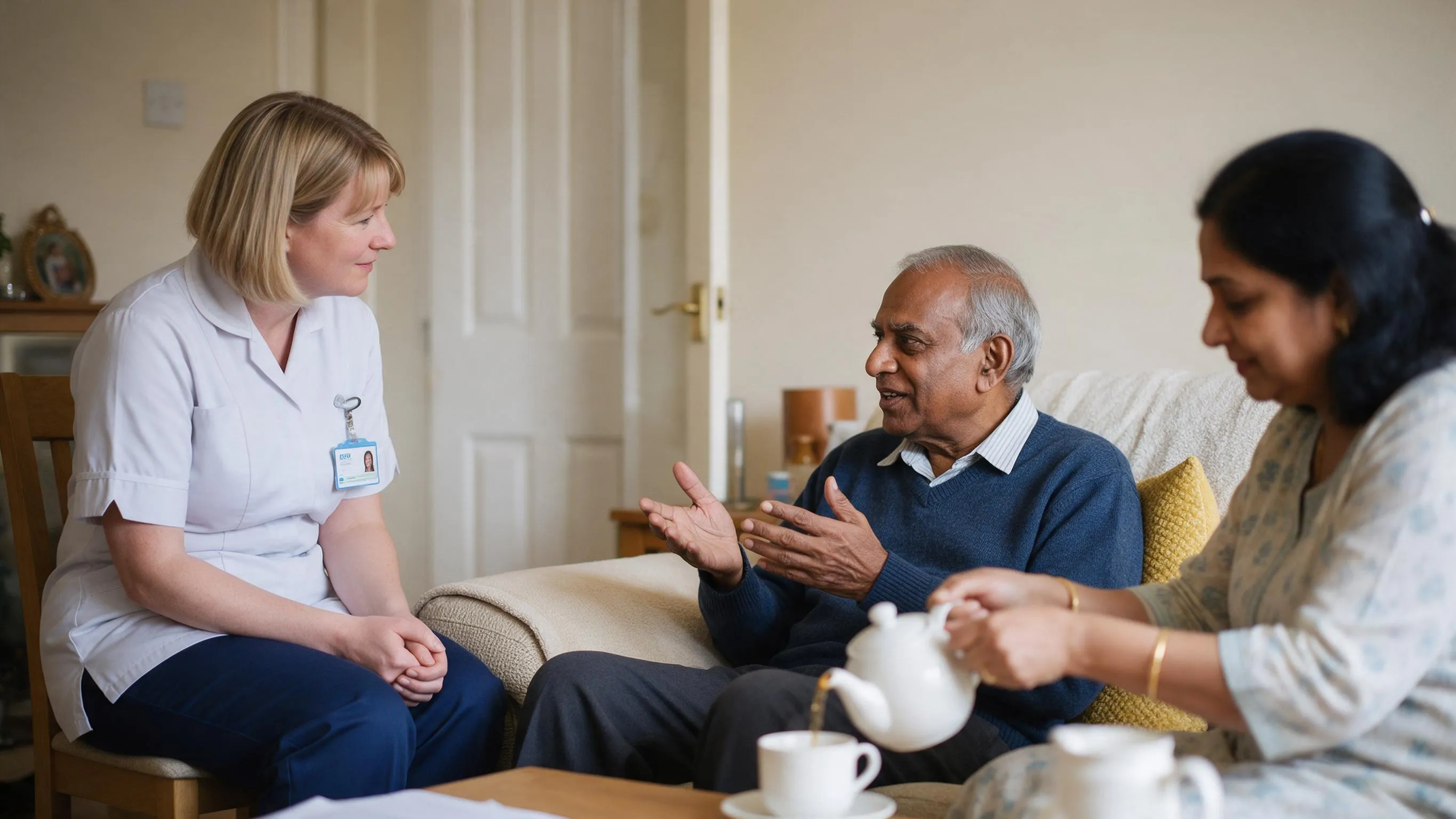
- Specialist nurse: ask the GP for a referral to the local heart failure team or respiratory (COPD) team, if the person does not already have a named nurse.
- Self-management plan: ask the nurse or GP for a written plan that says what to do on a bad day and when to call.
- Rehabilitation: ask the GP, specialist nurse or hospital team for a referral to cardiac or pulmonary rehabilitation.
- Oxygen: if oxygen might help, the GP or respiratory team can refer for the tests that decide whether it is needed.
- Vaccinations: book flu, pneumococcal, COVID-19 and RSV vaccines through the GP surgery or a pharmacy when eligible.
- Support at home: ask the council’s adult social care team for a care needs assessment and an occupational therapist for equipment.
- Comfort and planning: ask the GP or specialist nurse about the community palliative care team when symptoms become harder to manage.
When to call 111 or 999
Call 999 immediately if the person:
- Has severe difficulty breathing: gasping, choking or unable to get words out.
- Has chest pain or tightness, or pain spreading to the arms, back, neck or jaw.
- Has lips or skin turning very pale, blue or grey.
- Becomes suddenly confused, or collapses and is not responding normally.
Contact the GP urgently or NHS 111 (free, 24 hours) for the heart failure or COPD warning signs above, a suspected chest infection, or if you are struggling to manage at home. Do not drive someone who is seriously unwell to A&E yourself; call 999.
How care at home can help
Breathlessness often makes personal care, cooking and nights the hardest parts of the day. A carer can take on the tiring tasks so the person saves energy for what they enjoy, support medicines, help with daily weighing and keep a record, and notice early warning signs. Night-time breathlessness and anxiety are common, so night care or a live-in carer can bring real reassurance. If the illness becomes advanced, our page on end of life care at home explains how care can support comfort and family time.
Help with costs
- Attendance Allowance (£76.70 or £114.60 a week) over State Pension age, or Personal Independence Payment under it; neither is means-tested.
- A free council care needs assessment, followed by a financial assessment.
- NHS Continuing Healthcare for complex health needs, including the Fast Track route for people whose health is deteriorating quickly towards the end of life.
Where to get support
- British Heart Foundation Heart Helpline: 0808 802 1234 (free), staffed by cardiac nurses. Weekdays 9am to 5pm, except bank holidays.
- Asthma + Lung UK Helpline: 0300 222 5800. Monday to Friday 9am to 5pm, except bank holidays.
- Age UK Advice Line: 0800 678 1602 (free). 8am to 7pm, every day of the year.
- Carers UK Helpline: 0808 808 7777. Monday to Friday, 9am to 6pm.
What to do next
- Make sure there is a written self-management or breathlessness plan, and keep it by the phone.
- Start a daily weight and symptom diary.
- Check vaccinations and inhaler technique with the GP surgery or pharmacy.
- Ask for a referral to cardiac or pulmonary rehabilitation.
- If oxygen is used, book a free home fire safety visit.
- Request a council care needs assessment if daily tasks have become exhausting.
How we can help
Day and Nightcare provides fully managed live-in care anywhere in England, from £1,550 a week, and home care visits, waking nights and sleep-ins across Oxfordshire, and 24-hour care with carers working in shifts anywhere in England. We work with private, council, direct payment and NHS Continuing Healthcare funding. Call 01865 715780 to arrange a free assessment.
Common questions
What is the difference between heart failure and COPD?
Heart failure means the heart is not pumping blood around the body as well as it should; it does not mean the heart has stopped. Fluid can build up in the lungs, legs and tummy. COPD (chronic obstructive pulmonary disease) is a group of lung conditions, including emphysema and chronic bronchitis, that narrow the airways and damage the lungs. Both cause breathlessness and tiredness, and many older people live with both.
Will oxygen help with breathlessness?
Not necessarily. Home oxygen is prescribed for people whose blood oxygen level is too low, which is checked with tests. The NHS explains that long-term oxygen therapy treats low oxygen levels rather than breathlessness itself, and it is usually needed for at least 15 hours a day to help. Many breathless people have normal oxygen levels and are better helped by breathing techniques, positioning, rehabilitation and the right inhalers or medicines.
What is a COPD rescue pack?
A rescue pack is a supply of steroid tablets, and sometimes antibiotics, that a doctor or nurse may prescribe for someone with COPD to start at home if a flare-up begins. The COPD self-management plan should say exactly when to use it. Always tell the GP or respiratory team when the rescue pack has been used, so they can review treatment and replace it.
Should someone with heart failure drink less?
Only if their heart failure team advises it. Some people are asked to keep to a daily fluid limit, because extra fluid can build up when the heart is weak, but others are not. Restricting drinks without advice can lead to dehydration, dizziness and kidney problems, especially for people taking water tablets. Ask the team for a clear daily amount, and whether it changes in hot weather or illness.
Is palliative care only for the last days of life?
No. Palliative care focuses on comfort and quality of life, and it can start much earlier, alongside other treatment. For people with advanced heart failure or COPD, a palliative care team can help with breathlessness, anxiety, pain, equipment and support for the family, and help plan for the future. Ask the GP or specialist nurse about a referral when symptoms become harder to manage.
Sources and further information
- NHS: Heart failure
- NHS: Living with heart failure
- NHS: COPD treatment
- NHS: Living with COPD
- British Heart Foundation: Heart failure
- Asthma + Lung UK: COPD flare-ups
- NHS: RSV vaccine
Prepared by the Day and Nightcare care team. Last updated 30 October 2026; sources last checked 30 October 2026. This guide is general information about care in England, not financial, legal or medical advice.