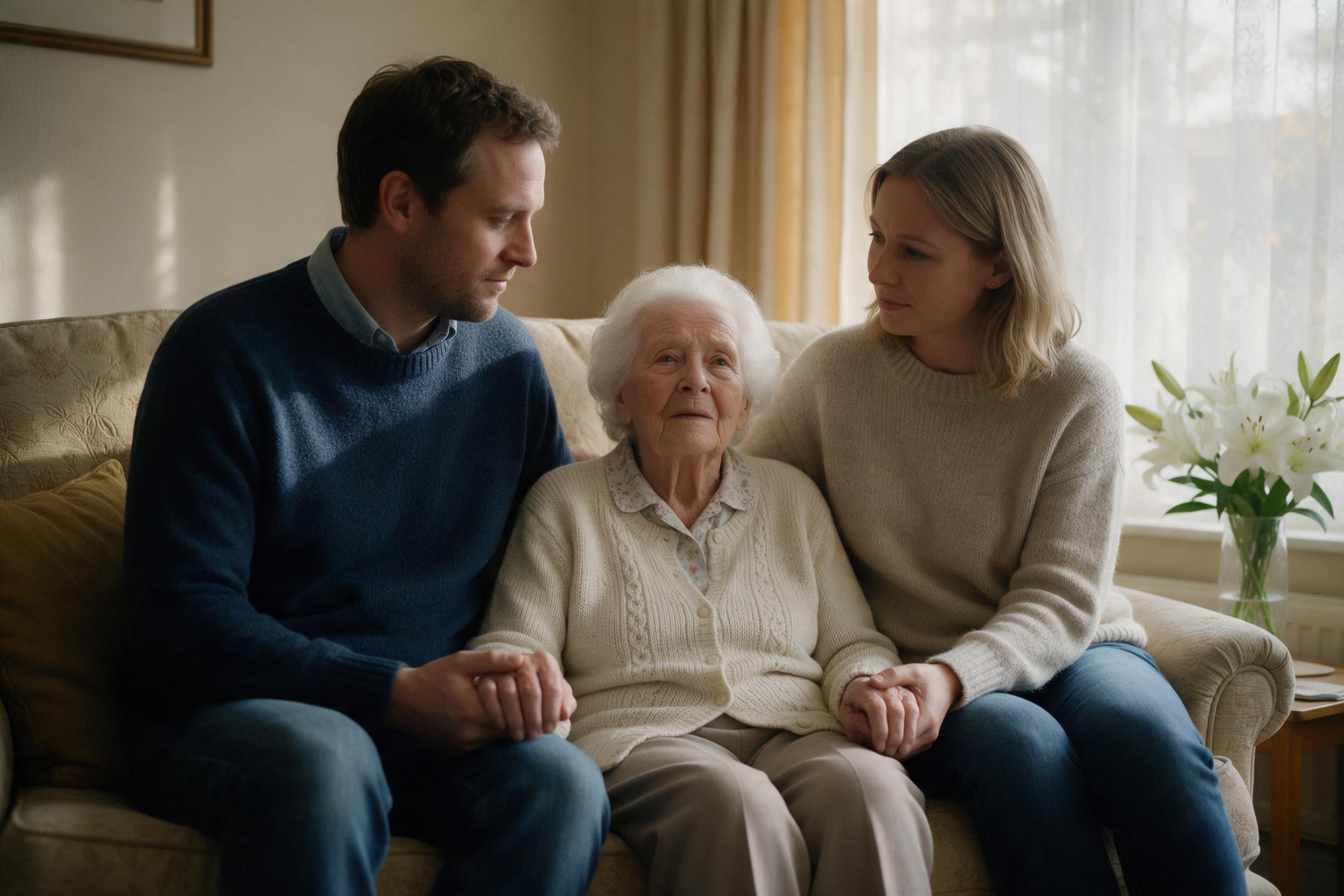
In the first hours
There is usually no need to hurry. Take the time you need to sit with the person, say goodbye and follow any religious or cultural wishes.
If the death was expected and happened at home, there is no need to call 999. Phone the GP practice, or its out-of-hours number, or the district nursing or hospice team if they were involved. A doctor or nurse will come to confirm the death. Once that is done, contact a funeral director when you feel ready; most offer a 24-hour service.
If the death was sudden or unexpected, call 999. The police usually attend an unexpected death as a matter of routine, and the death may be reported to a coroner. This does not mean anyone has done anything wrong.
If the person died in hospital or a hospice, staff will explain what happens next. Many hospitals have a bereavement office that will contact you about collecting belongings and the next steps. The person stays in the hospital’s care until the funeral director collects them.
If care workers or a live-in carer were there, they can help with these first steps and let their office know. If they were not there, tell the care provider as soon as you can, so visits stop.
The medical examiner
Since 9 September 2024, deaths in England and Wales that are not investigated by a coroner are reviewed by a medical examiner: a senior doctor who was not involved in the person’s care. The person’s own doctor first confirms the death and contacts the medical examiner, which can take a few days.
The medical examiner’s office will then contact you to explain the cause of death and answer any questions about it or the care given. You do not have to speak to them, but many families find it helpful. Then they confirm that you can register the death.
If the death is reported to a coroner, the process is different and may take longer. The Coroners’ Courts Support Service gives free help on 0300 111 2141 (Monday to Friday, 9am to 7pm; Saturday, 9am to 2pm).
Registering the death
You must register the death within 5 days of the medical examiner’s office confirming you can, including weekends and bank holidays. If you need longer, tell the register office straight away.
Contact a register office to book. You can use any register office in England and Wales, but the one for the area where the person died is usually quicker.
Information the registrar will ask for:
- the person’s full name at the time of death, and any previous names
- their date and place of birth, and their last address
- their occupation
- the full name, date of birth and occupation of any surviving or late spouse or civil partner
- whether they got a State Pension or other benefits
Documents to take if you have them: birth certificate, marriage or civil partnership certificate, NHS card, passport, driving licence, Council Tax bill and proof of address. Ask the register office what to do if some are missing.
You will receive:
- the certificate for burial or cremation (the “green form”), which the funeral director needs before the funeral
- the chance to buy death certificates at £12.50 each
- a Tell Us Once reference number
Tell Us Once
Tell Us Once lets you report the death to most government organisations in one go, online or by phone, using the reference from the registrar. Use it within 28 days. It tells HMRC, the Department for Work and Pensions (DWP), HM Passport Office, the DVLA, the local council (Council Tax, Blue Badge, Housing Benefit and the electoral register), Veterans UK and some public sector pension schemes.
Have ready: the person’s National Insurance number, passport and driving licence numbers, details of benefits and pensions, and the name and contact details of the executor. Get permission from anyone else whose details you give, such as a surviving partner.
Ending care, equipment and benefits
 Tell Us Once does not reach everyone. Use this checklist:
- The care provider: confirm the date care ended and ask in writing how the final invoice is worked out. Our guide to care contracts explains what is fair.
- The council’s adult social care team, if it arranged or funded care. Any assessed charges owed up to the date of death are usually recovered from the estate. If the person had direct payments, unspent money usually has to be returned.
- The integrated care board (ICB), if care was funded by NHS Continuing Healthcare.
- The equipment loan service, to collect hospital beds, hoists, commodes and other loaned equipment. The number is usually on a label.
- The pharmacy: return unused medicines rather than throwing them away.
- The GP surgery and hospitals: cancel any appointments.
- The personal alarm or telecare provider.
- The DWP Bereavement Service (0800 151 2012, Monday to Friday, 8am to 6pm), if you did not use Tell Us Once.
- The Office of the Public Guardian (0300 456 0300), if there was a Lasting Power of Attorney or deputyship.
If you were the main carer, Carer’s Allowance can usually continue for up to eight weeks after the death, if you still meet the other conditions. Universal Credit’s carer element usually continues for the rest of that assessment period and the next two.
If a live-in carer was there, talk to the provider about when the carer will leave. If a surviving partner also needs support, ask whether care can continue for them; see live-in care for couples.
Banks, bills and the estate

- Banks, building societies, pensions, insurers and utility companies need telling. The free Death Notification Service lets you tell several banks at once.
- Powers of attorney and deputyship end at death. The executor named in the will, or an administrator if there is no will, now deals with the money and property.
- Probate (a “grant of representation”) is often needed to deal with property, larger savings and investments. The fee is £526 if the estate is worth more than £5,000, and nothing if it is £5,000 or less. The grant usually arrives within 12 weeks of applying.
- A surviving partner under State Pension age may get Bereavement Support Payment, if the person who died paid enough National Insurance: up to £3,500 plus 18 monthly payments of £350 for those getting Child Benefit or pregnant, otherwise up to £2,500 plus 18 payments of £100 for married couples and civil partners. Claim within 3 months of the death to receive the full amount.
The funeral
You can use a funeral director or arrange the funeral yourself. Funeral directors must publish a price list for their standard services, so it is fine to compare. Check whether the person had a prepaid funeral plan or life insurance. Many banks will pay a funeral director’s invoice directly from the person’s account before probate, so ask. If nobody is able to arrange a funeral, the council will.
Looking after yourself
Grief can be overwhelming, and tiredness after months of caring can hit hard. Be gentle with yourself, and accept help with the practical tasks.
- Cruse Bereavement Support: 0808 808 1677 (Monday, Wednesday, Thursday and Friday, 9.30am to 5pm; Tuesday, 1pm to 8pm).
- Marie Curie Support Line: 0800 090 2309 (Monday to Friday, 8am to 6pm; weekends, 10am to 4pm).
- Samaritans: 116 123, any time.
- Your GP, if grief is affecting your sleep, health or ability to cope.
A checklist for the first two weeks
- Have the death confirmed by a doctor or nurse.
- Contact a funeral director when you are ready.
- Wait for the medical examiner’s office to confirm you can register.
- Register the death within 5 days and buy several certificates.
- Use Tell Us Once within 28 days.
- Tell the care provider, council, equipment service and pharmacy.
- Find the will and tell the executor.
- Tell banks, pension providers and insurers.
How we can help
If someone in the family needs support after a bereavement, such as a surviving partner who now lives alone, we are here when you are ready. We provide live-in care anywhere in England, from £1,550 a week, and home care across Oxfordshire. You can call us on 01865 715780 for a no-obligation conversation and a free initial assessment.
Common questions
Who should register a death?
A relative should register the death if possible. If no relative can, it can be registered by someone who was there at the time of death, a hospital administrator if the person died in hospital, or the person arranging the funeral. You can contact any register office in England and Wales, but it is usually quicker to use the one for the area where the person died. The register office will tell you how to book and what to bring.
How many death certificates will I need?
Most families need several, because banks, building societies, pension providers, insurers and the probate service may each ask for a certified copy, and photocopies are usually not accepted. Certificates cost £12.50 each, whether you buy them when you register or order them later from the General Register Office (0300 123 1837). Buying a few at registration saves waiting while you sort out the person's affairs. Some organisations will return a certificate after checking it, so ask.
What happens to a Lasting Power of Attorney when someone dies?
It ends at the moment of death, and so does a deputyship. Attorneys and deputies can no longer use the person's accounts or make decisions for them. From then on, the estate is dealt with by the executor named in the will or, if there is no will, by an administrator. Let the Office of the Public Guardian (0300 456 0300) know, so that the LPA can be cancelled, and tell the bank that the attorney's authority has ended.
Do we have to pay care fees after someone has died?
You may have to pay for care already given, and for any notice period that the contract fairly requires, from the person's estate. Fees for care provided before the death are a debt of the estate. The Competition and Markets Authority has said that terms requiring care home fees to be paid for extended periods after a death are likely to be unfair. Read the contract, ask the provider in writing how the final invoice is worked out, and question anything that seems excessive.
Can we get help with funeral costs?
Yes, if you get certain benefits and are responsible for the funeral. A Funeral Expenses Payment can help with burial or cremation fees and other costs, including up to £1,000 for things like the funeral director's fees, if you or your partner get Universal Credit, Pension Credit, Housing Benefit or income-related ESA. Claim within 6 months of the funeral through the DWP Bereavement Service on 0800 151 2012. Any payment is deducted from money you later receive from the person's estate.
Sources and further information
- GOV.UK: What to do after someone dies
- GOV.UK: Register a death
- GOV.UK: Order a birth, death, marriage or civil partnership certificate
- GOV.UK: Get help with funeral costs (Funeral Expenses Payment)
- GOV.UK: Bereavement Support Payment
- GOV.UK: Applying for probate
- Carers UK: Carer's Allowance and breaks in care
- Cruse Bereavement Support: Helpline
Prepared by the Day and Nightcare care team. Last updated 30 October 2026; sources last checked 30 October 2026. This guide is general information about care in England, not financial, legal or medical advice.