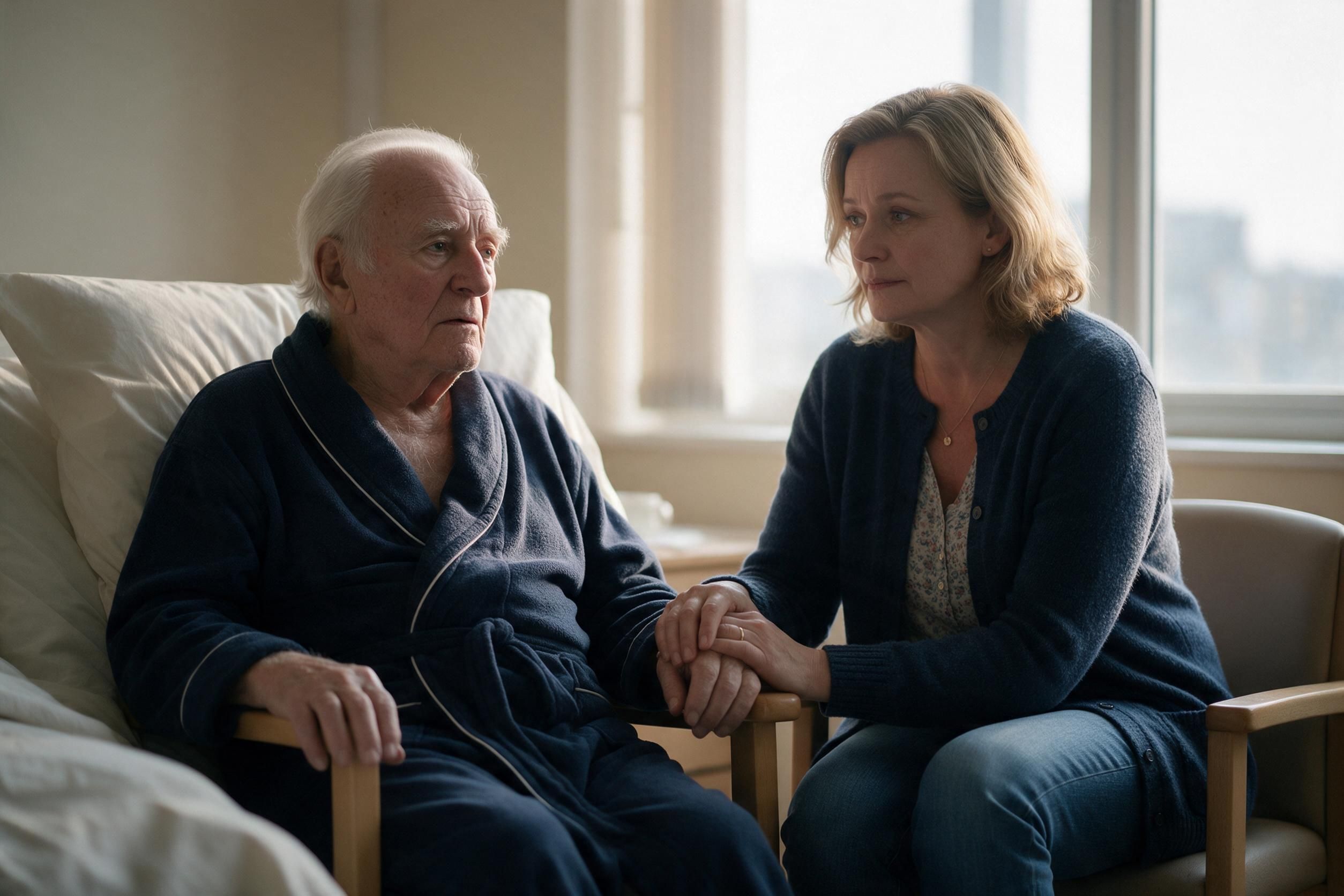
Your rights when someone is leaving hospital
Hospitals in England follow the government’s statutory Hospital Discharge and Community Support Guidance. It gives patients and families real rights, and it also sets limits. Knowing both helps you raise a concern in a way that gets results.
What the hospital should do:
- Involve you early. NHS trusts have a legal duty, introduced by the Health and Care Act 2022, to involve patients and their unpaid carers, including young carers, in discharge planning as soon as is feasible, where appropriate.
- Plan for the person’s needs. Their immediate recovery needs should be worked out before they leave, with a plan to meet them. That includes practical matters such as equipment, adaptations and whether the home is suitable.
- Check on them at home. Anyone who needs formal care and support after discharge should have an initial safety and welfare check on the day they go home.
- Explain what happens next. Discharge information should cover the person’s medicines and how to raise concerns if something goes wrong.
- Respect the person’s choices. Someone with mental capacity makes their own decisions about the care they accept. If they lack capacity for the decision, it must be made in their best interests, with the family consulted.
- Not depend on family who cannot care. If a relative is unwilling or unable to provide the care needed, the NHS, council and care providers should work together to arrange it.
- Avoid big decisions in a crisis. People should not have to decide about long-term care, such as a permanent care home, while in an acute hospital bed.
The limits:
- Nobody has a right to stay in a hospital bed they no longer clinically need, including to wait for a preferred care home or provider. A suitable short-term alternative should be offered instead.
- If every short-term option is turned down, the person can still be discharged to an alternative that meets their recovery needs.
So the strongest concern is rarely “they should stay in hospital”. It is “this part of the plan is missing, and this is what could go wrong”.
Signs a discharge plan may not be safe
One tick does not always mean the plan is wrong, but each is worth raising.
- They cannot get to the toilet, in and out of bed or up the stairs safely, and nobody is planned to help.
- Equipment the therapists recommended, such as a commode, frame or hospital bed, has not been delivered.
- Care visits are “being arranged” with no provider, start time or named contact.
- They have new confusion, are barely eating or drinking, or have a pressure sore nobody has explained.
- Their medicines have changed and nobody has explained the changes to whoever will manage them.
- They live alone, have fallen at night and have no way to call for help.
- The plan assumes a relative will provide care they have not agreed to, or cannot give.
- They will arrive late in the evening to a cold, empty home with no food or heating.
- Nobody in the family has been told the discharge date.
Who to speak to, and in what order
 Start on the ward and move up only if you need to. Note each person’s name, the time and what was said.
- The nurse in charge of the ward. Explain the specific worry and ask for it to be recorded in the notes.
- The discharge coordinator, social worker or care transfer hub case manager. They arrange the support. Ask what is confirmed, what is outstanding and who is paying.
- The consultant or a senior doctor. Ask to discuss the plan. For complex needs, ask for a meeting with the therapists and social worker too.
- The ward manager or matron, if answers are not coming.
- The Patient Advice and Liaison Service (PALS). Free, confidential help, found in most hospitals, to resolve problems informally. If discharge is imminent, say it is urgent. The ward or hospital switchboard has the number.
- A formal complaint, either to the hospital trust or to the integrated care board (ICB) that commissions the service, but not both.
- The ombudsman. For the NHS, the Public Service Ombudsman, the new name since 1 October 2026 for the Parliamentary and Health Service Ombudsman (0345 015 4033, Monday to Thursday 9am to 4pm, Friday 8.30am to 12pm). For councils and care providers, the Local Government and Social Care Ombudsman (0300 061 0614).
Alongside these:
- If someone is at risk of harm, you can raise a safeguarding concern with the council’s adult social care team.
- If a regulated care service is unsafe, tell the Care Quality Commission (03000 616161, Monday to Friday, 8.30am to 5.30pm).
- If you need support to speak up, free independent NHS complaints advocacy is available at any stage. Search for “NHS complaints advocacy” and your council area.
Words you can use on the ward
Calm, specific and written down works best. Adapt these:
- Stating the risk: “Mum has fallen twice at night going to the toilet. The plan has no help overnight and the commode has not arrived. What will happen at 2am?”
- Asking for a record: “Please could you note our concerns in her records today, and tell us who will review the plan and when?”
- When family cannot provide care: “I work full time and live an hour away. I can visit at weekends but I cannot give daily care. Please do not plan the discharge on the basis that I can.”
- Asking for a short wait or an alternative: “We are not asking for her to stay longer than she needs to. We are asking for the discharge to wait until the care and equipment are confirmed, or for a short-term alternative to be offered.”
- About capacity: “Dad seems more confused than before he came in. Has his capacity to decide about going home been assessed, and how were his views and ours taken into account?”
An email you can copy
Send it to the ward manager and discharge team, and copy in PALS if discharge is close.
Subject: Urgent: concern about the discharge plan for [full name], [ward], NHS number [number]
Dear [ward manager or discharge coordinator],
I am the [relationship] of [name], who is on [ward] and expected to go home on [date]. We want [name] to go home when it is safe, but we are worried the current plan is not safe because:
- [for example: no help is planned at night, and she has fallen twice at night]
- [for example: the commode and raised toilet seat have not been delivered]
- [for example: I cannot provide daily care, as I work full time]
Please could you record these concerns in [name]’s notes, review the plan before discharge, and confirm in writing what support will be in place, who is providing and paying for it, when it starts, and the name and number of our contact.
[Name] has agreed to me raising this. [Or: I hold a registered Lasting Power of Attorney for health and welfare.]
I would be grateful for a reply today on [phone number].
Yours sincerely, [your name]
Keep a simple record

- a dated note of each conversation: who, when, and what was said or agreed
- the expected discharge date and the planned discharge pathway
- copies of the discharge letter and medicines list
- the name and direct number of your contact
- emails sent and replies received
This helps if you need to complain later, and it helps the next professional understand what has happened.
If the discharge has already happened and it is not working
- Ring the named contact or care transfer hub on the discharge paperwork if care does not arrive or the plan is failing.
- Ring the GP surgery about medicines or new symptoms, or NHS 111 for urgent advice day or night.
- At nights and weekends, the council’s out-of-hours emergency duty team deals with urgent social care problems.
- Call 999 in an emergency.
What can make a discharge safer
Sometimes the answer is not more time in hospital but different support while the person recovers. The four discharge pathways are explained in leaving hospital: what to expect.
- Reablement or intermediate care, free for up to six weeks. See reablement and intermediate care.
- A short stay in a community bed (pathway 2) for rehabilitation before going home.
- A voluntary “home from hospital” service for shopping, settling in and check-in calls.
- Equipment delivered before the day, and a bed downstairs if stairs are a problem.
- Privately arranged care, such as extra visits, waking nights or live-in care. Tell the discharge team early so it is written into the plan.
If the person may have a primary health need, ask whether NHS Continuing Healthcare should be considered.
What to do next
- Write down exactly what worries you and what could go wrong at home.
- Raise it today with the nurse in charge and ask for it to be recorded.
- Ask the discharge coordinator what is confirmed, what is outstanding and who is paying.
- If nothing changes, send the email above and contact PALS.
- Keep a dated record of every conversation.
How we can help
Since 2014 we have provided Discharge to Assess care, and for several years we ran Oxfordshire’s Urgent Response service, so we understand how hospital discharges work and where they can go wrong. If more support at home would make a discharge safer, we provide live-in care anywhere in England, from £1,550 a week, and home care visits, waking nights and sleep-ins across Oxfordshire. Call us on 01865 715780 to arrange a free initial assessment.
Common questions
Can the hospital discharge someone against the family's wishes?
Yes, in some situations. If the patient has mental capacity and wants to go home, their decision comes first, even if the family or professionals disagree; the team should then help them manage the risks. If they lack capacity for the decision, it must be made in their best interests and the family must be consulted. What should not happen is a discharge where the support the hospital has assessed as needed is not in place. If you believe that is happening, raise it in writing straight away.
Do I have to look after my parent when they come home?
No. A family member cannot be made to provide care. National discharge guidance says that if a relative or unpaid carer is unwilling or unable to provide the care needed, the NHS, the council and care providers should work together to arrange it. Tell the discharge team plainly what you can and cannot do, for example that you can visit at weekends but work full time, and ask for a carer's assessment if you will be helping.
Can we refuse the short-term care home place the hospital offers?
You can say no, but the person cannot stay in hospital to wait for a different option. National guidance says that if someone turns down the short-term options offered, they should be discharged to another suitable alternative for their recovery. Ask why the place is being offered, how long it is for, who pays and what would be needed for a safe discharge home instead. A short-term placement is for recovery and assessment; it should not be treated as a permanent decision.
How long do we have to complain about a hospital discharge?
Normally 12 months from the events, or from when you became aware of the problem. The NHS can extend this if there is a good reason and a fair investigation is still possible. You should receive an acknowledgement within 3 working days. If you are still unhappy after the final response, you can ask the Public Service Ombudsman (called the Parliamentary and Health Service Ombudsman until 1 October 2026; 0345 015 4033) to look at it. Free NHS complaints advocacy can help you write the complaint.
What if the person is readmitted soon after going home?
Get help in the usual way first: NHS 111, the GP, or 999 in an emergency. A readmission does not by itself mean the discharge was wrong, but if you believe it happened because the plan was unsafe or not followed, write down what happened while it is fresh. Tell the new ward, so the next discharge plan takes it into account, and raise it with PALS or as a complaint if you want it looked into.
Sources and further information
- GOV.UK: Hospital discharge and community support guidance
- NHS England: Feedback and complaints
- Public Service Ombudsman (formerly the Parliamentary and Health Service Ombudsman): Contact us
- CQC: Contact us
- legislation.gov.uk: Mental Capacity Act 2005
Prepared by the Day and Nightcare care team. Last updated 30 October 2026; sources last checked 30 October 2026. This guide is general information about care in England, not financial, legal or medical advice.