
Most concerns about care are put right quickly once the right person knows. A complaint is simply a formal way of making sure that happens, and of getting a written answer. This guide covers England; Scotland, Wales and Northern Ireland have their own complaints rules and ombudsmen.
If someone is at risk, act first
A complaint is not the route for immediate danger. If you think someone is being abused or neglected, tell the council’s adult social care team straight away. In Oxfordshire, use the “Reporting a safeguarding concern” form on the county council’s website, or call 01865 519800 (Monday to Thursday 8.30am to 5pm, Friday 8.30am to 4pm); out of hours, call the Emergency Duty Team on 0800 833 408. Call 999 in an emergency, and the police if a crime may have happened. See safeguarding and scams.
Which route to use
| Your complaint is about | Complain first to | If still unhappy |
|---|---|---|
| Home care or a care home you pay for yourself | The provider | Local Government and Social Care Ombudsman |
| Care arranged by the council | The provider or the council | Local Government and Social Care Ombudsman |
| A council decision: assessment, care plan, charges, direct payments | The council | Local Government and Social Care Ombudsman |
| NHS care: hospital, GP, district nurses, NHS Continuing Healthcare | The NHS provider or the integrated care board (ICB) | Public Service Ombudsman |
If a complaint involves both the council and the NHS, for example a hospital discharge that went wrong, send it to either one: they have a duty to work together and give one coordinated response. The two ombudsmen run a joint team for complaints that cross health and social care. Complaints about care under the Mental Health Act go to CQC. Disagreements about whether someone is eligible for NHS Continuing Healthcare have their own review process: see NHS Continuing Healthcare.
Complaining to a care provider
Every CQC-registered care provider must run an accessible system for receiving, recording, investigating and responding to complaints, and must act on what it finds.
- Have a quiet word first with the care coordinator or the Registered Manager. Many problems are fixed this way.
- Ask for the complaints procedure. It should say who handles complaints, how quickly they respond and how to escalate.
- Put it in writing if the problem continues or is serious, using the template below.
- Ask for a final response in writing if you are not satisfied, so you can go to the ombudsman.
For disputes about a contract, such as fees, notice or refunds, the Citizens Advice consumer helpline can advise: 0808 223 1133, weekdays 9am to 5pm. See also care contracts: what to check.
Complaining to the council
Council adult social care complaints follow national regulations. The council must:
- acknowledge your complaint within 3 working days;
- offer to discuss how it will be handled and how long it is likely to take;
- investigate, and send a written response explaining its conclusions, any action it will take, and your right to go to the ombudsman;
- respond within 6 months, unless you agree a longer time before then.
Ask what timescale the council expects for your complaint. Councils accept complaints online, by email, by phone or by letter: look for “complaints” on the council’s website. If the council arranged the care, you can complain to the council or the provider, and the council should coordinate the response.
Complaining about NHS care

- Choose one route: complain to the NHS provider (the hospital trust, GP practice or community service) or to the body that commissions it, which is usually your local integrated care board. You cannot complain to both.
- PALS: most hospitals have a Patient Advice and Liaison Service that can help sort out problems informally, and quickly, especially while someone is still on the ward.
- Free help: every council funds an independent NHS complaints advocacy service, which can help you write letters and come to meetings. Ask PALS, the council or your local Healthwatch for the local provider. In Oxfordshire, Healthwatch Oxfordshire is on 01865 520520.
- Timescales: the same rules apply as for councils: acknowledgement within 3 working days and a written response, normally within 6 months.
Time limits
- Councils and the NHS: complain within 12 months of the event, or of when you found out about it. The organisation can accept a later complaint if you had good reason for the delay and it can still investigate fairly.
- Local Government and Social Care Ombudsman: normally within 12 months of first knowing about the problem. You can go to it if you have had the provider’s or council’s final response, or if you have had no response within a reasonable time, which it says is usually up to 16 weeks.
- Public Service Ombudsman: normally within 12 months of when you became aware of the problem, usually after a final response from the NHS organisation. There is some flexibility for later complaints.
Do not let the internal process run the ombudsman clock down: if things drag on, ask for a final response.
Taking it to an ombudsman
Both ombudsmen are free, independent and look at whether things went wrong and whether that caused an injustice.
Local Government and Social Care Ombudsman (councils, and all adult social care, including care people arrange and pay for privately):
- Online: the complaint form at lgo.org.uk, the quickest route.
- Phone: 0300 061 0614. Lines are open Monday, Tuesday, Thursday and Friday 10am to 1pm, and Wednesday 1pm to 4pm. Calls from withheld numbers are not accepted.
- Post: Local Government and Social Care Ombudsman, PO Box 4771, Coventry CV4 0EH, using its postal form. Send only the organisation’s last letter at first.
Public Service Ombudsman (the NHS in England, including NHS Continuing Healthcare). On 1 October 2026 the Parliamentary and Health Service Ombudsman changed its name; its powers and service are unchanged.
- Online: the complaint checker and form at ombudsman.org.uk.
- Phone: 0345 015 4033, Monday to Thursday 9am to 4pm, Friday 8.30am to 12pm.
If an ombudsman upholds a complaint, it can recommend an apology, a payment to put things right, or changes to stop the same thing happening again.
Telling CQC
CQC regulates care providers but cannot investigate individual complaints. It does want to hear about poor care, because it uses what people share to decide when and where to inspect. Use the Give feedback on care form on the CQC website, or call 03000 616161 (Monday to Friday, 8.30am to 5.30pm). Do this as well as, not instead of, complaining. See CQC ratings explained.
Complaining for someone else
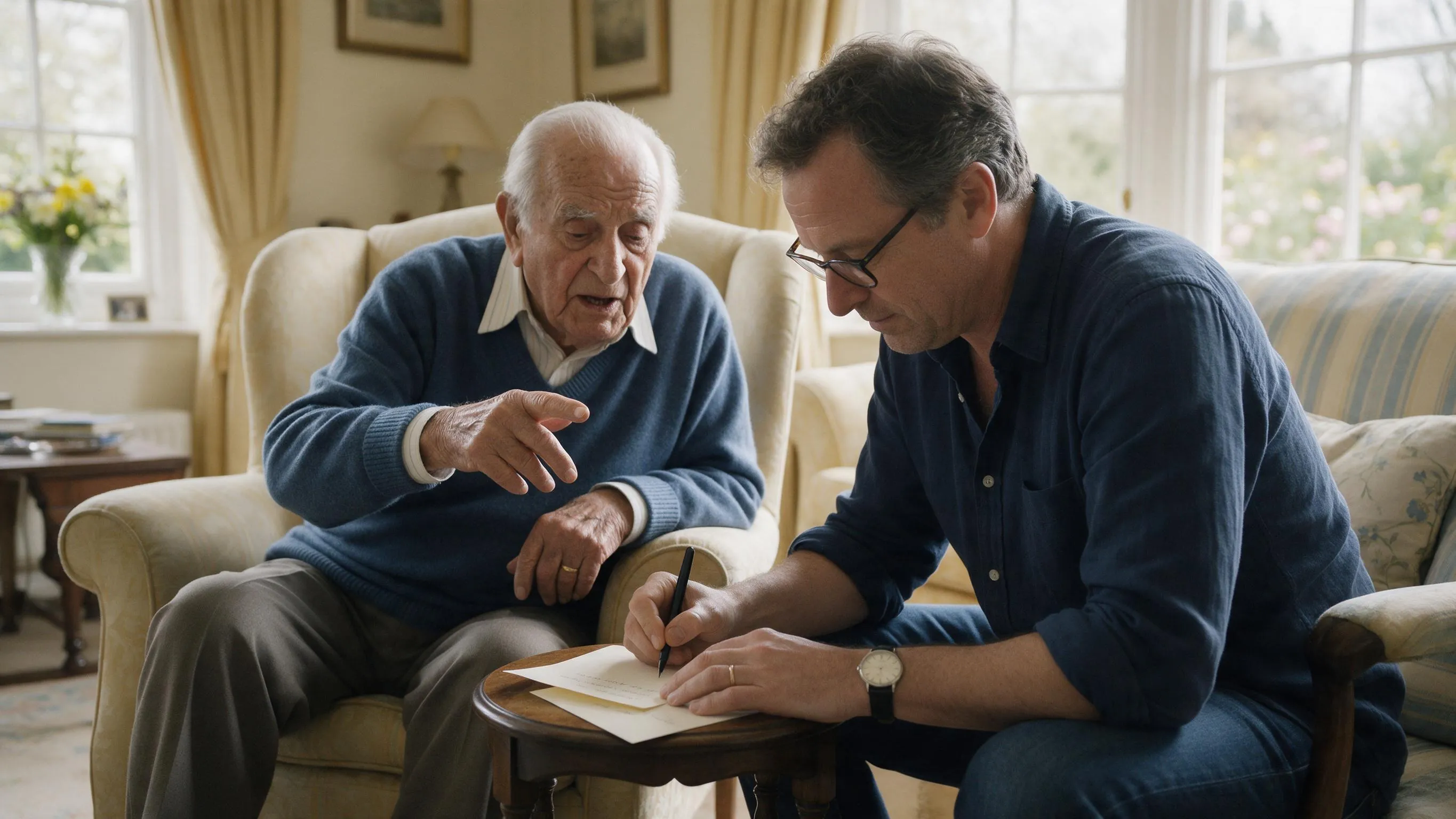
You can complain for a relative with their permission. If they lack capacity to complain, or have died, a representative can complain for them. If you hold a Lasting Power of Attorney, say so and enclose a copy.
Keep a record
Before and during a complaint, keep a simple log: dates, times, names, what happened, what was said, and the effect on the person. Keep copies of letters, emails, invoices and care notes. Photographs of injuries or conditions can help, taken with the person’s agreement.
Template complaint letter
Subject: Formal complaint about the care of [full name, date of birth]
Dear [Registered Manager / Complaints Manager],
I am writing to make a formal complaint about [the care provided to / the decision about] my [mother], [full name], of [address]. [She has asked me to complain on her behalf / I hold a Lasting Power of Attorney for her, a copy of which is enclosed.]
What happened: On [dates], [describe the facts briefly, in date order].
The effect: This has caused [harm, distress, cost, missed care].
What I would like: [An explanation / an apology / a review of the care plan / a refund of £[amount] / changes to make sure this does not happen again].
Please acknowledge this complaint, tell me who is handling it and when I can expect your written response. I am happy to meet to discuss it.
Yours sincerely, [name, relationship, phone, email]
When you need a final response: “Please treat this as a request for your final response to my complaint of [date], so that I can refer it to the ombudsman if I remain unhappy.”
What to do next
- If anyone is at risk, contact the council’s safeguarding team or call 999 first.
- Raise the concern informally, then in writing using the template.
- Keep a record and copies of everything.
- Ask for a final response if you are still unhappy.
- Go to the right ombudsman within 12 months, and tell CQC.
How we can help
Day and Nightcare is a CQC-registered home care provider, rated Good, and, like every registered provider, we have a complaints procedure that anyone can ask to see. If you have a concern about care we provide, please tell us early, and we will listen. If you are looking for a new provider after a difficult experience elsewhere, call us on 01865 715780 for a free initial assessment.
Common questions
Will complaining affect the care my relative receives?
It should not. Every CQC-registered provider must have an accessible complaints system, investigate complaints and act on what it finds. Complaining is a right, and good providers welcome it because it helps them improve. If you are worried about reprisals, say so in your complaint, and tell CQC and the council. If you believe someone is being treated badly because a complaint was made, raise it as a safeguarding concern with the council.
Can I complain on behalf of my mum or dad?
Yes, with their permission, which it helps to put in writing. If they lack the mental capacity to complain, or have died, a relative or other representative can usually complain for them. The Local Government and Social Care Ombudsman also accepts complaints from someone with a legal right to act for the person, such as an attorney. Include your relationship and, if you have it, their signed consent.
What can an ombudsman actually do?
An ombudsman investigates independently and can recommend how things are put right. That might be an apology, a payment for the injustice caused or money lost, a fresh assessment, a refund of charges, or changes so the same thing does not happen to others. Ombudsmen are not courts: claims for negligence or personal injury are for the courts. They usually only investigate once the organisation's own complaints process is finished.
Is there an appeal against a council care decision?
For most adult social care decisions, such as the outcome of a needs assessment, the size of a personal budget or a charge, there is no separate appeal tribunal. The council's complaints procedure is the route, followed by the Local Government and Social Care Ombudsman. In some cases, a solicitor may advise a judicial review, which has strict and short time limits. Decisions about NHS Continuing Healthcare have their own review process.
Should I tell CQC about a complaint?
Yes, it is worth it. CQC cannot take up individual complaints for you, but it uses what people tell it to decide when, where and what to inspect. Use its online Give feedback on care form, or call 03000 616161 (Monday to Friday, 8.30am to 5.30pm). Telling CQC does not replace complaining to the provider, the council or the NHS.
Sources and further information
- Local Government and Social Care Ombudsman: How to complain
- Local Government and Social Care Ombudsman: Contact us
- Public Service Ombudsman: Our new name
- Public Service Ombudsman: Making a complaint about the NHS in England
- NHS England: Making a complaint
- legislation.gov.uk: Local Authority Social Services and NHS Complaints (England) Regulations 2009
- CQC: Complain about a service or provider
Prepared by the Day and Nightcare care team. Last updated 30 October 2026; sources last checked 30 October 2026. This guide is general information about care in England, not financial, legal or medical advice.