
“What happens to Mum if something happens to me?” is one of the most common worries carers have. A little planning now turns that worry into a set of instructions anyone can follow, and helps the person you care for stay safe, calm and, wherever possible, at home.
What happens if you are suddenly taken ill
In a real emergency, things usually unfold like this:
- You tell the ambulance crew or hospital that you look after someone who cannot be left alone. A carer’s card or a note in your wallet does this for you if you cannot speak.
- Your emergency contacts are called. They use your written plan to step in, check on the person and keep their routine going.
- If nobody can step in, someone calls the council’s adult social care team, or its emergency duty team out of hours. The Care Act 2014 allows a council to meet urgent needs straight away, before any assessment. Help might be care at home, or a short stay in a care home.
- Afterwards, the council will usually assess needs properly, and may carry out a financial assessment. Emergency care is not automatically free.
The Care and Support Statutory Guidance says that where a carer meets someone’s needs, the council should consider plans to respond if that caring arrangement breaks down. Ask for this to be written into the person’s care and support plan and your carer’s support plan.
Three layers of backup
A strong plan has more than one layer:
- People: two or three relatives, friends or neighbours who know the routine, live close enough to come, and have agreed to be called.
- Paid care: a care provider who already knows the person, or who you have contacted in advance. Regular planned respite, such as respite live-in care, means a carer who already knows the house and the routine.
- The council: the person’s needs assessment, your carer’s assessment, and the out-of-hours number.
Your backup plan: a template
Copy this, fill it in with the person you care for, and date it. If you already have a one-page information sheet, our guide to looking after yourself as a carer has one, and this plan adds who does what, and when.
1. About us
- Carer’s name, phone, address:
- The person I care for: full name, date of birth, NHS number:
- They cannot be left alone for more than: [hours]
- Main language, hearing, sight and communication needs:
2. Who to call, in order
- Contact 1 (name, relationship, phone, how far away):
- Contact 2:
- Contact 3:
- Care provider and out-of-hours number:
- Council adult social care and emergency duty team numbers:
- GP surgery and pharmacy:
3. The first 24 hours
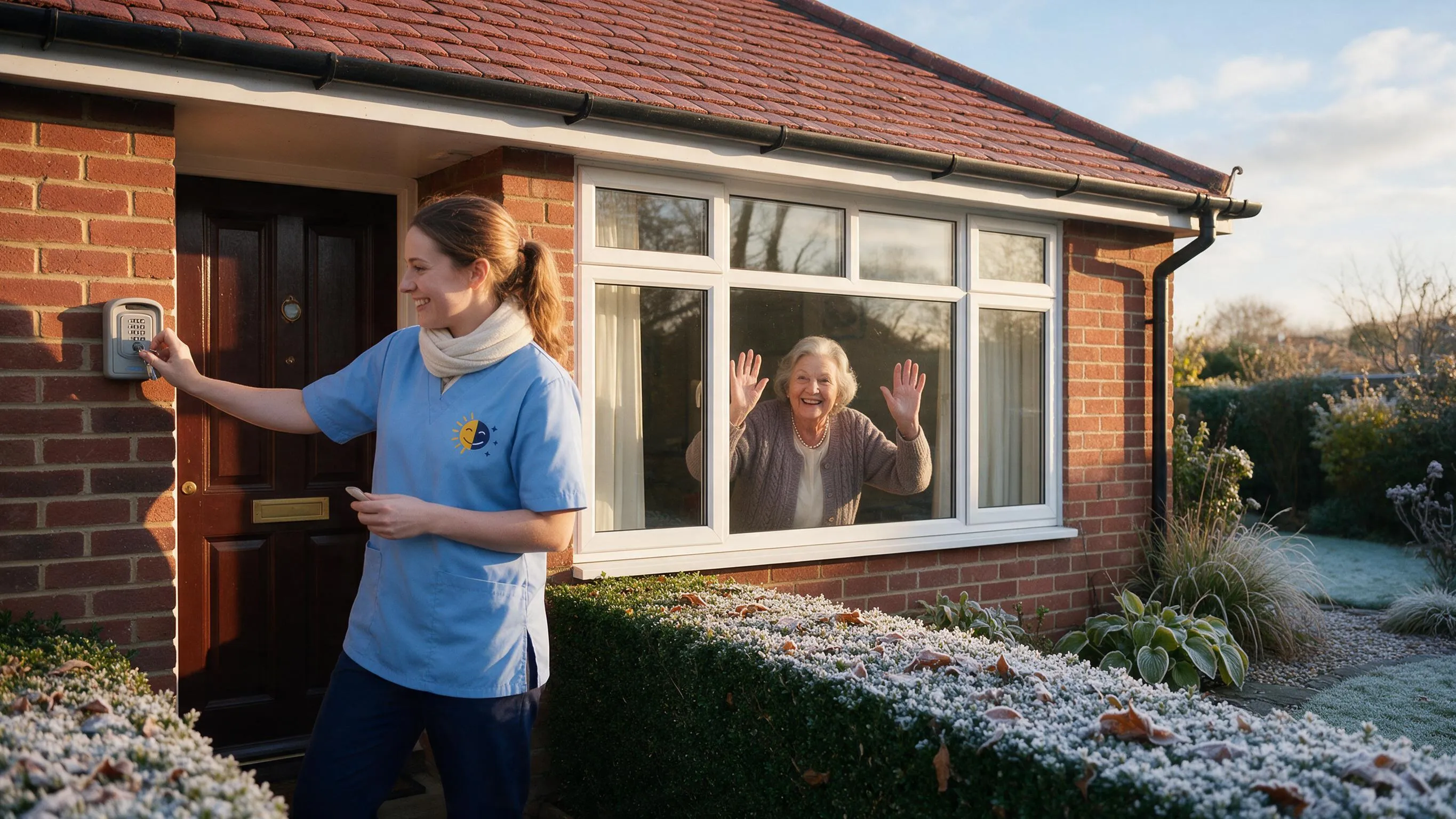
- Who will go to the house, and how they get in (key holder or key safe; share the code separately):
- Medicines due today, and where the list and the medicines are kept:
- Meals, drinks and any special diet:
- Help needed with the toilet, washing, moving or getting to bed:
- Pets, and who feeds them:
- Things that cause distress, and what helps them feel calm:
4. If I am away for days or weeks
- Who can stay, or visit daily:
- Paid care that could start, and who has agreed to arrange it:
- Appointments to cancel or keep:
- Who can collect prescriptions and do shopping:
- How bills and money will be handled (any Lasting Power of Attorney, and where it is kept):
5. Health and legal papers
- Conditions and allergies:
- ReSPECT form, advance decision, advance statement or DNACPR decision, and where kept:
- Lasting Power of Attorney: who the attorneys are, and where it is kept:
- Hospital bag: where it is, and what is in it:
6. Plan details
- Date written, and date to review:
- Copies given to:
Where to keep it and who needs a copy

- One copy at home where emergency services can find it, such as by the phone or on the fridge.
- One with each named contact, and one with the care provider.
- One with the GP: ask the surgery to note that you are a carer.
- A photo or PDF on your phone.
- In your phone contacts, save emergency contacts as ICE1, ICE2 (“in case of emergency”).
Carers’ emergency card schemes
Many areas run schemes that let emergency services know you are a carer. Carers UK explains that in the fullest schemes, you register a plan with the scheme and carry a card with its phone number and a unique ID instead of personal details; in an emergency, the scheme’s 24-hour service puts your plan into action. Schemes vary a great deal, so check what yours does.
In Oxfordshire, Carers Oxfordshire runs a Carer ID card for unpaid carers aged 13 or over who support someone living in Oxfordshire. It is a photo card, valid for two years, with a unique QR code that gives your emergency contacts and your GP surgery’s number. You apply online with a recent photo and your emergency contacts’ names and numbers; Carers Oxfordshire says applications are currently taking a few weeks. It also provides contingency plan templates for carers and for the person cared for, will help you write a plan if you ask, and points carers to the Lions’ Message in a Wallet scheme. Contact the CarersLine on 01235 424715 (Monday to Friday, 9am to 5pm).
Elsewhere, some councils run a registered emergency plan with a round-the-clock response line. Essex County Council, for example, says its carers emergency plan is free and available 24 hours a day. Derbyshire County Council makes clear that its emergency plan does not include free care. Ask your local carers’ centre or council what exists where you live.
Other things that help in an emergency
- Message in a Bottle: many local Lions clubs offer a free bottle for the fridge holding key medical details, with stickers telling paramedics to look there.
- A key safe fixed outside, with the code shared only with named contacts.
- A personal alarm or telecare for the person you care for. See technology and telecare.
- Your energy supplier’s Priority Services Register, which can help during power cuts.
- The Herbert Protocol, used by many police forces, if the person has dementia and might go missing.
- Lasting Powers of Attorney, so someone can manage money or decisions if needed. See Lasting Power of Attorney.
- Carers UK’s MyBackUp, an online tool that walks you through building a backup plan.
If you work, you have a legal right to reasonable unpaid time off to deal with an emergency involving a dependant. See working while caring.
Who to call
- Emergency: 999. Urgent medical advice: NHS 111.
- Oxfordshire County Council Social and Health Care Team: 01865 519800 (Monday to Thursday 8.30am to 5pm, Friday 8.30am to 4pm).
- Oxfordshire Emergency Duty Team (out of hours): 0800 833 408.
- Elsewhere: search for your council’s name and “emergency duty team”.
- Carers Oxfordshire CarersLine: 01235 424715 (Monday to Friday, 9am to 5pm).
- Carers UK Helpline: 0808 808 7777 (Monday to Friday, 9am to 6pm).
- Samaritans: 116 123, 24 hours a day, if you are struggling.
What to do next
- Fill in the backup plan with the person you care for, this week.
- Ask two or three people to be your named contacts, and give them copies.
- Apply for a carer’s card, such as Oxfordshire’s Carer ID.
- Ask for a carer’s assessment, and for backup arrangements to be written into both care plans.
- Consider contacting a care provider in advance, and booking regular respite.
- Set a reminder to review the plan every six months.
How we can help
Day and Nightcare provides home care visits, waking nights and sleep-ins across Oxfordshire, and fully managed live-in care anywhere in England, from £1,550 a week, including respite live-in care. It can be reassuring to have a provider who already knows your relative before a crisis. Call us on 01865 715780 for a free initial assessment, and we can talk through how we would fit into your backup plan.
Common questions
What will happen to my husband if I am rushed into hospital?
Tell the paramedics or hospital staff straight away that you care for someone who cannot be left alone, and give them your emergency contact. Your contacts will be asked to step in using your plan. If nobody can, the council's adult social care team, or its out-of-hours emergency duty team, can arrange urgent care at home or a short emergency stay elsewhere. The council can act on urgent needs before any assessment, though charges may follow its financial assessment.
Is emergency replacement care free?
Not necessarily. Councils can meet urgent needs straight away, but the usual charging rules may apply afterwards, so the person being cared for may be asked to contribute after a financial assessment. Some council emergency card schemes say clearly that registering a plan does not include free care. A carer's assessment and the person's own needs assessment can set up planned support in advance, which is usually smoother than arranging help in a crisis.
How often should I update my emergency plan?
Look at it every six months, and straight away after any change: a new medicine, a hospital stay, a change of GP, new equipment, a new key safe code or a contact who has moved. Put a date on every version, give the new copy to everyone who has the old one, and ask them to destroy the old one. An out-of-date medicines list can be more dangerous than none.
Can a care company be ready to step in if something happens to me?
Yes. Many families contact a care provider in advance, so it already knows the person and can start more quickly in an emergency. Some families book regular respite, such as a week of live-in care every few months, so a carer already knows the routine. Ask any provider how quickly it can usually start, what it needs from you, and how it handles urgent requests out of hours.
Sources and further information
- Carers UK: Getting help in an emergency
- Carers Oxfordshire: Contingency planning
- Carers Oxfordshire: Carer ID
- legislation.gov.uk: Care Act 2014, section 19 (urgent needs)
- GOV.UK: Care and support statutory guidance
- Essex County Council: Carers emergency plan
- Derbyshire County Council: Carers emergency card
Prepared by the Day and Nightcare care team. Last updated 30 October 2026; sources last checked 30 October 2026. This guide is general information about care in England, not financial, legal or medical advice.