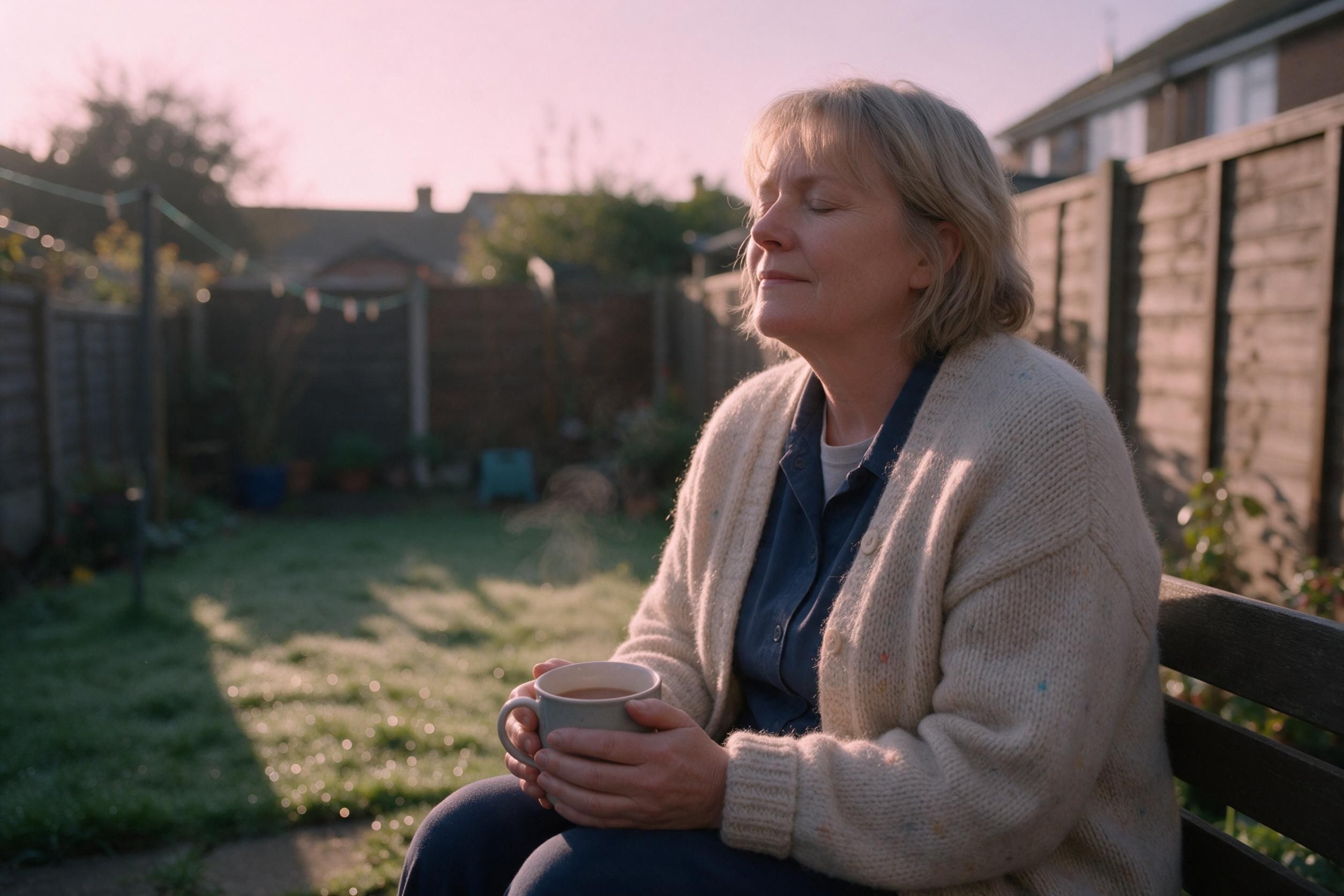
Signs of carer burnout to watch for
Burnout creeps up slowly. Many carers only notice it when something gives way. Look out for:
- Feeling exhausted even after a night’s sleep.
- Being short-tempered, tearful or numb.
- Feeling trapped, resentful or hopeless, then guilty for feeling it.
- Losing interest in things you used to enjoy, and seeing less of friends.
- Getting ill more often, or putting off your own health appointments.
- Back, neck or shoulder pain from lifting and helping.
- Drinking more, eating badly or relying on sleeping tablets.
- Making small mistakes, such as forgetting a dose or an appointment.
If several of these sound familiar, it is a signal to get more help now, not a sign that you have failed.
Some signs need help today. If you feel you cannot go on, have thoughts of harming yourself, or fear you might lose control with the person you care for, please talk to someone straight away. Samaritans answer 24 hours a day on 116 123. You can also call NHS 111, your GP, or the council’s adult social care team. Asking for help in that moment protects you both.
Protecting your sleep
Broken nights are one of the most common reasons caring becomes unsustainable. Try to find out what is waking the person you care for, because many causes can be eased:
- Pain or discomfort: ask the GP to review pain relief, and whether the timing of medicines could change.
- Needing the toilet: ask for a continence assessment, a commode by the bed or better night-time products.
- Confusion or restlessness: with dementia, daytime activity, daylight and a calm evening routine can help.
- Worry about falls: a bed sensor or motion-sensor lights can alert you only when needed, so you are not listening all night.
If nights remain broken, consider night care for one or two nights a week. A sleep-in carer sleeps in the home and helps if needed; a waking night carer stays awake and is on hand all night. Our page on night care explains the difference. Taking turns with other family members, and resting when the person naps, also helps.
Taking breaks, big and small
Breaks work best when they are planned and regular, rather than saved for an emergency.
- Every day: a short walk, a phone call with a friend, twenty minutes for yourself.
- Every week: a few hours away, with a sitting service, a day centre or a visiting carer covering.
- Every year: a proper holiday or a few nights away, with replacement care at home or a short stay elsewhere.
A council carer’s assessment can lead to funded breaks, and the person you care for may be able to use their own budget or benefits towards respite. Our guides to the carer’s assessment and respite options explain how.
Many carers feel guilty about taking time off. It may help to see breaks as part of the care plan: they are what allows you to keep caring well for longer.
Emotional support and someone to talk to

You do not have to be in crisis to deserve support.
- Carers UK helpline: 0808 808 7777, Monday to Friday, 9am to 6pm, for advice on rights, money and support. Carers UK also runs an online forum where carers support each other.
- Samaritans: 116 123, free, any time, for anyone who needs to talk.
- NHS Talking Therapies: if you are registered with a GP, you can refer yourself for help with low mood, worry, depression and anxiety without seeing your doctor first.
- Condition-specific charities: organisations such as Alzheimer’s Society, Parkinson’s UK and the Stroke Association run helplines and local groups for families.
Grief can start long before a death, as the person you knew changes. Counselling can help with this kind of loss too.
Carers’ groups and local carers’ centres
Most areas have a carers’ centre offering free information, groups, training and wellbeing support. Carers UK’s website has a directory of local organisations.
As an example, Carers Oxfordshire offers free help to adult unpaid carers of someone who lives in Oxfordshire, including support with carer’s assessments, carers’ groups, contingency planning, a Carer’s ID card and wellbeing offers such as leisure discounts and subsidised counselling. You can contact them on 01235 424715.
Groups are not for everyone, but many carers say meeting people who understand, without needing to explain, is the most helpful thing of all. Dementia cafés and condition-specific groups are often a gentle first step.
Tell your GP you are a carer
Ask your GP practice to record that you are a carer. Many practices keep a carers’ register, and what they offer varies, but it can mean:
- An invitation for a free NHS flu vaccine. Main carers of an older or disabled person, and people receiving Carer’s Allowance, are eligible.
- More flexible appointment times when it is hard to get away.
- Health checks and advice on looking after yourself.
- Signposting to local carers’ support.
How to do it: phone or call in at reception and say, “Please can you record on my notes that I am an unpaid carer for [name]?” Some practices have a short carer registration form. With the agreement of the person you care for, ask their practice to record you as their carer too, so you can be kept informed.
Look after your body as well as your mind. If you help someone move, ask for moving and handling training and an occupational therapy assessment for equipment, which can protect your back. Try to eat regular meals, stay active and keep your own appointments.
Have a plan for if you are ill
Worry about “what if something happens to me?” is common. A written emergency plan eases it. Copy this template, fill it in, and keep a copy by the phone, one in your wallet or bag saying “I am a carer, please see my emergency plan”, and one with each person named.
Carer’s emergency plan: template
About me (the carer)
- My name, phone number and address:
- I care for:
- If I am taken ill or have an accident, please contact:
The person I care for
- Full name, date of birth and address:
- NHS number:
- GP practice and phone number:
- Conditions and diagnoses:
- Allergies:
- Medicines: where the list is kept, and who the pharmacy is:
- Any ReSPECT form, advance decision or Lasting Power of Attorney, and where it is kept:
Who can step in
- First contact (name, relationship, phone):
- Second contact:
- Paid carers or care provider, and their out-of-hours number:
Daily care
- Morning routine:
- Meals, drinks and any special diet:
- Help needed with washing, dressing, the toilet or moving:
- Evening and night routine:
- How they communicate, and what to watch for if they are unwell:
- What helps them feel calm and settled:
The home
- Who has keys, and the key safe location (share the code separately):
- Pets and who will look after them:
- Equipment, such as a hoist or alarm, and who services it:
Many carers’ centres help you write a plan like this. Some, such as Carers Oxfordshire, help with contingency planning and offer a Carer’s ID card.
Check your money too
Money worries add to stress. Check whether you could claim Carer’s Allowance, which is £86.45 a week in 2026/27 if you care for at least 35 hours a week, or Carer’s Credit, which protects your National Insurance record if you care for at least 20 hours a week. Our guide to Carer’s Allowance explains the rules.
Helplines to save in your phone
- Samaritans: 116 123, free, 24 hours a day, every day.
- Carers UK: 0808 808 7777, Monday to Friday, 9am to 6pm.
- Age UK Advice Line: 0800 678 1602.
- Independent Age: 0800 319 6789, Monday to Friday, 8.30am to 5.30pm.
- NHS 111: for urgent health advice, day or night.
- Carers Oxfordshire: 01235 424715, for adult carers of someone living in Oxfordshire.
A weekly self-care check
Once a week, ask yourself:
- Have I slept properly on at least some nights?
- Have I had at least a few hours for myself?
- Have I spoken to someone about how I feel?
- Have I eaten properly and got outside?
- Is there one task I could hand to someone else next week?
If the answer to most of these is no, it is time to ask for more help.
What to do next
- Ask for a carer’s assessment from the council where the person you care for lives. Our carer’s assessment guide includes an example email you can send.
- Ask your GP practice to record you as a carer, and book any check-ups you have put off.
- Contact your local carers’ centre and ask about groups and wellbeing support.
- Plan one break in the next month, even a short one, and put it in the diary.
- Write an emergency plan and share it.
- Save the Carers UK (0808 808 7777) and Samaritans (116 123) numbers in your phone.
How we can help
Day and Nightcare is a CQC-registered home care provider, rated Good, and has supported people at home since 2008. Across Oxfordshire we provide home care visits from one hour, sleep-ins and waking nights, and 24-hour care with carers working in shifts anywhere in England, and we provide fully managed live-in care anywhere in England, so you can rest, sleep or go away knowing someone is there. Care can be funded privately, by the council (including direct payments) or by NHS Continuing Healthcare. Call 01865 715780 to arrange a free initial assessment.
Common questions
Is it normal to feel resentful or guilty as a carer?
Yes. Love, frustration, sadness, guilt and resentment often sit side by side, especially when caring has changed a relationship or taken over your life. Having these feelings does not make you a bad carer. They are often a sign that you need more rest or more help. Talking to other carers, a counsellor or the Carers UK helpline can make them easier to carry.
How can I get a break if the person I care for will not accept anyone else?
Start small and build trust. Introduce a new carer while you are still at home, for an hour or two, doing something they enjoy together. Present it as help for you rather than a judgement on them. A consistent carer who comes regularly is usually accepted more easily than a different face each time. If they lack capacity to make this decision, it can be made in their best interests.
Can I get a free flu vaccine as a carer?
Yes, if you are the main carer for an older or disabled person, or you receive Carer's Allowance, you can have a free NHS flu vaccine. Tell your GP practice or a pharmacy offering NHS flu vaccines that you are a carer. Being recorded as a carer on your GP record also means your practice is more likely to invite you.
What is a carer's ID card?
It is a card from a local carers' organisation that shows you are an unpaid carer. Depending on the scheme, it can help when you speak to hospital staff, pharmacies or other services, and may give access to local offers. In Oxfordshire, Carers Oxfordshire offers a Carer ID card to unpaid carers aged 13 or over who support someone living in the county. Ask your own local carers' centre what is available.
Who can I talk to at night if I am struggling?
Samaritans answer calls 24 hours a day, every day, free on 116 123. If you are worried about your safety or someone else's, call NHS 111 or, in an emergency, 999. During the day, the Carers UK helpline is open Monday to Friday, 9am to 6pm, on 0808 808 7777, and your GP can talk with you about low mood, anxiety or exhaustion.
Sources and further information
- Carers UK: Emotional support
- NHS: Carers' breaks and respite care
- NHS: Flu vaccine
- NHS: NHS Talking Therapies for anxiety and depression
- Carers Oxfordshire
- NHS: Carer's assessments
Prepared by the Day and Nightcare care team. Last updated 30 October 2026; sources last checked 30 October 2026. This guide is general information about care in England, not financial, legal or medical advice.