What has happened
Since April 2026, the Department for Work and Pensions has paid Attendance Allowance at two weekly rates:
- £76.70 a week (lower rate) for people who need help or supervision during the day or at night;
- £114.60 a week (higher rate) for people who need help both day and night, or who are nearing the end of life.
The rates rose from £73.90 and £110.40 in 2025/26. This is not a new change: the 2026/27 rates took effect in April 2026 and apply until the next uprating in April 2027. Attendance Allowance is for people at State Pension age or older who need help with personal care, or someone to supervise them, because of an illness or disability.
What it means for families
The higher rate is worth almost £6,000 a year, and it is not means-tested: savings, a pension or owning a home make no difference, and it can be spent on anything, including care at home. If someone receiving live-in care from £1,550 a week were awarded the higher rate, it would cover £114.60 of the weekly cost, bringing what the family pays from other money to about £1,435, before any other help.
Attendance Allowance can also open the door to other support, such as extra Pension Credit, and it is one of the qualifying benefits for a council tax discount for people living with dementia.
Our view
Attendance Allowance is one of the most useful benefits for older people who need care. Some people never claim because they assume it depends on income, or feel they “manage well enough” because a husband, wife or daughter quietly does the helping. What counts is the help a person needs, not whether someone is already giving it.
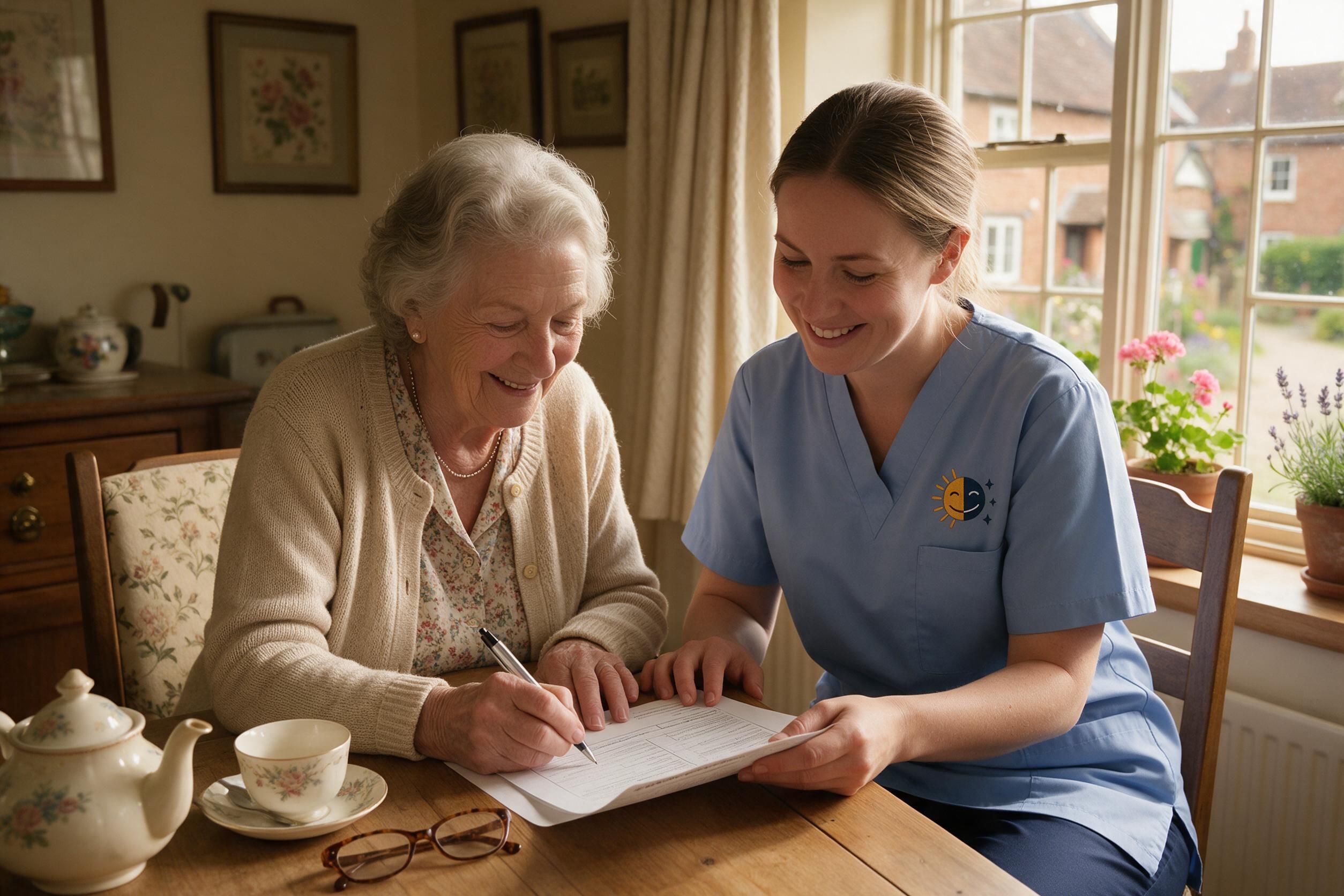
The claim form is long, and it helps to know what the Department for Work and Pensions is asking for. Its notes (AA1 Notes, November 2025) say that disabilities can affect people more on one day than another, and ask you to tell them as much as you can about how your needs vary. They also ask about help needed during the day and at night separately. Before filling in the form, the notes suggest keeping a record of the help you need over a full 24 hours, from getting up one morning to getting up the next; if you have good days and bad days, keep a record of a good day and of a bad day. A clear, honest picture of how often things are difficult, and what happens on bad days as well as good ones, helps the decision maker understand the real level of need. Simpler forms, and more active signposting by GPs, hospitals and councils when someone’s needs change, would help more people receive what they are entitled to.
What you can do
- Read our Attendance Allowance guide, including tips and example wording for completing the form.
- Keep a short record of the help needed over a day and a night, on a good day and on a bad day, and send it with the form if you wish. The notes say you do not have to fill in the form in one go.
- Claim through GOV.UK, or ask Age UK or a local advice service for free help with the form. People nearing the end of life can claim quickly under special rules.
- Use our funding and cost checker to see what other help may be worth looking into.
Sources
- GOV.UK: Attendance Allowance, what you'll get
- DWP: Benefit and pension rates 2026 to 2027
- DWP: Attendance Allowance claim form notes (AA1 Notes 11/25)
Published 30 October 2026 by the Day and Nightcare care team. General information, not financial or legal advice.