
A personal health budget (PHB) is not extra money. It is a different way of spending the NHS funding a person is already entitled to, so that they and their family have more choice and control over how their care is given and by whom. This guide covers England; in Scotland, Wales and Northern Ireland the arrangements differ.
Who has a right to a personal health budget
These groups have a legal right to have one:
- Adults eligible for NHS Continuing Healthcare, since October 2014, including people on the Fast Track for end-of-life care.
- Children and young people eligible for continuing care.
- People entitled to section 117 aftercare after detention under the Mental Health Act, since December 2019.
- People eligible for an NHS wheelchair, through a personal wheelchair budget.
NHS England expects that, unless there are exceptional circumstances, everyone receiving NHS Continuing Healthcare in their own home will have a personal health budget. People outside these groups can still ask their integrated care board (ICB), which may offer one. Integrated care boards must tell eligible people about the right; if nobody has mentioned it, ask.
The three ways to hold the budget
| Option | Who holds the money | Who arranges the care |
|---|---|---|
| Notional budget | The ICB | The NHS team, following the choices agreed with you |
| Third-party budget | An independent organisation, such as a charity or a trust set up for one person | That organisation |
| Direct payment for healthcare | The person, their representative or a nominee | You, by paying providers or employing staff |
You can combine them. A notional budget gives choice with the least paperwork; a direct payment gives the most control and the most responsibility.
How it works, step by step
- Eligibility is confirmed, for example a positive CHC decision.
- A care and support planning conversation takes place with the NHS team. You should be told an estimated (indicative) budget early on.
- The personalised care and support plan is written. It sets out the person’s health and wellbeing needs, the outcomes they want, the budget, how it will be spent and how it will be managed. It names a care co-ordinator as your first point of contact.
- The plan is agreed. The final budget is confirmed at this point and may be higher or lower than the estimate.
- Care starts, paid for in the way you chose.
- Reviews follow. With a direct payment, the plan must be formally reviewed within three months, then at least once a year. You can ask for a review whenever needs change.
How the amount is set
The budget is based on an assessment of the person’s needs and the cost of meeting them. The ICB can take comparative costs and value for money into account, but the national framework sets limits on how:
- comparisons must use the genuine cost of each option for this person, not a standard care home price;
- the ICB must not set arbitrary limits on care at home based on what a care home would cost, if that does not reflect the real cost of meeting the person’s assessed needs.
The framework also asks ICBs to look carefully at what “24-hour care” really means: constant hands-on care, or ready access to help and supervision. Describe needs precisely, especially at night, so the plan reflects what is genuinely required.
Using a personal health budget to choose a live-in care provider
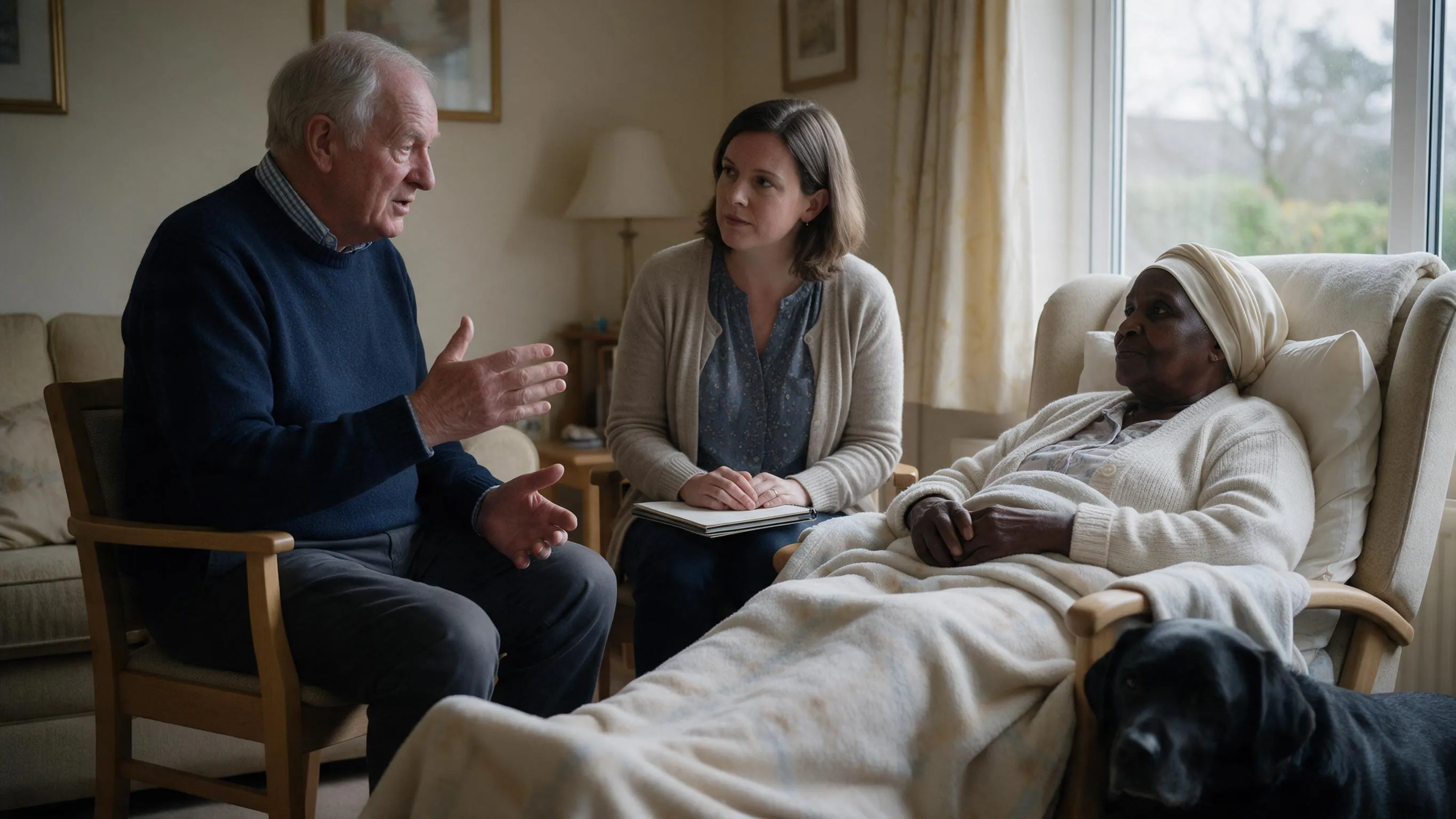
For many families, the main benefit is choosing who provides care at home, so that the person can stay in familiar surroundings, with a pet or a partner, and see the same faces each week. A PHB can pay for live-in care when that meets the needs in the plan.
- Describe the needs and outcomes first, not the service. For example: “Needs someone present day and night because of unpredictable seizures and falls; wants to remain at home with her husband.”
- Get a written quote from the provider you prefer, showing what is included: care hours, breaks cover, nights, travel at changeover, and any extra charges.
- Check the provider: it must be registered with the Care Quality Commission (CQC) if it provides personal care, and suitably insured. With a direct payment, these checks are your responsibility; the ICB can do them if you ask.
- Ask the care co-ordinator to include the provider and cost in the draft plan, and to explain in writing if the ICB proposes something different.
- Be honest about fit. If the person needs two carers at once around the clock, or constant registered nursing, one live-in carer may not be enough, and the plan should say what will cover that need.
Example email:
Dear [care co-ordinator], [name] has been found eligible for NHS Continuing Healthcare and wishes to remain at home. We would like the care to be provided through a personal health budget, managed as [a direct payment / a notional budget]. Our preferred provider is [name], a CQC-registered live-in care provider; their written quote is attached. Please include this in the draft care and support plan, tell us the indicative budget, and explain in writing if the ICB does not agree.
Rules for direct payments
- The money goes into a separate bank account (or an approved prepaid card), used only for the agreed care.
- Keep records of everything spent; you must be able to show what the money paid for.
- The budget cannot be spent on alcohol, tobacco, gambling, debt repayment or anything illegal. GP care, emergency care and medicines continue to be provided by the NHS in the usual way.
- Employing staff directly makes the budget holder an employer, with duties such as payroll and insurance. Paying a care agency that employs its own carers avoids this.
- Spending outside the plan may have to be repaid.
If someone also has council-funded care, the NHS and social care budgets can be combined into an integrated personal budget, and you can ask for both to be paid into one account. See direct payments and personal budgets.
If a personal health budget is refused
Refusals for people with a legal right should be rare, and only in exceptional circumstances. The ICB must give its reasons in writing. You can ask it to reconsider, adding more information, and it must do so. NHS England’s good-practice timescale is an acknowledgement within 10 working days and a decision within 28 working days. If a direct payment is refused, ask about a notional or third-party budget instead. If you are still unhappy, use the NHS complaints procedure.
Your personal health budget checklist
- Eligibility confirmed in writing
- Indicative budget requested
- Needs and outcomes written down, including nights
- Preferred provider chosen, with a written quote
- CQC registration and insurance checked
- Way of holding the budget agreed
- Separate account and record-keeping set up (direct payments)
- Review date in the diary
What to do next
- Ask the ICB’s CHC or mental health team for a personal health budget.
- Write down the outcomes that matter most to the person.
- Gather quotes from providers you would like to use.
- Agree the plan, and keep a copy.
How we can help
Day and Nightcare is a CQC-registered home care provider, rated Good, supporting people at home since 2008. We provide care funded by NHS Continuing Healthcare, by councils (including direct payments) and privately. Our fully managed live-in care is available anywhere in England from £1,550 a week, and we give a written quote after a free initial assessment, which families can share with their care co-ordinator. Call 01865 715780 or contact us.
Common questions
Can we have a personal health budget on the Fast Track at the end of life?
Yes. People funded through the NHS Continuing Healthcare Fast Track have the same legal right to a personal health budget. NHS England does not expect everyone receiving end-of-life care to take one, but families can choose to. Where time is short, a notional budget, where the NHS holds the money and arranges the care you have chosen, gives a say over the provider without the paperwork of a direct payment. Ask the Continuing Healthcare team as soon as the Fast Track is agreed.
Can the budget pay a family member to care?
Sometimes. The direct payment rules stop the budget paying a close family member or friend who lives in the same household, unless the ICB is satisfied that this is necessary to meet the person's needs satisfactorily (or, for a child, to promote their welfare). A relative who lives elsewhere is not covered by that restriction, but the arrangement must still be agreed in the care plan, and the ICB can attach conditions.
Can we add our own money to the budget?
In nearly all cases, no. NHS England's guidance says people cannot add their own money to a personal health budget; the exceptions are some wheelchair, dental and eye services. You can, however, pay privately for services that are not part of the NHS care plan, such as hairdressing, aromatherapy or entertainment, provided they are kept separate from the NHS-funded care, usually by being given by different staff.
What if the budget turns out not to be enough?
Tell the NHS team as soon as you can. The budget should be enough to meet the agreed needs in full, and if costs rise or needs change, the care plan should be reviewed. You can ask for a review at any time. NHS England's guidance is clear that nobody with a personal health budget should be denied the health care they need, and money spent outside the agreed plan may have to be repaid.
Can we give the personal health budget up later?
Yes. You can stop having a personal health budget at any time and the NHS will meet the person's needs another way, for example by arranging the care itself. Any money left over when a budget ends, or built up through underspending, may be kept for future health care or returned to the ICB, depending on what has been agreed. Ask the care co-ordinator to confirm the change in writing.
Sources and further information
- NHS.uk: What is a personal health budget?
- NHS England: Personal health budgets in NHS Continuing Healthcare
- NHS England: Guidance on the legal rights to have personal health budgets and personal wheelchair budgets (version 2, November 2022)
- NHS England: Frequently asked questions about personal health budgets
- GOV.UK: National framework for NHS continuing healthcare and NHS-funded nursing care
- legislation.gov.uk: National Health Service (Direct Payments) Regulations 2013, regulation 8
Prepared by the Day and Nightcare care team. Last updated 30 October 2026; sources last checked 30 October 2026. This guide is general information about care in England, not financial, legal or medical advice.