
When the council carries out a financial assessment for care, it can ask what happened to money or property the person used to have. The statutory guidance says people “should be treated with dignity and respect and be able to spend the money they have saved as they wish”, and that deprivation “should not be automatically assumed”. But if someone has deliberately reduced their assets to avoid care charges, the council can treat them as if they still had them. This guide explains the rules in England. It is information, not legal advice.
What deprivation of assets means
Deprivation of assets is when a person intentionally reduces their capital or income in order to reduce what they pay for care. Annex E of the Care and Support Statutory Guidance says they “must have known that they needed care and support” and reduced their assets to cut their contribution. “Assets” covers both capital, such as savings and property, and income, such as giving away the right to a pension.
Using money to repay a genuine debt, even one not yet due, must not be treated as deprivation.
There is no seven-year rule for care
The seven-year rule belongs to inheritance tax: gifts are usually free of inheritance tax if the giver lives for seven years afterwards. Care charging has no equivalent. The Local Government and Social Care Ombudsman’s 2022 guidance for councils says there is no time limit on how far back a council can look, and calls the seven-year belief “a common misconception”.
The same guidance says councils should be cautious about going far back, because they need evidence that the person would have known of a future need for care, and the need to pay for it, when the asset was given away. An old gift is not automatically safe, and a recent one is not automatically deprivation.
The tests the council must apply
Before deciding there has been deprivation, the council should consider:
- Motivation: was avoiding care charges a significant motivation in the timing of the gift or spending?
- Foreseeability of care: at that point, could the person reasonably have expected to need care and support?
- Foreseeability of paying: could they reasonably have expected to have to contribute to the cost?
The guidance says it would be unreasonable to find deprivation if, when the asset was given away, “they were fit and healthy and could not have foreseen the need for care and support”. Age UK notes that a long-term condition does not automatically mean care was foreseeable from the first symptoms; the council should look at how well it was managed at the time.
It is up to the person to show they no longer have the asset. Acceptable evidence includes a trust deed, a deed of gift, receipts and proof that debts were repaid.
What councils look at

The guidance lists common ways people deprive themselves of capital:
- a lump-sum payment to someone else, for example as a gift;
- sudden large spending that is out of character;
- transferring the title deeds of a property to someone else;
- putting assets into a trust that cannot be revoked;
- converting money into something the means test ignores, such as personal possessions;
- spending extravagantly, for example gambling;
- buying an investment bond with life insurance.
The Ombudsman’s guidance adds that councils must not treat all gifts as deprivation. They should look at how much the person had, the size of each gift compared with their capital, its purpose (a birthday or wedding, or a random gesture), whether it follows a long-standing pattern of giving, and the person’s life expectancy at the time.
Gifts made by an attorney
People acting under a Lasting Power of Attorney have limited powers to make gifts. Office of the Public Guardian guidance allows only gifts on customary occasions such as birthdays and weddings, to people connected with the donor or a charity they supported, and of reasonable value for the size of the estate; anything more needs the Court of Protection’s permission. See Lasting Power of Attorney.
Trusts sold as “care fee protection”
Some firms sell trusts, often called property protection or asset protection trusts, promising to keep a home safe from care fees. Be cautious:
- Putting assets into a trust that cannot be revoked is one of the examples of deprivation in the statutory guidance. A trust deed proves the asset has gone, but the council still applies the motivation and foreseeability tests.
- If the person goes on living in a home they have given away, rent-free, it usually still counts as part of their estate for inheritance tax, as a “gift with reservation”.
- The person loses control: moving or selling needs the agreement of the new owners or trustees.
- The new owners may face Capital Gains Tax later, and their own means-tested benefits may be affected.
- There are set-up costs and sometimes yearly fees. If the home is given outright to family instead, their divorce, remarriage or debts can affect it.
- Will-writing and much estate-planning work are not regulated legal activities in England, so anyone can sell these products.
Trusts can have proper uses, such as protecting a vulnerable beneficiary. Before signing anything, ask: Are you a solicitor regulated by the Solicitors Regulation Authority? What happens if the council challenges this? What are all the costs, now and every year? Will you put the tax, benefits and care-fee effects in writing?
What happens if the council finds deprivation
- Notional capital or income. The council assesses the person as if they still had the asset (regulations 17 and 22 of the Care and Support (Charging and Assessment of Resources) Regulations 2014).
- It reduces over time. Notional capital goes down each week by the difference between what the person is paying and what they would have paid without it (regulation 23).
- Family members can be asked to pay. Under section 70 of the Care Act 2014, someone who received an asset transferred to avoid charges can be asked to pay the council the difference between what it would have charged and what it did charge, but never more than the benefit they received. Where several people received gifts, each pays in proportion.
- Debt recovery. The council can recover unpaid charges as a debt, using the county court only after other options have been tried.
What to do if the council says you deprived yourself
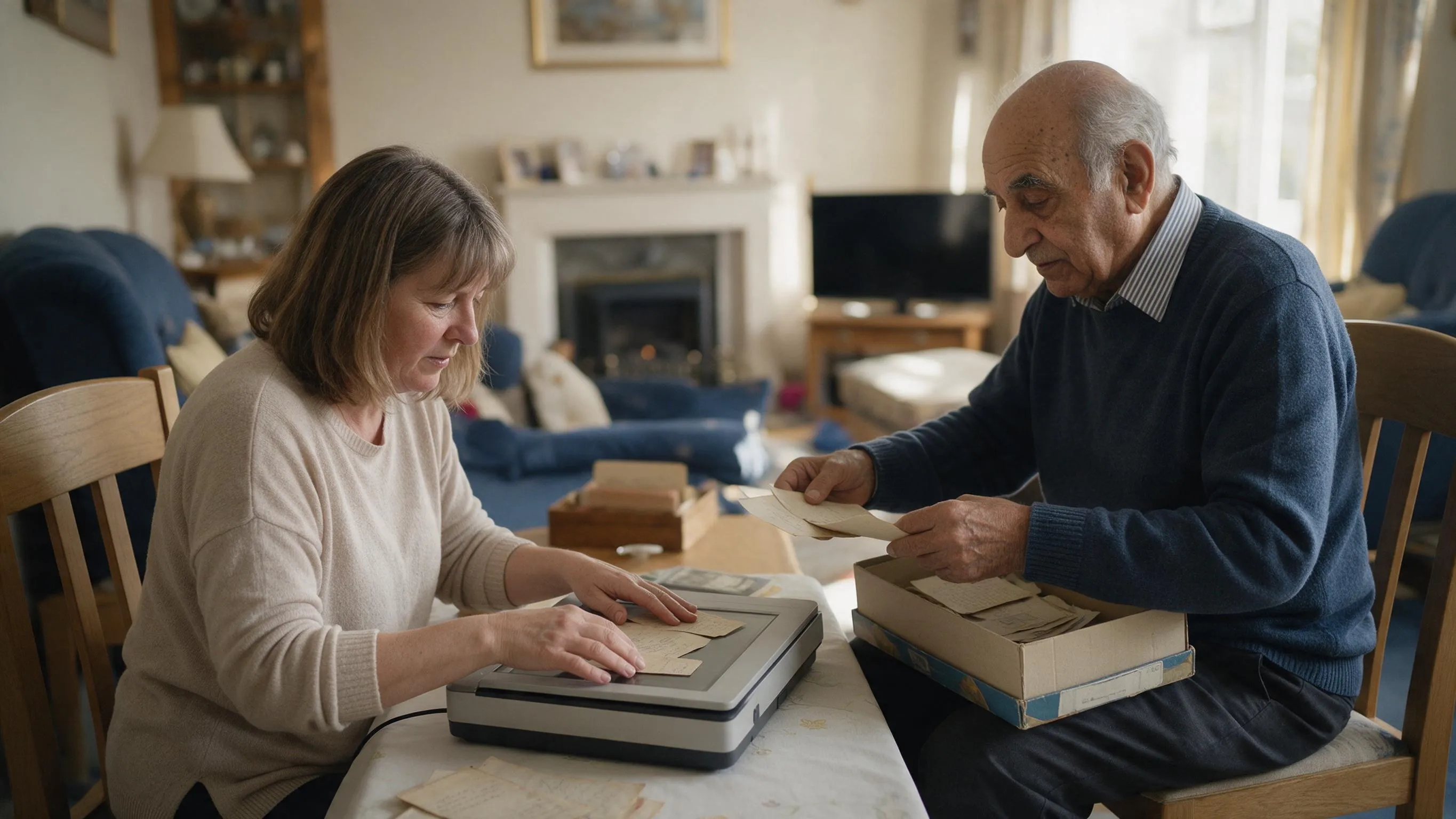
- Ask for the decision in writing, with the reasons, the evidence used, and how the council applied the motivation and foreseeability tests.
- Gather evidence: bank statements, deeds of gift, receipts, and anything showing the reason for the gift and the person’s health at the time, such as a letter from the GP.
- Reply in writing (wording below) and ask for a review. The Ombudsman expects councils to offer a review or appeal.
- Complain formally through the council’s complaints procedure, normally within 12 months.
- Go to the Ombudsman if you are still unhappy: online at lgo.org.uk or 0300 061 0614 (Monday, Tuesday, Thursday and Friday 10am to 1pm; Wednesday 1pm to 4pm).
- Get advice: Age UK Advice Line 0800 678 1602 (every day, 8am to 7pm), Independent Age 0800 319 6789 (Monday to Friday, 8.30am to 5.30pm), or a solicitor.
Wording you can use: “I am writing about your decision of [date] that [name] deliberately deprived [himself/herself] of £[amount]. I disagree. The [gift/payment] was made on [date] because [for example: to help with a house deposit, as he had done for each grandchild; to repay a loan]. At that time [he/she] was [living independently with no care needs], as the enclosed [GP letter, bank statements] show. Under Annex E of the Care and Support Statutory Guidance, the council must show that avoiding care charges was a significant motivation and that care was reasonably foreseeable at the time. Please review your decision, explain your reasons in full, and treat this as a formal complaint if you do not change it.”
Evidence to keep
- Deeds of gift or a short signed note of each large gift, its date and reason
- Receipts for large purchases, repairs and adaptations
- Proof that loans or debts were repaid
- Bank statements showing long-standing patterns of giving
- Any record of the person’s health at the time of large gifts
Pension Credit and other means-tested benefits have their own deprivation rules, so giving money away can affect those too.
What to do next
- Talk to a solicitor before any large gift or transfer of property.
- Keep evidence of the reason for any large gift.
- Answer the financial assessment honestly.
- If the council finds deprivation, ask for its reasons in writing and challenge it with evidence.
How we can help
Day and Nightcare is a CQC-registered home care provider, rated Good, supporting people at home since 2008. Our fully managed live-in care is available anywhere in England from £1,550 a week, with a written quote after a free initial assessment, which can help you plan care costs openly. Call 01865 715780 or contact us.
Common questions
Can I give my children money now to avoid care fees later?
You can give gifts, but avoiding care fees is exactly the motive the council looks for. If, when the gift is made, you could reasonably expect to need care and to pay for it, and avoiding charges was a significant reason for the timing, the council can treat the money as still yours. Gifts made while fit and well, with no foreseeable need for care, should not count. There is no fixed safe period, so take advice from a solicitor first.
Do the inheritance tax gift allowances protect gifts from care charges?
No. Allowances such as the £3,000 annual exemption and the £250 small gifts allowance are inheritance tax rules only. The council applies a different test: why and when the money was given. Small, customary gifts in keeping with what someone has always done, such as birthday and Christmas presents, are much less likely to be questioned. A large gift soon after a diagnosis or a fall is far more likely to be.
Is buying a funeral plan deprivation of assets?
Not automatically. Councils should not have blanket policies that treat particular kinds of spending, such as a funeral plan, as deprivation; each case depends on its facts. A plan at an ordinary price that reflects the person's wishes is easier to explain than an unusually expensive one bought just before a financial assessment. Keep the paperwork and a note of why it was bought.
If Mum gives us her house but keeps living there, is it protected?
Not reliably. For care at home the home is not counted anyway, so the transfer saves nothing on those charges. If she later moves permanently into a care home, the council can look at why and when the house was transferred. For inheritance tax, a home given away but still lived in rent-free is usually a 'gift with reservation' and stays in her estate. She also loses control of the home. Take a solicitor's advice before doing this.
Is it deprivation to spend savings on home adaptations?
Usually not, if the work is genuinely needed and fairly priced, such as a level-access shower or a stairlift that helps someone stay at home. The council looks at the purpose: an expensive extension or luxury refurbishment just before an assessment is harder to explain. Check free help first: minor adaptations up to £1,000 are free from the council, and a Disabled Facilities Grant can pay for larger work.
Sources and further information
- GOV.UK: Care and support statutory guidance (annex E: deprivation of assets)
- legislation.gov.uk: Care Act 2014, section 70 (transfer of assets to avoid charges)
- legislation.gov.uk: Care and Support (Charging and Assessment of Resources) Regulations 2014, regulation 22
- Local Government and Social Care Ombudsman: Deprivation of capital, guidance for practitioners (August 2022)
- Age UK: Factsheet 40, Deprivation of assets in social care (September 2026)
- GOV.UK: Inheritance Tax, gifts
Prepared by the Day and Nightcare care team. Last updated 30 October 2026; sources last checked 30 October 2026. This guide is general information about care in England, not financial, legal or medical advice.